Crumbl CEO Jason McGowan on Closing Stores Sundays, Prioritizing Family, and Transitioning to New Leadership
Key Takeaways
- •Crumbl generates over $1 billion in annual revenue with nearly 1,100 locations and more than 29,000 employees since its founding in 2017.
- •Cofounders Jason McGowan and Sawyer Hemsley announced in May that they are transitioning away from the company as it seeks new leadership to scale further.
- •Crumbl was reported last year to be exploring a sale that would have valued the company at nearly $2 billion, placing it among the most valuable privately held restaurant chains in the U.S.
- •McGowan, a former eighth-grade dropout and technology entrepreneur, credits Crumbl's growth partly to its early investment in proprietary app infrastructure and a scarcity-driven rotating weekly menu model.
- •McGowan emphasizes lifelong learning and the enduring importance of human connection, particularly as AI and GLP-1 weight-loss drugs pose new challenges for food businesses.
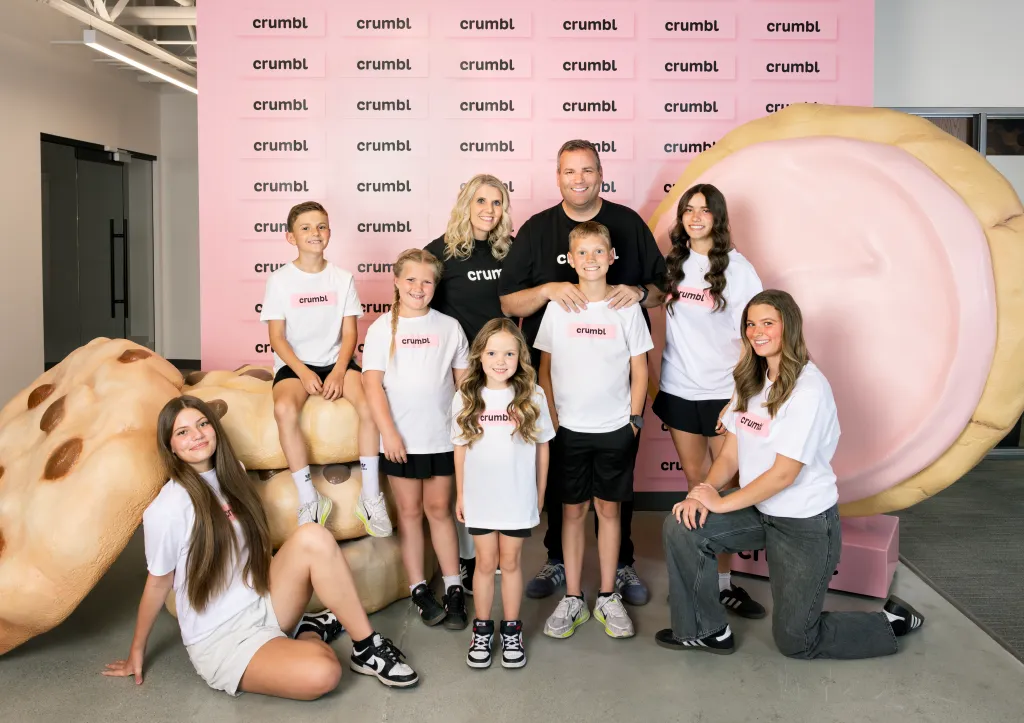
When Crumbl opened its first location in northern Utah in 2017, cofounders Jason McGowan and Sawyer Hemsley had one straightforward objective: perfect the chocolate chip cookie. Nearly a decade later, that venture has become a cookie empire generating more than $1 billion in annual revenue, with nearly 1,100 locations and over 29,000 employees. The company's rapid expansion has been fueled in large part by its social media presence—particularly on TikTok, where its pink-boxed cookies and weekly flavor drops have become a viral phenomenon, turning each new release into an event for millions of followers.
Yet according to McGowan, who serves as CEO, scaling a company to that magnitude is not always smooth. During the early days, the two cousins—McGowan and Hemsley—spent countless early mornings mixing dough, late nights cleaning kitchens, and weekends uncertain whether the business would survive. Those years of relentless effort ultimately shaped McGowan's approach to leadership, including his conviction that stepping away is as vital as building.
"[At Crumbl], we don't open on Sundays. Not just for religious purposes, but for time to reset," McGowan, who is Mormon, told Fortune. "Everyone thinks that life is just go, go, go…[but] for me, success isn't only about building the biggest company—it's also about creating meaningful moments with those who matter most."
For McGowan, that philosophy means being fully present in both personal and professional settings. As a father of seven, he sets aside his email during family moments—whether cheering from the sidelines at a soccer game or gathering around the table for a game of Catan. The same principle applies in his role as CEO: when visiting franchise locations or meeting with employees, McGowan said he gives those interactions his undivided attention rather than allowing distractions to interfere.
"Work-life balance is extremely important," McGowan said. "Being with your families and being present is really important. It is really hard to perfectly balance. I almost don't even like that word."
Crumbl is not alone among major U.S. companies in keeping its doors shut on Sundays. Chick-fil-A and Hobby Lobby have long maintained the same policy, citing their founders' Christian beliefs and the importance of giving employees time to worship, rest, and spend with family. McGowan's philosophy also comes amid a broader cultural shift in how work is viewed—as more employees push for greater flexibility and even four-day workweeks, the notion that success demands constant hustle is facing increasing scrutiny.
From Eighth-Grade Dropout to Billion-Dollar Cookie Empire
McGowan grew up in Alberta, Canada. His father worked as a social worker and his mother was employed at a bank. After completing the eighth grade, McGowan dropped out of school and entered the workforce.
"I wanted to actually own a restaurant one day," he said. "I'd worked at a steakhouse when I was young, and I was managing the kitchen portion of the steakhouse when I was just 16."
After moving to Utah in 2003, McGowan spent six months sleeping on friends' floors while teaching himself web development. He went on to cofound several technology startups, including a social network for students at Brigham Young University and a platform for discovering local events. From 2015 to 2017, he served as Ancestry's director of mobile product before teaming up with Hemsley to launch Crumbl. That technology background proved instrumental to Crumbl's growth: the company built its own app and ordering infrastructure early on, and its data-driven approach to rotating weekly menus helped create a scarcity-driven demand model that keeps customers coming back.
Today, the chain is recognized for its oversized cookies and adventurous weekly rotating flavor lineup. Recent offerings have included "Flamin' Lime Crunch," "Wild Cherry Blue Razz Slushy," "Root Beer Float," and "Hawaiian Coconut."
Reflecting on his journey, McGowan said too many aspiring founders become consumed with the idea of building a business rather than solving a genuine problem for customers.
"I love building things," he said. "Whether it's the world's best cookie or a piece of technology that serves somebody else. The joy of building something that makes somebody else smile—that's what drives me."
In May of this year, McGowan announced that he and Hemsley are in the process of transitioning away from Crumbl as they seek new leadership to take the company "to the next level." It was reported early last year that Crumbl was exploring a sale that would have valued the company at nearly $2 billion—a figure that underscores how quickly the brand has scaled, and one that places it among the most valuable privately held restaurant chains in the United States.
Advice for Gen Z: Never Stop Learning—Nor Lose the Human Touch
Operating a dessert company has grown more complex in recent years, from the rise of GLP-1 weight-loss drugs to artificial intelligence reshaping how businesses market, hire, and serve customers. Drugs such as Ozempic and Wegovy have been flagged by food industry analysts as a potential headwind for companies selling indulgent, calorie-dense treats, as the medications can suppress appetite and shift consumer preferences toward lighter options.
For McGowan, those transformations are precisely why curiosity matters more than ever.
"The future has always been unpredictable," McGowan said. "I will always tell my kids, never be afraid to learn new things, and never be afraid to just constantly be learning. It doesn't matter what age you are, and who you are. Never be afraid to continue to learn and to grow."
That mindset is particularly relevant for Gen Z entering a labor market being transformed by AI. While technology will continue to reshape the workplace, McGowan said the fundamentals of creating value for other people will not change.
"We've got to remember the importance of technology and helping and serving people," he said. "I think sometimes that can get lost in translation, and that's something that's really important—never underestimate the power of human touch."
Those principles—embracing lifelong learning while staying focused on serving others—will outlast any technological disruption, McGowan added.
"If you're not afraid to learn, and you're not afraid to understand the importance of building something for somebody else and creating value in the world, you're going to be just fine."
This story was originally featured on Fortune.com.

