China, Russia, Iran, and North Korea Forge an Operational but Informal Power Bloc, Challenging Western Strategy
Key Takeaways
- •The CRINK grouping functions as an operational but selective network where members cooperate on shared interests without a formal alliance structure, mutual-defense treaty, or unified command.
- •The war in Ukraine has become a central arena for military exchanges among CRINK members, with Iran supplying drones, North Korea providing troops and ballistic missiles, China offering dual-use technology and energy purchases, and Russia sharing battlefield technology in return.
- •US lawmakers and national-security analysts increasingly view conflicts in Europe, the Indo-Pacific, and the Middle East as interconnected threats, with outcomes in one theater directly influencing deterrence in others.
- •The grouping faces significant internal constraints, including China's unease over the deepening Russia-North Korea relationship, power asymmetries favoring Beijing, and the absence of a shared ideology beyond opposition to the US-led international order.
- •Experts recommend that the United States and its allies respond with a cross-regional approach including coordinated sanctions, aggressive use of the Global Magnitsky Act, and continued military assistance to Ukraine.
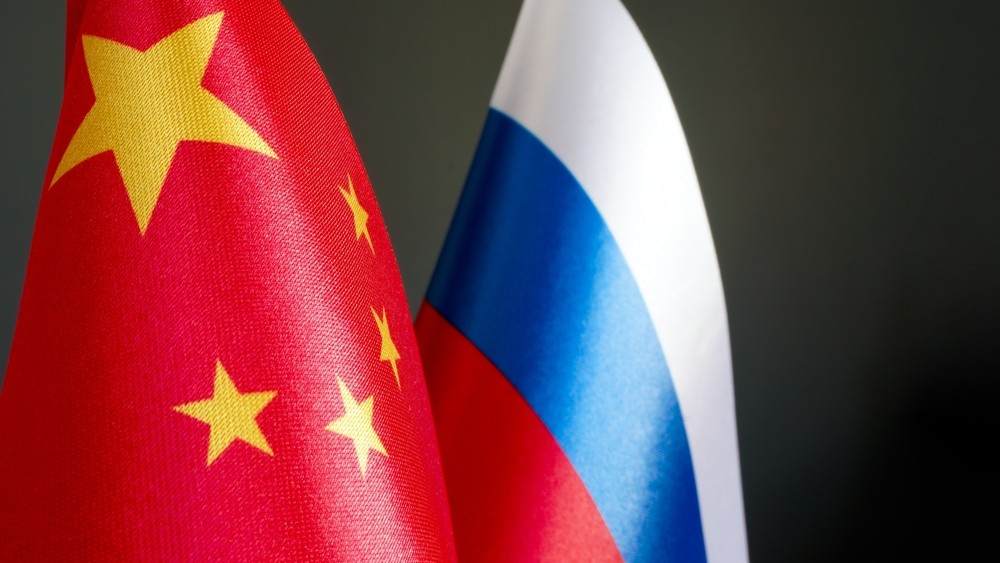
The world's leading autocracies—China, Russia, Iran, and North Korea—are increasingly leveraging one another's resources, military capabilities, and geopolitical influence to withstand Western pressure. For Washington, the central strategic question is no longer whether these four nations are cooperating, but rather how significantly their alignment is reshaping the balance of power across multiple theaters at once. The pattern marks a notable departure from the post-Cold War era, during which successive US administrations sought to integrate Russia and China into a Western-led international order.
The stakes have been underscored on the battlefield in Ukraine. President Volodymyr Zelenskyy stated that Russia used North Korean ballistic missiles in an August 11 attack on the city of Zaporizhzhya that killed seven people and injured two dozen others. The strike came amid reports that a North Korean missile unit armed with up to 120 ballistic missiles has begun deploying to western Russia.
On the same day, Pyongyang test-fired another ballistic missile just days before major US-South Korean military exercises, drawing a joint response from the United States and 40 other nations. The parallel crises highlight the dual security pressures confronting Washington and its partners in both Europe and the Indo-Pacific.
David J. Kramer, executive director of the George W. Bush Institute and a former senior US diplomat, told RFE/RL that while cooperation among the four states—increasingly referred to by the acronym CRINK—is already operational, it falls short of a formal alliance comparable to NATO.
"It is operational, and it's selective," Kramer said.
His assessment reflects a nuanced view that is gaining traction among policymakers in Washington: CRINK is neither a tightly integrated military bloc nor merely a rhetorical device. Instead, it functions as a flexible network in which members cooperate where their interests converge, enabling each regime to offset some of its strategic vulnerabilities.
Military Cooperation Through the Ukraine War
The war in Ukraine has emerged as a principal arena for military capability exchanges among CRINK members. Iranian-designed Shahed drones played a critical role in Russia's offensive operations during the early phase of Moscow's full-scale invasion launched in February 2022. Tehran's drone transfers to Russia represented a significant expansion of Iran's military reach beyond its traditional regional theater in the Middle East.
North Korea's involvement has expanded considerably. Pyongyang has dispatched troops to support Russia's war effort, with estimates rising from an initial 12,000 to 15,000 personnel to reports suggesting as many as 50,000. North Korea has also supplied ballistic missiles. The deployment, if confirmed at the higher figures, would represent one of the largest commitments of North Korean military personnel abroad since the Korean War.
China's role, while less overtly kinetic, remains significant. Beijing has helped finance Russia's war by purchasing Russian energy—bilateral trade between the two countries reached record levels above $240 billion in 2023—and has also provided dual-use technology to Moscow.
"All of these countries have been supporting and reinforcing each other," Kramer said.
The cooperation also creates opportunities for military learning and technology transfers. Kramer noted that Russia developed its own version of Iran's Shahed drones, while North Korea has benefited from supplying troops and missiles and appears to be receiving technology from Russia in return. This reciprocal dynamic has raised concerns among Western analysts that battlefield-tested technology could eventually flow back to other theaters, including the Indo-Pacific and the Middle East.
The four countries do not share a mutual-defense treaty, a unified command structure, or a binding strategic doctrine. Analysts note that there appears to be no unifying ideology among them beyond their opposition to the West—particularly their shared resistance to the US-led international order.
"This collaboration has already paid dividends, sustaining war efforts, propping up embattled regimes, and chipping away at democratic norms. Yet its reach is constrained: the grouping is transactional, leaderless, and riven by competing interests, with no shared blueprint for an alternative order," according to analysts at the Lowy Institute, a nonpartisan international policy think tank based in Sydney, Australia.
Asymmetries Within the Grouping
China remains the dominant partner in its relationship with Moscow, leaving Russia far more dependent on Beijing than the reverse. China has stopped short of providing the level of direct military support the Kremlin may have anticipated when the two nations declared their "no-limits" friendship in 2022.
Beijing is also monitoring closely as Russia deepens its relationship with North Korea—a development that Kramer said China is not particularly pleased with.
Those differences, however, have not prevented practical cooperation.
"I think it poses a bigger challenge because where they do seem united is trying to weaken whether it's neighboring states or democracy or the role and reliability of the United States in particular," Kramer said.
CRINK is therefore not a unified geopolitical bloc. Rather, its members have demonstrated an ability to identify areas of common interest and support one another when doing so serves their individual strategic objectives.
Kramer pointed to the BRICS grouping—originally comprising Brazil, Russia, India, China, and South Africa, and since expanded to include additional members—noting that efforts to unify that broader coalition have not been particularly successful. CRINK, by contrast, has been most effective when its members identify specific "targets of opportunity" and areas of need where they can reinforce one another.
An Interconnected Threat Landscape in Washington
This broadening threat perception is reshaping the debate in Washington, where lawmakers and national-security analysts increasingly view regional conflicts through an interconnected strategic lens.
Republican Senator John Curtis of Utah, a member of the Senate Foreign Relations Committee, stressed that outcomes in Eastern Europe carry direct implications for deterrence in the Indo-Pacific.
"Letting Putin have a victory in Ukraine would dramatically impact many other areas around the world," Curtis told RFE/RL, pointing specifically to Beijing's ambitions toward Taiwan. "There's no doubt they're watching our reaction."
Senator Rick Scott, a Republican from Florida, echoed that assessment, telling RFE/RL that defeating Russian aggression is integral to deterring the broader network of authoritarian states.
Retired Rear Admiral Mark Montgomery, senior director of the Center on Cyber and Technology Innovation at the Foundation for Defense of Democracies, a Washington-based nonpartisan research institute focused on national security and foreign policy, and co-author of Axis of Aggressors, told RFE/RL that his research has documented more than 600 instances of cross-cooperation among the four nations.
Montgomery offered a stark assessment: Ukraine is effectively confronting elements of all four adversaries simultaneously. Tehran has supplied drone capabilities; Pyongyang has provided manpower and munitions; Beijing has supplied dual-use components; and Moscow has contributed tactical battlefield experience and appears to be offering military technology in return.
This feedback loop creates an adaptive system. Because each member can help compensate for another's economic, technological, or military weaknesses, pressure on one country can be partially offset through cooperation with the others. Meanwhile, Moscow and Beijing have used tools such as UN vetoes and other diplomatic actions to block international efforts to pressure their partners.
Constraints and Countermeasures
CRINK, however, is not invincible, according to analysts. The absence of a formal alliance structure is itself a source of vulnerability. China has its own interests and has limited the degree of direct military support it provides Russia. Beijing is also uneasy about the deepening relationship between Moscow and Pyongyang, and the four countries do not share a unified strategic doctrine.
Kramer argued that the United States and its allies should respond by working more closely across Europe, Asia, and the Middle East, rather than treating the threats posed by the four countries as separate problems.
He also called for more aggressive measures, including the use of the Global Magnitsky Act, which authorizes the United States to impose sanctions on officials and others involved in gross human rights abuses and corruption. Broader sanctions, he said, could also be applied more aggressively against the four regimes.
Above all, Kramer emphasized that military assistance to Ukraine remains central to the Western response.
"Supporting Ukraine with military assistance is absolutely vital," he said, citing Russia's continuing cruise- and ballistic-missile attacks and Ukraine's urgent need for interceptor missiles.
The immediate test of Western resolve remains centered in Ukraine, where shortages of air-defense systems leave civilians and critical infrastructure exposed to Russian attacks involving Iranian-designed drones and North Korean missiles.
The implications extend well beyond Europe. Kramer noted that Taiwan is among Ukraine's biggest supporters because Taipei recognizes that the way the West responds to Russia's war will influence China's calculations regarding Taiwan.
This creates a direct strategic link between the European and Indo-Pacific theaters. The United States and its allies may face geographically separate crises, but the governments behind those challenges increasingly possess the capacity to support one another.
As Washington confronts threats across Europe, the Indo-Pacific, and the Middle East, treating each theater as an isolated problem risks overlooking the ways in which Russia, China, Iran, and North Korea can reinforce each other.
CRINK does not need to become a formal alliance to pose a significant challenge to Western interests. As Kramer's analysis underscores, its members need only continue identifying pragmatic areas where cooperation can strengthen each of them against what they perceive as pressure from the United States and its allies.
By RFE/RL

