Craig Wright Reignites Bitcoin Governance Debate, Calling for a Permanently Fixed Protocol
Key Takeaways
- •Craig Wright stated that the Bitcoin protocol should remain permanently immutable and must not be altered by any individual or entity, including developers, miners, exchanges, businesses, or foundations.
- •Wright argued that genuine decentralization is a byproduct of an unchangeable protocol rather than an outcome of community-driven upgrades through mechanisms like Bitcoin Improvement Proposals.
- •Wright criticized the evolving investment narratives around Bitcoin, which have shifted from electronic cash to digital gold, then to a store of value, and most recently to a vehicle for wealth generation.
- •Wright contended that Bitcoin's multi-trillion-dollar market capitalization cannot sustain the rapid returns seen in its earlier years and does not imply equivalent cash is available for withdrawal.
- •Many developers continue to advocate for protocol evolution, citing upgrades such as the 2021 Taproot activation as evidence that changes enhance Bitcoin's privacy, scripting, and overall functionality.
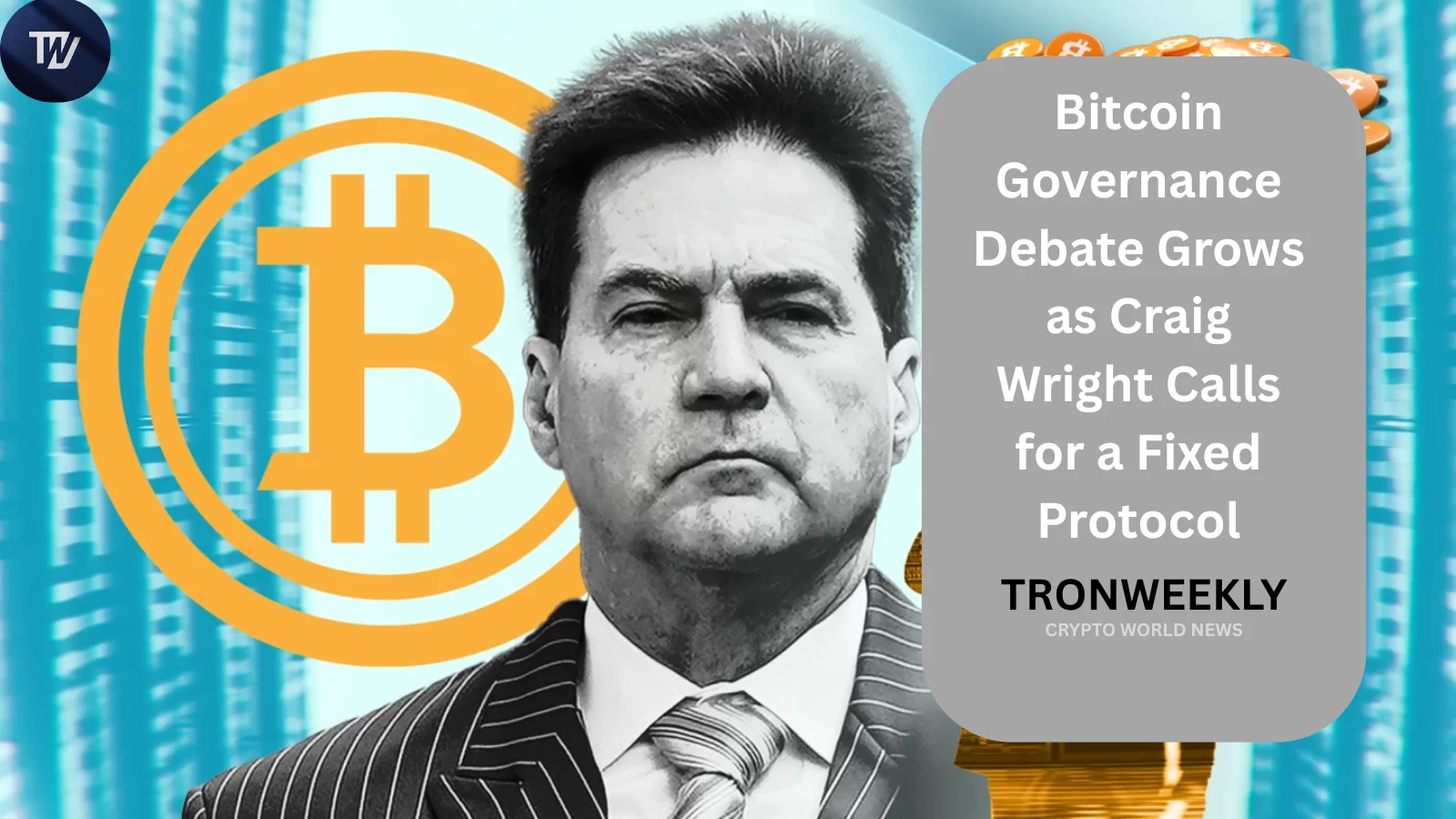
The debate over Bitcoin governance has been reignited after Craig Wright, who has claimed to be Satoshi Nakamoto, declared that the Bitcoin protocol should never be modified. Wright argued that maintaining an immutable protocol is essential for network security and for giving companies the confidence to build their businesses on top of Bitcoin.
Wright shared his position in a post on X (formerly Twitter) on August 2, 2026:
Now think carefully about what that means. Many of you called me a fraud for arguing that Bitcoin should remain an open system with a fixed protocol—one in which anyone can transact, build, compete and accept payment without seeking permission. At the same time, you yelled in…
— Dr Craig S Wright (@Dr_CSWright) August 2, 2026
Protocol Should Remain Unchanged
According to Wright, Bitcoin governance should not be placed in the hands of developers, miners, exchanges, businesses, or foundations. He believes the protocol should remain exactly as it was originally created, with new innovations and value-added services built on top of the platform rather than introduced as changes to the foundation itself.
"The protocol has to remain unchanged because it cannot be modified by any individual or entity, such as developers, miners, exchanges, the foundation, or companies for selfish reasons," Wright stated. He emphasized that protocol stability is critical for businesses considering long-term investments in Bitcoin infrastructure.
Wright's stance echoes themes from Bitcoin's block size debate of 2015–2017, a protracted governance conflict over whether to increase Bitcoin's block size limit to accommodate more transactions. That dispute culminated in the activation of Segregated Witness (SegWit) on the Bitcoin network and the creation of Bitcoin Cash as a separate chain—an episode that remains a touchstone in discussions about who should influence protocol changes and how.
The Decentralization Debate
Wright pushed back against the widespread claim that Bitcoin is genuinely decentralized, arguing that in practice, decisions are made by a small group of individuals. He contends that imposing restrictions on transaction volume, altering consensus rules, and dismissing dissenting opinions all represent departures from Bitcoin's original purpose.
In Wright's view, Bitcoin was created to eliminate the need to trust any individuals or committees. He frames decentralization as a consequence of an immutable protocol, not something achieved by allowing network participants to steer development through upgrades. Bitcoin's actual development process operates through Bitcoin Improvement Proposals (BIPs), a structured system through which developers propose, discuss, and implement protocol changes that require broad community consensus to activate—a mechanism that proponents argue provides decentralized governance without a central authority.
Wright Questions Bitcoin's Investment Narrative
Beyond governance, Wright criticized the evolving investment narratives surrounding Bitcoin. He noted that the framing has shifted over time—from electronic cash to digital gold, then to a store of value, and most recently to a vehicle for wealth generation.
According to Wright, these shifting narratives have fostered unrealistic expectations. He argued that an asset valued in the trillions of dollars cannot sustain the rapid rates of return that Bitcoin experienced in its earlier days. He also pointed out that Bitcoin's market capitalization does not mean that equivalent cash is available for withdrawal.
Ongoing Governance Discussion
Wright's latest remarks have added further fuel to the ongoing Bitcoin governance debate. While many developers maintain that protocol evolution strengthens Bitcoin over time—pointing to upgrades such as the 2021 Taproot activation that improved privacy and scripting capabilities—Wright holds that Bitcoin's core advantage lies in the immutability of its rules, with innovation occurring at layers built above the base protocol, such as the Lightning Network for faster payments.

