Seoul Bankruptcy Court Approves Homeplus Restructuring Plan
Key Takeaways
- •The Seoul Bankruptcy Court approved Homeplus's restructuring plan after creditors representing at least two-thirds of claims voted in favor.
- •Homeplus, controlled by MBK Partners, has been under court-led rehabilitation since March 4 of last year, with proceedings briefly terminated in July before Meritz Financial Group provided financing.
- •Co-CEO Kim Kwang-il said the company will focus on profitable stores and sell certain locations, directing proceeds toward prioritized creditor repayments.
- •Homeplus resumed normal operations at 67 stores as of Aug. 13 after temporary closures caused by a shortage of operating funds.
- •If Homeplus misses the repayment schedule, the court can terminate the rehabilitation and declare the company bankrupt without a separate application.
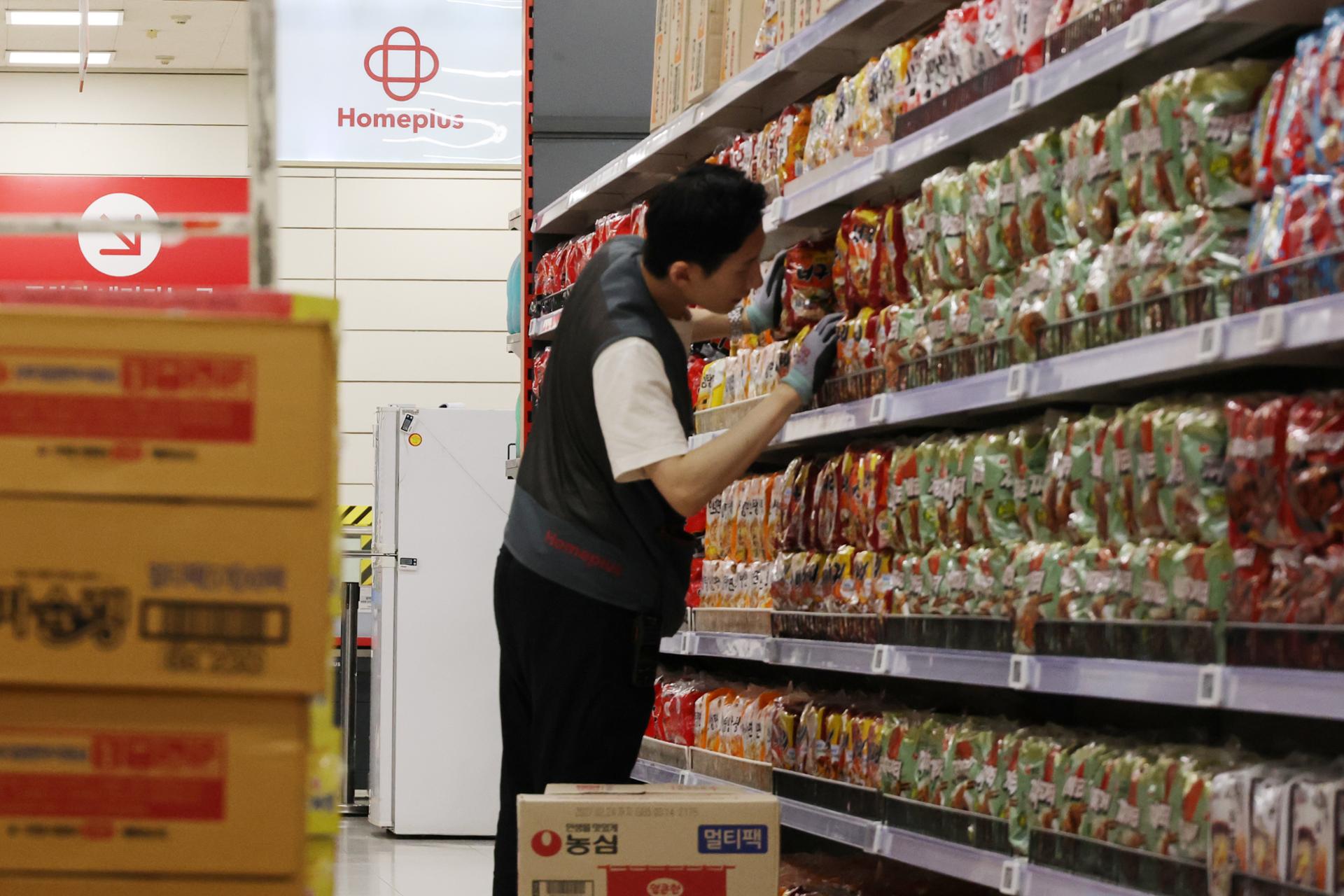
Homeplus, the country's No. 2 supermarket chain currently under court-led rehabilitation proceedings, secured court approval Wednesday for its restructuring plan. The rehabilitation proceedings will come to an end once the retailer begins repaying creditors in line with the approved plan.
The Seoul Bankruptcy Court held a creditors' meeting earlier in the day to vote on the plan. After creditors approved the proposal, the court immediately gave it the green light, formally authorizing the retailer to carry out the debt repayment and restructuring measures set out in the plan.
"The plan satisfied the requirements for approval, with support from at least two-thirds of creditors," the court said.
The court urged the retailer, which is controlled by private equity firm MBK Partners, to cooperate closely with its employees and business partners and to do its utmost to ensure the successful implementation of the rehabilitation plan.
MBK Vice Chairman and Homeplus co-CEO Kim Kwang-il, who attended the meeting, apologized to creditors affected by the company's rehabilitation process.
"Our priority under the restructuring plan is to restore profitability by focusing our business on profitable stores," he said. "We also plan to sell certain stores promptly and use the proceeds to prioritize repayments to creditors."
The court plans to close the rehabilitation proceedings once the retailer begins making repayments in full under the approved plan. Failure to follow the schedule, however, could lead the court to terminate the rehabilitation proceedings despite the plan having been approved. In that event, the court would have the authority to declare the retailer bankrupt without a separate application.
The approval marks a critical step for a company that has spent more than a year under court protection. Homeplus has been under court-led rehabilitation proceedings since March 4 last year. The proceedings were initially terminated on July 3 after the firm failed to raise 200 billion won ($147 million) in minimum operating funds. The process was later reinstated after its largest creditor, Meritz Financial Group, stepped in with the necessary financing.
Since then, Homeplus has resumed normal operations at 67 stores as of Aug. 13, roughly a month after they were temporarily closed as the company struggled to pay suppliers and landlords amid a shortage of operating funds.
The outcome also carries wider significance for Korea's retail and grocery sector, where Homeplus ranks second among supermarket chains. The disruption caused by the temporary store closures last year affected suppliers and landlords who depend on the chain, and the court's emphasis on cooperation with employees and business partners reflects the broad footprint of the rehabilitation. Under Korean rehabilitation law, the court's authority to declare bankruptcy without a separate application if the repayment schedule is missed gives the plan a binding enforcement mechanism, meaning the retailer's ability to execute timely repayments and store sales will determine whether it exits rehabilitation or faces liquidation.
Source: The Korea Times
