Democrats Plan Corruption Crackdown as New Congress Eyes Trump's 59 Businesses and $117 Million in Foreign Deals
Key Takeaways
- •Democrats won control of both the House and Senate in Tuesday's midterm elections, and corruption ranked above affordability, the war, and the immigrant crackdown in several exit polls.
- •A Harris poll for The Guardian found 76% of voters believe elected officials care more about enriching themselves than improving the economy, while a Reuters/Ipsos poll found 69% say Trump's private business interests influence his presidential decisions.
- •CREW President Donald Sherman testified that a UAE-backed investment vehicle purchased a 49% stake in Trump's crypto venture World Liberty Financial for $500 million shortly before the administration transferred sensitive AI chip technology to the UAE.
- •Total election spending reached a record of nearly $12 billion, including $474 million from Elon Musk in an unsuccessful effort to help Republicans keep control of Congress.
- •Sherman urged the new Congress to investigate conduct that may fall outside the Supreme Court's Trump v. United States liability shield and to adopt internal reforms such as banning members from owning and trading individual stocks.
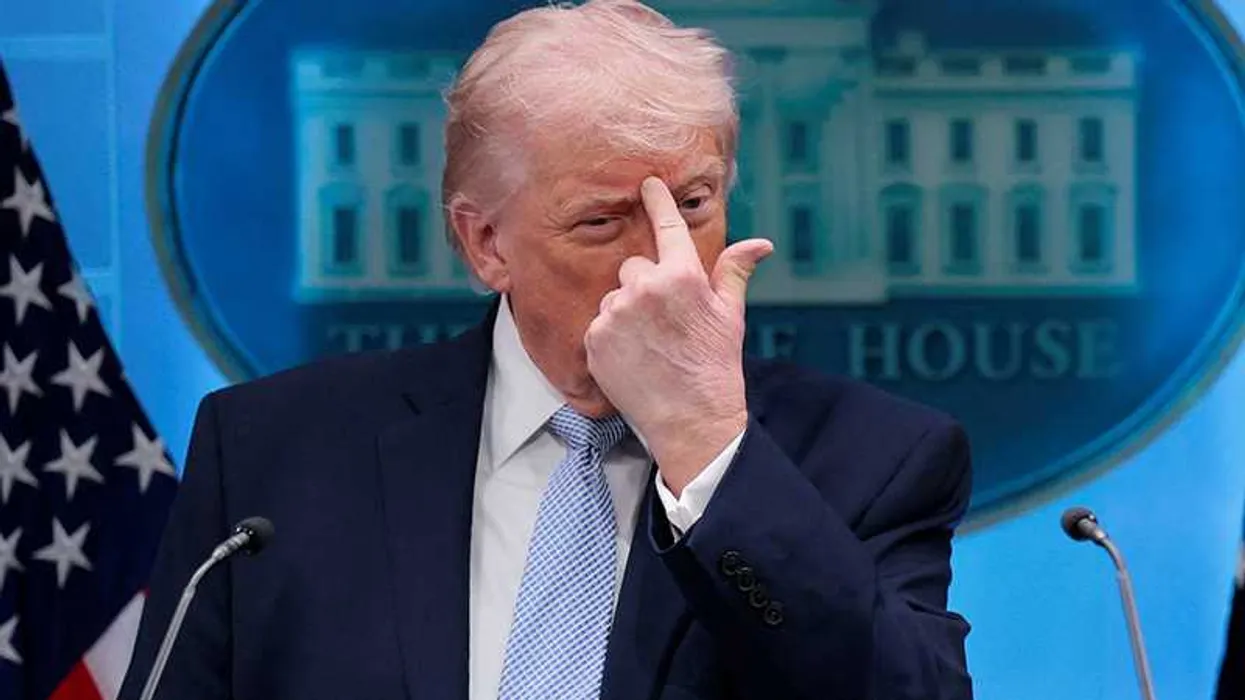
Democrats won control of both the House and the Senate in Tuesday's historic midterm elections — a result Democracy Now! characterized as “a sweeping rebuke to Trump and his MAGA movement” — in a comeback fueled largely by voter anger over high prices and the war in Iran. But no issue ranked higher in a number of exit polls than corruption, which finished ahead of affordability, the war and the immigrant crackdown.
A Harris poll conducted for The Guardian found that 76% of voters said elected officials care more about enriching themselves than improving the economy for ordinary people. A separate Reuters/Ipsos poll found that 63% of Americans considered it inappropriate for President Trump and his family to profit from cryptocurrency, while 69% said his private business interests influence his decisions as president.
“If this election was about corruption and cost, then this next Congress needs to be focused on accountability and affordability,” Donald Sherman, president and CEO of the watchdog group Citizens for Responsibility and Ethics in Washington, or CREW, said in an interview on Democracy Now! with hosts Amy Goodman and Nermeen Shaikh. “Congress needs to do oversight not just on the administration's corruption, not just on the president's profiteering, but also on corporate America, what they have gotten out of engaging in the president's pay-to-play environment, how corporate America and the outside influence of money in our political system has undermined the public voice in our policy discussions — not just in our elections, but in the day-to-day work of policymaking.”
A Watchdog's Case: World Liberty Financial and AI Chips
CREW has filed lawsuits, ethics complaints and public records requests challenging what it describes as corruption and conflicts of interest in the Trump administration. Testifying before Congress earlier this year on what he called one example of alleged corruption by the president, Sherman focused on the president's cryptocurrency venture.
“Days before President Trump's second inauguration, an investment vehicle backed by the United Arab Emirates national security adviser bought a 49% stake in Trump's crypto venture, World Liberty Financial, for $500 million,” Sherman testified. “Months later, the Trump administration handed over America's most sensitive AI chips technology to the UAE, despite national security concerns. This type of corrupt profiteering from influence seekers is unprecedented, dangerous and, in some cases, against the law.”
Record Spending — and Victories for Anti-Corruption Candidates
Tuesday's midterm elections brought a tidal wave of victories for candidates who challenged corruption in politics and the influence of corporate and special interest money in elections, even as spending this cycle reached a record of nearly $12 billion, according to the group Open Secrets. The New York Times reports that top donor Elon Musk, a trillionaire, spent almost half a billion dollars — $474 million — in an unsuccessful attempt to help Republicans keep control of Congress. That figure does not include any dark money — political spending whose donors are not publicly disclosed — he might have spent.
Texas Senator-elect James Talarico addressed the spending in his victory speech.
“We went up against more than $300 million, more than any Senate campaign in American history,” Talarico said. “We went up against all the negative ads, smear campaigns, foreign bots and AI deepfakes that money can buy. Those attacks were the final howls of a dying establishment.”
'Corruption Underlies All of Those Issues'
Asked what the polling reveals, Sherman argued that corruption is inseparable from the kitchen-table issues that dominated the campaign.
“I think what the poll suggests is what Americans have been experiencing, which is, whether it is costs or the war or the other everyday issues animating conversations at kitchen tables across this country, corruption underlies all of those issues,” Sherman said. “That's what the polls don't connect — that it's corruption and costs. It's corruption that leads to the costs that Americans are experiencing, that has animated so many people to make their voices heard.”
Tariffs, he said, illustrate the connection. “From day to day, week to week, everyday consumers, farmers, grocers don't have any sense of how tariffs are going to impact the costs that they are experiencing,” Sherman said, “but they do know that the president's business impacts how he approaches tariffs.”
“When the president wanted to — his business wanted to pursue trademarks in Vietnam, all of a sudden, a couple of weeks before, the tariffs on Vietnamese products gets lowered,” Sherman said. “We saw how the Trump Organization engaged with countries like Argentina and Mexico, invoking tariffs as part of the leverage that they use in order to extract concessions from those governments.”
Sherman also pointed to the president's stock trading. He alleged that Trump has made millions from oil and gas stock trading tied to what Sherman described as the “illegal war” the president is pursuing in Iran, and that the president's stock portfolio “has increased substantially because of the immigration policy that led to investments in GEO Group and other private prisons.”
“So it should be a surprise to no one that corruption is at the top of the list,” Sherman said, “because the reality is that the president's corruption, and government corruption writ large, underlies all of the other problems that are animating Americans' concerns about their government and about their daily lives.”
The $5,000 Check Promise and the Ballroom
The examples of alleged profiteering, as Shaikh noted, are “legion.” Among the most staggering, even by Trump standards, was his earlier promise to send checks for $5,000 to every U.S. adult if Republicans retained control of both the House and the Senate.
“I'm not aware of anything like that ever happening. It's obviously corrupt,” Sherman said. He added that the president has “time and time again” demonstrated that he is not credible — a pattern he said is “directly connected with his corruption.”
Sherman cited the president's public comments about the ballroom he is building at the White House as an illustration. “When the president goes on TV and says, 'Well, the American people aren't going to spend a dime for this ballroom or for my arch,' he's doing two things,” Sherman said. “One, all of a sudden, a couple weeks later, he comes hat in hand to Congress asking for taxpayer money. But also, he's burying the lede, which is that he's shaking down corporate America in order to get money for his vanity projects, which communicates to the American public a couple of things. One, he's not putting their priorities first. Two, that everybody knows there's no such thing as a free lunch. Corporate America is not funneling money into the president's pet projects out of the goodness of their heart. They are getting something for those donations at the expense of everyday Americans.”
The staging of Trump's post-election appearances drew attention as well. He held his final big rally speech in front of the Reflecting Pool, then delivered his Wednesday morning remarks — after what fellow Republican Governor DeSantis called an “extinction-level election” — in front of the White House ballroom under construction, where he signed the beams going into it.
“It is amazing that corruption in a number of the exit polls was number one, above affordability, above the war, above the immigrant crackdown,” Goodman said in introducing the interview.
59 Businesses and $117 Million in Foreign Deals
Sherman argued that voters could see for themselves that the president has not prioritized their concerns, and he pointed to a series of figures.
“This is someone, in President Trump, who created 59 businesses — 59 businesses — since winning the White House in 2024,” Sherman said. “This is someone who made $117 million in foreign business deals since returning to the White House.”
He also cited the $500 million that the UAE sovereign wealth fund — a state-controlled investment vehicle — donated, or invested, in the president's crypto enterprise, and said the president's golf trips “funnel millions of taxpayer dollars into his business.”
“This is someone that has prioritized making money for himself, enriching himself, as opposed to the needs of the American people,” Sherman said. “And he's doing it at their expense.”
Kushner's Quasi-Diplomatic Role Under Scrutiny
Sherman connected the corruption concerns to the war in Iran, the other big issue in the election. The president, he noted, tapped his son-in-law, Jared Kushner, for a quasi-diplomatic role even as Kushner runs his own company, which has received $2 billion from Saudi Arabia's sovereign wealth fund.
“If the war in Iran is such a significant priority, why would you put someone in such a prominent role, without going through Senate confirmation, without filing a financial disclosure statement, that has a lucrative side hustle where he has received investments from foreign governments?” Sherman asked.
“The American people can easily understand not just the scope and scale of the president's corruption, but why the president and how the president's corruption is harming them on a daily basis,” he added.
Official Conduct, Private Conduct and the Supreme Court
Asked whether the president and vice president are exempt from criminal liability, Sherman said the president is not categorically exempt, but that the Supreme Court “has expanded the exemption for the president.” To the extent there is criminal official conduct, that is where the liability shield exists, he said; it does not necessarily cover private actions.
Shaikh noted that Trump has made $2.7 billion in the two years since becoming president. With Democrats holding the House and Senate for the remaining two years of the administration, Sherman said tariffs are official conduct — but any role the president may have played in the Trump Organization's use of tariffs as a leverage point in negotiations with foreign governments is conduct Congress should examine, and could be an example of private conduct falling outside the exceptions the Supreme Court has established. Trump v. United States, the ruling at issue, is the Supreme Court decision that shields presidents from criminal liability for their official conduct. Democratic control of both chambers carries with it committee chairmanships and the subpoena authority on which congressional investigations depend.
Private conduct, he added, could extend to questions as basic as whether the president has paid his taxes.
“There is a whole host of private conduct and private misconduct that we have seen from this president that should be investigated by Congress and could fall outside of the scope of the Trump v. United States decision,” Sherman said. “I think that Congress needs to look at all of it.”
Reforming Congress Itself
Sherman also endorsed a point made by member-elect Representative Kiros: the incoming Congress must address not only corruption in the Trump administration, but also put its own house in order.
The reforms he outlined include banning members from owning and trading individual stocks; potentially barring former members from serving as lobbyists; extending the Freedom of Information Act to Congress; and having the Senate set up an independent ethics office.
“There's a lot of work that Congress needs to do to ensure accountability,” Sherman said, “not just for the abuses of the Trump administration, not just for the abuses of corporate America and their outside influence on our policy, but also on the ways that Congress, as an institution, has undermined public trust.”
With a clear mandate, Sherman concluded, lawmakers must deliver on both fronts: “They have been given a mandate to address corruption and costs. And again, they need to do that by ensuring accountability and focus on affordability. Those two things are directly linked. They've been directly linked by the president's misconduct. They have been directly linked by the voters.”
This article is based on a Democracy Now! interview published by Alternet.

