US Aid to Ukraine Faces Scrutiny as Corruption Allegations Surround Zelenskyy's Inner Circle
Key Takeaways
- •Congress has appropriated well over $100 billion in assistance to Ukraine since Russia's full-scale invasion began in February 2022.
- •U.S. oversight of Ukraine aid includes audits by the Pentagon's Inspector General, USAID, the State Department, and a Congressionally established Inspector General for Ukraine assistance.
- •Prediction markets price the chance of a formal Russia-Ukraine ceasefire by the end of 2026 at 19.5% YES, a slight decline from earlier in the week.
- •Corruption allegations around Zelenskyy's inner circle could weaken international confidence in Ukraine's governance and complicate diplomatic efforts.
- •Ukraine has long ranked poorly on Transparency International's Corruption Perceptions Index, and anticorruption reform remains a condition for Western support and EU membership aspirations.
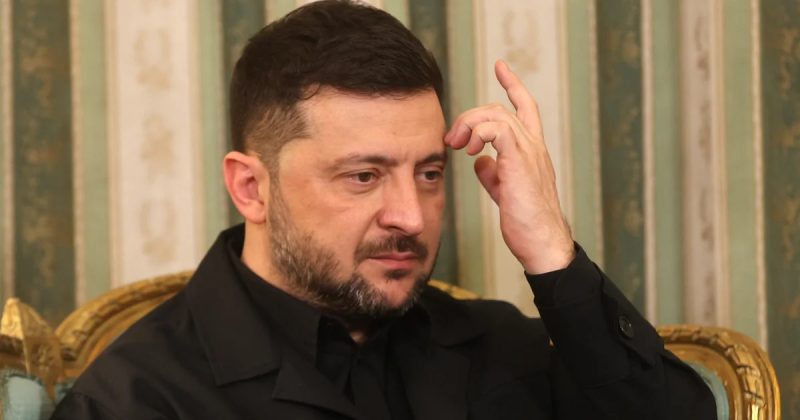
Recent reports pointing to corruption within Ukrainian President Volodymyr Zelenskyy's inner circle have placed the extensive U.S. aid program to Ukraine under heightened scrutiny. The revelations come as questions persist about the governance and stability of Ukraine, a country that has received substantial financial and military support from the United States since Russia's full-scale invasion in February 2022. Congress has appropriated well over $100 billion in assistance to Ukraine since the invasion, spanning military equipment, budgetary support, and humanitarian aid — a scale that makes accountability questions politically consequential in Washington.
Washington has put in place numerous oversight mechanisms to monitor how these funds are distributed and spent, with the goal of ensuring accountability. These include inspections and audits by agencies such as the Pentagon's Inspector General, the U.S. Agency for International Development, and the State Department, alongside a dedicated Inspector General for Ukraine assistance established by Congress. Even so, concerns about possible mismanagement could affect how Ukraine is perceived as a reliable partner in its ongoing conflict with Russia. Ukraine's own track record compounds the sensitivity: the country has long ranked poorly on Transparency International's Corruption Perceptions Index, and anticorruption reform has been a standing condition tied to Western support and to Ukraine's aspirations for European Union membership.
Prediction markets appear to be pricing in the political uncertainty. In the Russia-Ukraine ceasefire agreement market, current odds for a formal ceasefire by December 31, 2026, stand at 19.5% YES — slightly down from earlier in the week. The modest decline may reflect apprehension about Ukraine's political climate and its potential effect on diplomatic negotiations.
The war between Russia and Ukraine, which began in February 2022, remains a critical geopolitical issue with no formal peace agreement in sight. Diplomatic efforts, including those mediated by the United States, have so far failed to produce substantial progress toward either a ceasefire or a broader peace deal. The corruption allegations could further complicate these efforts by shaping international perceptions of, and support for, Ukraine.
Key Takeaways
- Market behavior suggests a decreased likelihood of a Russia-Ukraine ceasefire agreement by the end of 2026, with current pricing at 19.5% YES.
- Corruption allegations within Zelenskyy's inner circle could weigh on international confidence in Ukraine's governance and its diplomatic prospects.
- Oversight and accountability of U.S. aid remain critical issues as the war and associated diplomatic efforts continue without resolution.
What to Watch
Observers will be watching for any response from Ukraine's government to the corruption allegations and efforts to restore confidence. U.S. officials and their European counterparts may also issue statements that could shift market perceptions. Future diplomatic activity — including potential meetings or negotiations involving key actors such as U.S. President Donald Trump and Russian President Vladimir Putin — could offer new insight into the likelihood of a ceasefire. Any changes in Russia's military strategy or territorial demands could likewise influence market sentiment and the perceived probability of a peace agreement.
