Corgi Cafe: Inside London's 24/7 Hub for Tech Founders
Key Takeaways
- •Corgi, an AI insurance startup valued at approximately $4 billion, opened its first London co-working cafe in Shoreditch in early August 2026 after launching its original San Francisco location in February 2026.
- •Co-founders Nico Laqua and Emily Yuan selected London over New York for both their office and cafe, citing the city's potential to become an AI hub as US visas become more difficult to obtain.
- •The company is known for its extreme work culture, with Laqua working seven days a week on roughly three hours of sleep per night and stating that employees who want weekends off have no place at the company.
- •The Shoreditch cafe's clientele is approximately 90 per cent male, with most visitors reporting they discovered the venue through social media platforms such as TikTok.
- •The expansion has been viewed as a signal of the trend called "Londonmaxxing," a term coined in 2026 to describe renewed optimism around London's startup scene.
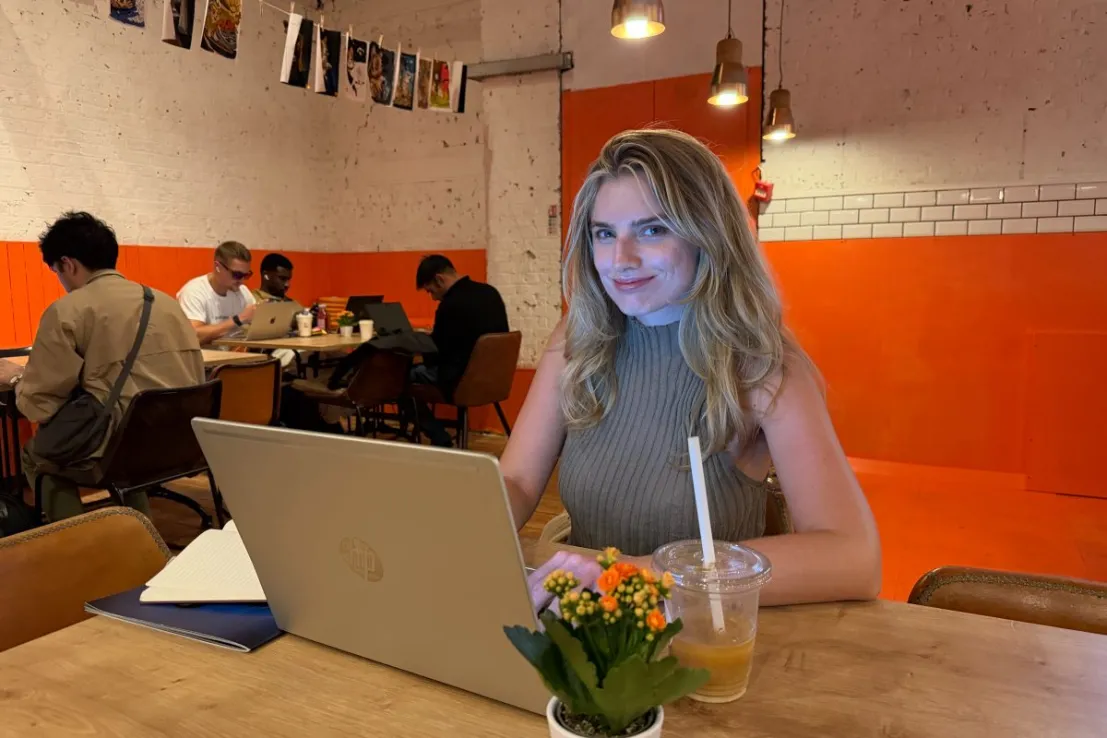
San Francisco startup Corgi has brought its round-the-clock co-working cafe concept to Shoreditch, targeting what it calls "very ambitious" Londoners who "want to work hard, but [don't] know where to go." Open 24 hours a day, seven days a week, the venue bills itself as part hangout, part co-working space where patrons are actively encouraged to bring laptops and settle in.
Inside the Shoreditch Location
The cafe, which opened in early August 2026 near Old Street — also known as Silicon Roundabout, the intersection that gave its name to a tech cluster first promoted by the UK government's 2010 Tech City initiative — features a distinctive neon-orange aesthetic against exposed brick walls. Classical Renaissance frescoes have been reimagined with corgis in place of human figures: a take on Michelangelo's The Creation of Adam adorns the ceiling, while an artist was at work on a full-wall adaptation of Raphael's School of Athens. Dozens of additional corgi-themed classical artworks, created by engineers during a community event over the opening weekend, were also on display.
During a Tuesday morning visit, roughly 20 young men were hunched over laptops at shared tables. Corgi community manager Claudia Maggi described the clientele as self-selecting: "It's not for everyone." By observation, the clientele was approximately 90 per cent male and about half were wearing baseball caps. A couple of visitors entered mistakenly believing it was a dog cafe and left disappointed.
During the visit, the wifi was not operational — a staff member said it was being replaced. Hot drinks were also unavailable overnight at the time of the visit; at 11:30pm, the only offering at midnight was an iced matcha latte. Numerous patrons appeared not to have purchased anything, or not for some time, and no issue was taken with customers occupying seats for extended periods.
A return visit around midnight found the cafe nearly as busy as during the day, with approximately 17 customers working on laptops under fluorescent lighting. One group, unable to find enough seats, departed loudly asking: "How are we supposed to grind?"
What Is Corgi?
Corgi Cafe is an extension of its parent company, an AI insurance startup launched in 2024 by co-founders Nico Laqua and Emily Yuan and headquartered in San Francisco. Despite being under two years old, the company is valued at approximately $4bn and is known for its intense work culture.
Laqua works seven days a week and sleeps roughly three hours per night on a mattress kept on the floor of his office. Appearing on the 20VC podcast, he was asked whether he would prefer Corgi to become a trillion-dollar company if it meant dying at 50, or for the company to fail while he lived to 80. He answered that the former was easily preferable, saying he would rather measure his lifespan "in victories than years."
The company's workforce also operates on a seven-day schedule. Two thirds of the company's first 30 employees have tattoos of the Corgi logo. Laqua has stated that anyone who wants to take Saturday and Sunday off "not have a place at Corgi," though he has conceded that employees can take a rest day "every now and then" if needed. The approach echoes a broader debate within the technology industry over extreme hours and founder intensity — a conversation that has intensified as startups pursue AI-driven opportunities at an accelerated pace.
Co-founder Yuan expressed a similar ethos. Asked by the Wall Street Journal about social sacrifices, she said: "Why would I go drink at a bar if I can be building a company?"
The first Corgi Cafe opened in San Francisco in February 2026. For the London launch, Maggi said no formal marketing was required beyond social media posts, as a community was already in place.
Why London?
The company selected London ahead of New York for both its office and cafe. Laqua has described himself as "very bullish" and "very long" on London, citing the city's potential to become an AI hub as US visas become harder to obtain — though he noted the number of pubs "as a problem." London has consistently ranked among Europe's top startup funding destinations, and the arrival of a high-profile US-founded company adds to the city's efforts to position itself as a competitive alternative to San Francisco for AI-focused ventures.
The choice has been viewed as a further signal of the trend dubbed "Londonmaxxing," a term coined by the tech community earlier in 2026 to describe renewed optimism around the city's startup scene.
A Distinct Community
Most visitors during the visits reported discovering the cafe through social media. A maths student revising for exams at a neighbouring table said he had seen a TikTok claiming the founder opened the cafe because Londoners were not working hard enough. "That's probably true," he remarked.
A strong sense of community identity was evident throughout the visit. Many customers stopped outside to photograph the orange shopfront before leaving. One group arriving with laptops declared they would "make a Corgi corner" at the back of the venue. In the queue, strangers struck up conversations — one woman in a branded cap laughed, "Are we tech bros? How can you tell!" before inviting her new acquaintances to her startup's ice cream pop-up.
"Wow we really got the Corgi experience!," one patron commented on the way out. In this sphere, Corgi is not merely a company but a worldview.
