CoreWeave and Broadcom Push Back Against OKXICE Tokenized Stock Listings
Key Takeaways
- •CoreWeave and Broadcom are reportedly pushing back against OKXICE's plans to list tokenized versions of their shares, according to a report from The Information.
- •OKXICE is a joint venture combining cryptocurrency exchange OKX with Intercontinental Exchange, the parent company of the New York Stock Exchange.
- •Tokenized stocks are digital instruments designed to track the value of traditional shares but do not always grant holders direct ownership of the underlying equity.
- •The report does not detail the companies' specific objections, nor does it confirm whether either firm has pursued legal action or whether the proposed listings have been canceled.
- •The disagreement could intensify scrutiny of whether tokenization platforms need cooperation from underlying issuers and how securities regulations apply to different token structures.
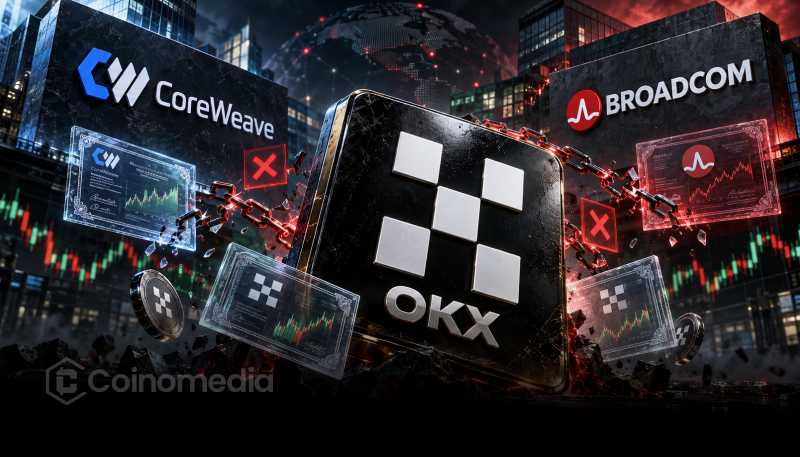
CoreWeave and Broadcom are reportedly opposing plans by OKXICE to list tokenized versions of their shares, according to The Information. OKXICE is a joint venture involving cryptocurrency exchange OKX and Intercontinental Exchange (ICE), the operator of the New York Stock Exchange. CoreWeave is an AI cloud infrastructure provider, while Broadcom is a semiconductor and infrastructure software company.
The reported dispute raises questions about issuer consent, oversight and how traditional publicly traded companies are represented in the expanding market for tokenized stocks. It also highlights tensions between companies outside the crypto industry and platforms seeking to bring stock exposure to blockchain-based financial infrastructure.
Tokenized stocks are digital instruments designed to represent or track the value of traditional company shares. They can provide access to stock-linked products through blockchain-based systems, but they do not necessarily give holders direct ownership of the underlying shares. Legal structures, shareholder rights and redemption arrangements can vary significantly between products.
The reported opposition from CoreWeave and Broadcom suggests that some public companies are seeking greater clarity about how their names, shares and investor rights are presented to customers.
Why CoreWeave and Broadcom Are Pushing Back
The dispute involving OKXICE raises broader questions about the relationship between token issuers, trading platforms and the companies whose shares are represented by digital products.
Traditional stock markets operate through established systems involving exchanges, brokers, custodians and securities regulators, with shares changing hands during set trading sessions. Tokenized equity products add blockchain technology, which can support continuous transfer of digital assets, and may involve different arrangements for trading, settlement and ownership records.
Companies may have concerns about how their securities and associated investor rights are described and delivered. However, the report from The Information, as summarized, does not establish the specific objections raised by CoreWeave or Broadcom. It also does not confirm whether either company has taken legal action or whether the proposed listings have been canceled.
The reported pushback therefore should not be interpreted as a final regulatory or legal decision. Instead, it illustrates the challenges that can arise when blockchain-based financial products involve assets issued by companies outside the crypto sector.
NEW: CoreWeave and Broadcom are pushing back on OKX and ICE’s joint venture OKXICE listing tokenized versions of their shares, per The Information. pic.twitter.com/PoWYQLdVlT — Cointelegraph (@Cointelegraph) October 16, 2026
https://x.com/Cointelegraph/status/2110966559820677250?ref_src=twsrc%5Etfw
What the OKXICE Dispute Means for Tokenized Stocks
The disagreement comes as interest in tokenized real-world assets continues to grow. Supporters of stock tokenization argue that blockchain infrastructure could improve settlement efficiency and expand access to financial markets.
At the same time, tokenized versions of publicly traded shares create questions involving compliance, investor protection and the rights attached to each product. The OKXICE dispute could focus attention on whether platforms need cooperation from the underlying companies and how securities rules apply to different token structures.
The answer may depend on the design of the specific product and the jurisdictions in which it is offered. For investors, the distinction between a token that represents actual share ownership and one that provides only price exposure is significant.
The reported opposition does not establish that all tokenized equity products require direct approval from the companies that issued the underlying shares. For now, CoreWeave and Broadcom’s pushback underscores the friction between traditional corporate interests and the expanding market for blockchain-based stock products. Further details about the companies’ objections and OKXICE’s response would clarify the status of the proposed listings.

