What AI can really tell us about safety
Key Takeaways
- •A camera or PPE detection tool alone cannot measure safety culture because it does not explain the context behind crew behavior.
- •ShipIn says continuous operational data can help identify patterns that precede rare but serious maritime incidents.
- •A joint Maritime Risk Report with NorthStandard found that more than half of human-error incidents also involved factors such as fatigue, communication breakdowns and poor watch handovers.
- •In an analysis of about 600 vessels and 1,600 reported accidents, 29% of vessels accounted for 70% of accidents.
- •Vessels with FleetVision scores below 75 had an accident rate 5.7 times higher than vessels scoring above 85.
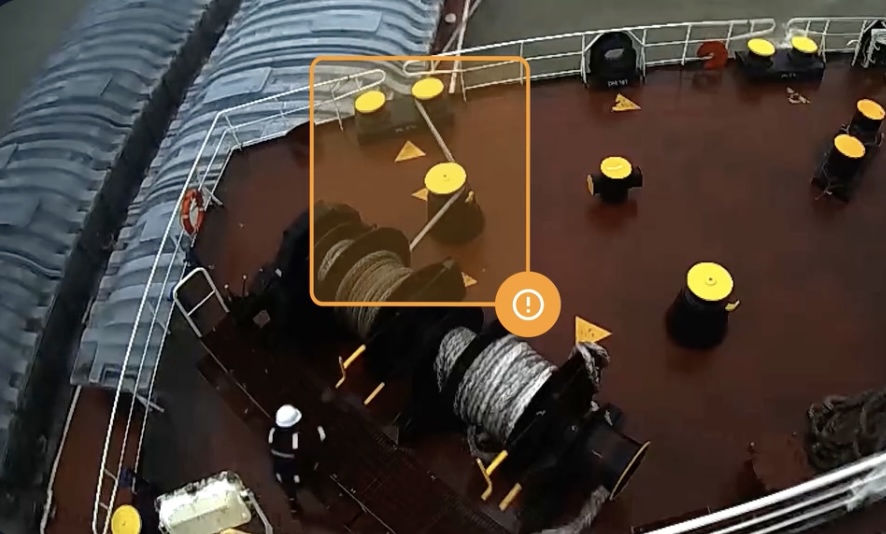
What continuous operational data can tell us about safety, risk and performance at sea, by Osher Perry, founder and CEO of ShipIn Systems.
I enjoyed reading Alex Byelyavtsev’s article questioning whether an AI camera can measure safety culture. He raises an important discussion for our industry, especially as shipping looks for ways to turn more of day-to-day operations into usable safety insight rather than relying only on periodic checks.
On one fundamental point, I agree: a camera alone cannot measure safety culture. Neither can a PPE detection algorithm. A helmet in frame does not explain competence, fatigue, commercial pressure or why someone departed from procedure.
But a camera is only a sensor.
When visual information becomes another source of operational data, combined with vessel status, policies, operating conditions, historical patterns and human input, we move from detecting an event to understanding a pattern.
We already trust leading indicators
Aviation has analysed routine flight data for decades to identify adverse trends before they become accidents. One exceedance does not define a pilot or an airline’s culture. Thousands of flights, however, reveal patterns an annual inspection cannot.
The principle is simple: measure what happens frequently to better understand what happens rarely.
In an age when AI can combine thousands of signals, observations and contextual information, why should shipping be different?
Fatigue is exactly the point
Alex uses fatigue as something a camera cannot make disappear. He is right. But that is exactly why these systems matter.
Fatigue, workload and commercial pressure lead people to take shortcuts. Most result in nothing. Some become near misses. Occasionally, the same behaviour contributes to a fatality, collision or major loss.
Those are low-frequency, high-impact events. The opportunity is understanding the high-frequency, lower-impact deviations that precede them.
Our recent joint Maritime Risk Report with NorthStandard found that more than half of incidents involving human error also involved systemic factors such as fatigue, communication breakdowns and inadequate watch handovers.
One shortcut tells us little. Thousands of observations reveal a pattern.
Does the pattern reveal risk?
Alex rightly invokes Goodhart’s law. A 98% PPE score should never mean a 98% safety culture. But that is an argument against simplistic KPIs, not against measurement.
The NorthStandard-ShipIn analysis examined approximately 600 vessels and 1,600 reported accidents. 29% of vessels accounted for 70% of accidents. More importantly, vessels with FleetVision scores below 75 experienced an accident rate 5.7 times higher than vessels scoring above 85.
That does not mean a helmet equals culture. It means recurring operational patterns tell us something meaningful about how a vessel is actually operating, and why continuous context matters when trying to distinguish a one-off lapse from a broader operational trend.
Compared with what?
Shipping today relies on inspections, audits, class assessments, vetting and claims histories. All are valuable, but most are snapshots or lagging indicators.
Can an annual inspection measure culture? Can yesterday’s claims tell us what is happening aboard a vessel today, or the likelihood of another similar claim in the future?
Continuous operational data on key safety parameters does not replace these tools. It fills the enormous space between them, giving crews and managers something closer to live operational visibility rather than waiting for the next audit cycle or incident report.
Visibility must empower the crew
If AI becomes another tool for shore management to police seafarers, we will have failed. Its purpose should be to empower the crew and enhance safety through close collaboration with the seafarers and their managers ashore.
Across hundreds of vessels operating with FleetVision for 12 months, operational safety deviations fell from approximately 230 per vessel per month to eight, a 96% reduction.
Today, FleetVision operates across approximately 1,300 vessels and 92 shipowners. ShipIn’s patented technology goes beyond individual detections, organising visual and operational data across bridge, safety, technical, security and cargo to give crew and shore teams a broader picture of how a vessel is operating.
It can also reduce administrative burden onboard, automatically generating operational logs for crew review rather than requiring repeated manual entries. These operational logs can be used for enhanced training ashore to review work activities on board and learn from the best practices.
The important outcome is not detection accuracy. It is what crew and organisations do with the information.
Safety culture is thousands of decisions made every day. Can a camera measure that? No.
But can AI identify patterns showing where risk is building and give crew information to act earlier? Increasingly, yes.
Shipping has spent decades trying to understand tomorrow’s risk through periodic snapshots and yesterday’s losses.
We believe that close collaboration with key industry stakeholders is essential to unlocking the full potential of AI in maritime operations. Our platform is not about monitoring crew, but about empowering them to identify risks and take action before a rare event escalates into a catastrophic one. AI-powered vision technology represents the future of safer ship operations, and now is the time for the industry to engage, understand its capabilities, and work together to harness its benefits in support of safety at sea.

