Container Carriers Accelerate Shift Toward Owned Tonnage, Reducing Charter Market Reliance
Key Takeaways
- •Global container carriers raised their owned capacity share from 43% in January 2020 to 63% of total operated capacity, according to Sea-Intelligence data.
- •MSC, HMM, and Wan Hai made the largest reductions in chartered tonnage, with Wan Hai now operating an entirely owned fleet.
- •MSC's aggressive newbuilding and secondhand acquisition strategy enabled it to surpass Maersk as the world's largest container line by operated capacity in 2022.
- •Hapag-Lloyd, Maersk, COSCO, and ZIM made only relatively minor adjustments to their fleet ownership balance over the same period.
- •A substantial share of recent newbuilding orders specify dual-fuel or alternative-fuel propulsion designs, linking fleet ownership decisions to upcoming IMO greenhouse gas emissions regulations.
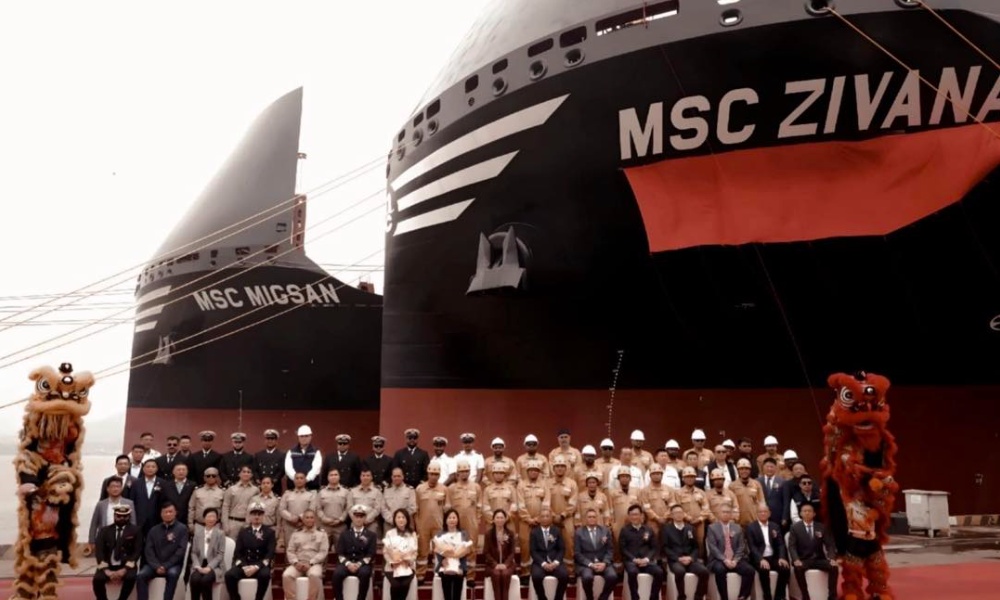
Global container shipping lines have sharply increased their reliance on owned vessels throughout the 2020s, reducing exposure to a charter market that has been repeatedly constrained by limited vessel availability.
According to data from Sea-Intelligence, a Copenhagen-based maritime analytics provider, global carriers owned 63% of their operated capacity at the latest count, a significant rise from 43% in January 2020. The figure underscores a broader strategic pivot across the industry toward greater fleet self-sufficiency.
Mediterranean Shipping Co (MSC), HMM, and Wan Hai have made the largest moves away from chartered tonnage. Wan Hai now operates an entirely owned fleet, according to Sea-Intelligence. At the other end of the spectrum, Hapag-Lloyd has made almost no change to its fleet ownership balance since the start of 2020. Maersk, COSCO, and ZIM have also made only relatively minor adjustments over the same period.
The ownership shift has unfolded during one of the most volatile and profitable eras in container shipping history. The period has spanned the pandemic-driven freight boom that began in 2020, widespread port congestion across major gateways, and the subsequent disruption of services through the Red Sea, where attacks on commercial vessels forced many carriers to reroute around the Cape of Good Hope. During the peak of the 2021–2022 freight surge, time-charter rates for container ships reached historic highs as available tonnage dwindled, sharply widening the cost gap between owners and charter-dependent operators.
Sea-Intelligence argued that vessel ownership has been a decisive advantage for carriers seeking to expand market share during a period that delivered record-breaking profits across the sector. When charter markets tighten, operators dependent on third-party tonnage face higher hire costs and fewer opportunities to secure ships. Carriers with owned fleets, by contrast, retain greater control over vessel deployment, capacity additions, and network expansion.
MSC's aggressive programme of secondhand acquisitions and newbuilding orders has been central to its rise to become the world's largest container line, surpassing Maersk in operated capacity in 2022. The Geneva-based carrier's strategy of combining large-scale newbuilding orders with an extensive secondhand purchasing campaign has allowed it to scale rapidly while competitors have taken more measured approaches.
The broader industry trend suggests that many carriers now view vessel ownership not simply as an asset strategy, but as a means of protecting operational flexibility in markets where available charter tonnage can disappear quickly. A substantial share of newbuilding orders placed during this cycle specify dual-fuel or alternative-fuel propulsion, including methanol and LNG-ready designs, tying fleet ownership decisions to emerging emissions regulations under IMO greenhouse gas targets. With the global order book for new container ships at historically elevated levels as of 2026, the balance between owned and chartered capacity is likely to remain a defining factor in competitive positioning across the major trade lanes.

