House Stock Trading Ban Debate Reopens Crypto Conflict in Congress
Key Takeaways
- •The Restore Trust in Congress Act, introduced in the House in September 2025 with over 80 co-sponsors, would bar lawmakers, their spouses, and dependent children from owning or purchasing individual stocks.
- •Lawmakers remain divided on whether the proposed trading ban should extend to cryptocurrencies, with opponents arguing digital assets serve as a legitimate inflation hedge rather than a conflict of interest.
- •Approximately ten sitting members of Congress are estimated to hold between $750,000 and $2 million in crypto assets, while the crypto sector contributed at least $119 million in political donations during the 2024 election cycle.
- •A 2026 National Bureau of Economic Research working paper found that congressional investment portfolios performed similarly to or worse than the broader market from 2012 through 2023, complicating the empirical case for a total trading ban.
- •The 2012 STOCK Act imposed a maximum late-reporting penalty of only $200 and has never led to a prosecution for insider trading, leaving conflict-of-interest concerns largely unresolved.
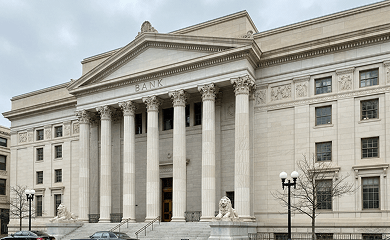
The U.S. House of Representatives has renewed efforts to restrict stock trading by lawmakers, but the debate has increasingly turned toward cryptocurrency and whether digital assets should be covered by the same ethics rules as individual stocks.
According to reporting cited from the Associated Press, lawmakers remain divided over whether a proposed prohibition should extend to digital currencies. The issue is politically sensitive because the crypto sector became a major source of campaign contributions in the 2024 election cycle, while some sitting members of Congress also hold crypto assets.
The central question is no longer only whether stricter ethics rules are appropriate for elected officials. It is also where the limits of those rules should be drawn. Politico reported that a bipartisan push to require lawmakers to use blind trusts ran into a major point of disagreement: whether Bitcoin and other cryptocurrencies should be treated like ordinary shares.
Rep. Abigail Spanberger of Virginia has argued that cryptocurrencies should be included because political leaders can affect their prices through legislation. Rep. Chip Roy of Texas has taken the opposite view, saying cryptocurrencies are “a little different” and that lawmakers should still be permitted to use digital currencies as a hedge against inflation.
The debate also follows earlier ethics proposals reported by Cryptopolitan, including a proposal by Rep. Bryan Steil aimed at tightening congressional trading rules.
Why digital assets are the sticking point
Cryptocurrency’s expanding role in Washington helps explain why the question has become divisive. According to the Campaign Legal Center, ten sitting members of Congress are estimated to hold between $750,000 and $2 million in crypto assets. At the same time, crypto emerged as one of the largest sources of political donations, contributing about $119 million during the 2024 elections, while Politico has reported that the figure exceeded $160 million.
The conflict is especially difficult to resolve because crypto regulation is still being shaped across multiple policy areas, including market structure, stablecoins, taxation, sanctions compliance, and oversight authority. That gives lawmakers repeated opportunities to vote on rules that may affect digital asset companies, token markets, and investor obligations.
Critics say lawmakers should not be allowed to trade assets they are responsible for regulating. Sen. Jon Ossoff has said members of Congress should not buy or sell cryptocurrencies while they are writing crypto legislation.
Sen. Cynthia Lummis, a prominent supporter of cryptocurrency, has taken a different position. She has said she voluntarily placed her own crypto investments in blind trusts, but does not believe such a requirement should be mandatory for all lawmakers. In her view, a blanket obligation could place additional pressure on politicians with fewer financial assets.
A disclosure law that failed to end criticism
Congress previously tried to address concerns over lawmakers’ trading activity through the STOCK Act, enacted in 2012. The law prohibited insider trading by members of Congress and required them to report transactions within 45 days. However, it has done little to quiet criticism of congressional trading practices.
The maximum penalty under the law for failing to report a transaction on time is only $200, and no member of Congress has been prosecuted for insider trading under the statute. Legal experts have also noted that the Constitution’s Speech or Debate Clause creates an additional barrier to enforcing the law.
Academic research suggests the STOCK Act changed some trading behavior but did not eliminate the underlying conflict-of-interest concerns. A 2024 study published in the International Review of Economics & Finance, which examined more than 181,000 trades by members of Congress between 2004 and 2022, found that lawmakers’ stock purchases declined after the STOCK Act took effect.
Even so, trading continued at elevated levels during congressional sessions and periods of geopolitical turmoil, keeping attention focused on whether disclosure requirements are enough.
What the new bill would change
According to the Harvard Journal on Legislation, the latest reform effort centers on the Restore Trust in Congress Act, which was introduced in the House of Representatives in September 2025 and has more than 80 co-sponsors. The bill seeks to prevent lawmakers, their spouses, and dependent children from owning or buying individual stocks.
The unresolved issue is whether cryptocurrencies would be included in the ban. How the bill defines covered assets will determine whether digital tokens are treated as personal investments subject to restriction, as a separate asset class, or as holdings that can be managed through disclosure and trust arrangements.
The measure drew renewed attention after the Harvard Journal on Legislation reported that more than 50 lawmakers had made over 2,000 financial transactions in companies affected by Donald Trump’s reciprocal tariff announcement within 55 days of the policy’s implementation in February 2025.
At the same time, newer research complicates the case for a total ban. A 2026 National Bureau of Economic Research working paper by Haotian Chen and Bruce Sacerdote found that congressional investment portfolios performed similarly to, or less successfully than, the broader market from 2012 through 2023.
That finding has shifted the debate rather than ended it. The issue is increasingly less about whether lawmakers outperform the market and more about whether they should be allowed to hold investments that could be affected by the laws they pass. Supporters of stricter rules, including possible restrictions on cryptocurrencies, argue that protecting public trust is more important than proving illegal profit-taking.

