Congress briefed on Chinese intelligence links to Jensen Huang's affair partner amid widening Nvidia scandal
Key Takeaways
- •FBI, CIA, and ODNI officials briefed House and Senate intelligence committee staff on Alice Huang's and Kang Wei's links to China's Ministry of State Security, with Kang Wei described as the more significant MSS asset.
- •Silicon Valley divorce lawyers report a surge in CEOs and high-net-worth clients seeking prenuptial agreements and nondisclosure agreements for partners following the Jensen Huang affair revelations.
- •Fed Chair Kevin Warsh is widely expected to raise U.S. interest rates by 0.5% in December, fueling recession concerns as inflation at 3.7% is driven by oil and chip prices the Fed cannot control.
- •Investors dumped tech stocks as the Nasdaq Composite fell 1.48% amid doubts about the AI trade and a report that the Trump administration is proposing new tariffs on China, Europe, and 14 other countries.
- •Deutsche Bank says the S&P 500 is far from a bear market and forecasts the index will reach 9,000 by the end of next year.
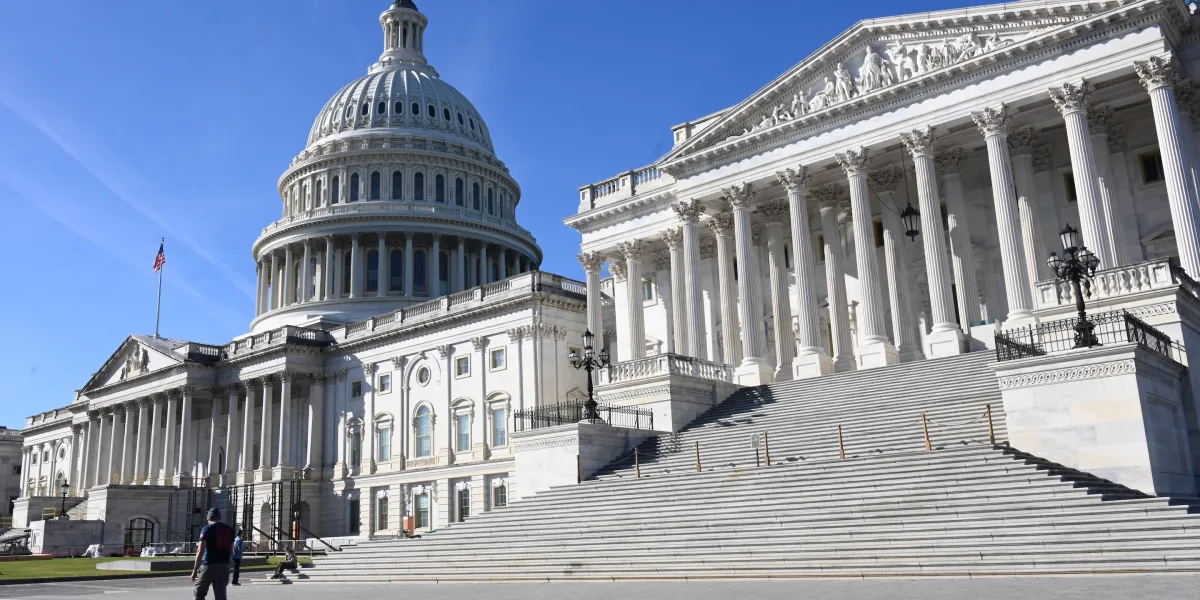
Congress briefed on links between Jensen Huang's affair partner and China's Ministry of State Security
Officials from the FBI, the CIA, and the Office of the Director of National Intelligence briefed staff members of the House and Senate intelligence committees on some of what the agencies know about Alice Huang, the company Megaspeed, and their links to China's Ministry of State Security (MSS), according to the New York Times.
"The intelligence officials told the group there was no evidence she was directed by that agency to initiate an affair with Mr. Huang, though they did not dispute that she passed intelligence back to the agency after the affair began," the report stated.
The briefers also flagged a second figure as more significant. "The briefers told the congressional staffers that the man who was often introduced as Ms. Huang's husband, Kang Wei, was a more significant figure. He had been, at least at times, an MSS [China Ministry of State Security] asset and had more significant contacts with the Chinese spy agency, the briefers said."
Staff-level sessions of this kind are a routine vehicle for congressional oversight of the intelligence community: the House and Senate intelligence committees hold jurisdiction over the FBI, the CIA, and the Office of the Director of National Intelligence — the three agencies that took part in the briefing — and use classified staff briefings to review sensitive material on behalf of committee members.
Nvidia scandal sends Silicon Valley CEOs to divorce lawyers
Silicon Valley divorce lawyers are seeing a surge in outreach from CEOs, founders, and high-net-worth employees who cite the Nvidia scandal as the reason for their calls, according to Fortune. One lawyer who has been involved in the high-profile divorces of some of the tech industry's most famous CEOs described the revelation of Jensen Huang's affairs as a "precautionary tale for other CEOs."
Jensen and Lori Huang have been married for 41 years and reportedly do not have a prenuptial agreement. Jensen Huang is one of the richest people in the world, with a net worth of roughly $137 billion; if Lori Huang left, a huge chunk of that net worth would potentially transfer to her.
The stakes carry particular weight in California: the state is a community-property jurisdiction, meaning assets acquired during a marriage are generally split equally in a divorce unless a valid prenuptial agreement provides otherwise.
In addition to pursuing prenuptial agreements, many callers are interested in drafting nondisclosure agreements (NDAs) for their significant others — a new trend, according to Monica Mazzei, a partner in Buchalter's San Francisco family law office.
More on the Nvidia fallout
- Wall Street analysts and investors weighed in on at what price Anthropic stock is a buy (Morgan Chittum, Fortune).
- Jensen Huang said he still does not believe in succession planning (FT).
- "Anflopic" bodes badly for OpenAI's IPO prospects (FT).
- Worries about AI debt grow as Nvidia's rebound masks a Big Tech spending squeeze (CNBC).
More from Fortune
- Meta and Amazon discuss ending Muse shopping bot blockade, as ads and search emerge as key issues (Sebastian Herrera)
- Europe has spent $15.9 billion trying to win the quantum race. Is it enough? (Sam Birchall)
- Nvidia degrades U.S. national security as the Chinese military snags its chips (Jeffrey Sonnenfeld, Stephen Henriques, and Steven Tian)
- Backed by Samsung, SK Hynix, and the Korean government, Rebellions CEO Sunghyun Park wants to prove sovereign AI pays off (Nicholas Gordon)
- Best Buy's new CEO inherits its fastest sales growth in five years and a 49% stock rally (Fernanda Tronco)
- Walmart's shopper base is shifting: high earners lead its gains as low-income shoppers turn to Amazon (Lena Borrelli)
- Ukraine's biggest steelmaker has battled years of Russian bombardment — now it faces a new threat (Kamal Ahmed)
- Going home for Thanksgiving? For a record 25.2 million young adults, that just means walking downstairs (Catherina Gioino)
- After $26 billion in gifts, MacKenzie Scott is still worth $27 billion — and just gave Atlanta students $8 million more (Bilin Lin)
Wall Street recession fears grow despite the AI boom
Fed chairman Kevin Warsh will almost certainly add another 0.5% to U.S. interest rates in December, according to the CME FedWatch futures index, and Wall Street is anxious that the move will cause a recession.
"The Fed will put the U.S. and [the] world in recession if it continues to raise rates in a failed attempt to drive inflation to 2%," Bill Ackman said recently.
He is not alone. "The economy is super strong right now, but the Fed is about to kill it," Jamie Cox of Harris Financial Group ($1.5 billion AUM) told Fortune.
The problem is that inflation — which, at 3.7%, is running well above the Fed's 2% target — is being driven by the price of oil (which the Fed can do nothing about) and the price of computer chips and tech equipment (which the Fed also cannot influence). If the Fed raises interest rates, it may derail corners of the economy that are sensitive to higher borrowing costs while doing nothing about the roaring trade in oil. AI is increasingly dependent on debt funding, and higher rates could choke off that liquidity.
The bind maps onto the Fed's statutory dual mandate, which charges it with delivering both price stability and maximum employment — a balance that becomes harder to strike when inflation is driven by prices the central bank cannot directly control.
"Tech drove 44% of GDP growth [in the last 12 months], leaving growth vulnerable as capex slows," according to Wells Fargo's Ohsung Kwon. "The fear is hikes into a slowdown, and an overly hawkish Fed could potentially drive recession fears."
The situation with Iran is out of the Fed's control. But as Fortune's Ellie Pringle noted yesterday, if Warsh continues to "look through" oil-driven inflation, bond investors will start questioning the Fed's credibility.
"The path of the war is crucial for the Fed's path," Kwon said in a note.
All of which points to the December meeting of the Federal Open Market Committee, the Fed's rate-setting body, as the next checkpoint for both the rate path and Wall Street's recession debate.
The return of "risk-off": investors flee tech stocks
Investors have continued to dump tech stocks over the past 24 hours on persistent worries about the stability of the AI trade and a report that the Trump administration is proposing a new set of trade tariffs on China, Europe, and 14 other countries. S&P 500 futures moved lower ahead of the open in New York.
"The risk-off tone has returned over the last 24 hours," Jim Reid and his team at Deutsche Bank said this morning.
At UBS, Paul Donovan said: "The concern is the impact on U.S. inflation, and thus U.S. interest rates. Reports suggest U.S. importers will face only modest tariffs on goods from several countries. There is less certainty about goods from China, but U.S. importers became adept at avoiding those tariffs. A 10% tariff on a finished good translates into around a 4% consumer price increase, as tariffs occur early in supply chains."
The tech sector saw the worst losses. The tech-heavy Nasdaq Composite fell 1.48% yesterday, far more than the broader market. The equal-weight S&P 500 — a notional index that values each stock equally — rose 0.53%, suggesting buyers stepped into a range of non-tech stocks.
S&P 500 futures were down again this morning, falling 1.37% after the index lost 0.5% yesterday, while Nasdaq 100 futures slipped even farther, down 2.39%.
In Europe, the Stoxx 600 was up 0.25% in early trading, and the U.K.'s FTSE 100 rose 0.42% before midday. In Asia, South Korea's KOSPI was down 6.16%, Japan's Nikkei 225 fell 2.78%, India's Nifty 50 was up 1.85%, and China's CSI 300 fell 1.65%. Brent crude was $91 per barrel. Bitcoin fell to $59,011.
Deutsche Bank: the S&P 500 is far from a bear market
The S&P 500 may have flirted with a downward "correction" around the Nvidia drama, but it is nowhere near an official bear market, defined as a decline of 20% from the peak. In fact, a bear market is unlikely, according to Deutsche Bank's Henry Allen. The bank's official forecast is for the S&P 500 to hit 9,000 by the end of next year.
"It's worth bearing in mind that the outright bear markets of the last 50 years (S&P 500 down 20% or more) have previously occurred when there was at least one of (1) a recession, (2) widespread expectations of a recession, or (3) after a Fed tightening cycle with multiple hikes."
For reference, markets will officially be in a tightening cycle if the Fed raises interest rates in December — which it is widely expected to do.
Chart of the day: data centers poach residential construction workers
"Since Q4 2021, nonresidential construction employment has outgrown residential by 13.2% in the typical state among the 10 with the highest data center spending, versus 3.5% elsewhere," according to Matthew Martin of Oxford Economics. "If these 10 states had followed the rest of the country, up to 45,000 more workers would be in residential construction — about 24,000 of them in specialty trades."
Number of the day: ~$300 per kilogram
The price at which lifting an AI data center into orbit would fall below the cost of building one on Earth, if Elon Musk's SpaceX can achieve routine and rapid rocket reuse, according to an estimate by ARK Invest's Tasha Keeney. The price is currently $1,000 per kilogram.
For reference, SpaceX's Falcon 9 became the first orbital-class rocket to recover a booster in December 2015 and the first to refly one in March 2017 — the reuse milestones on which estimates like Keeney's rest.
Elsewhere on the front pages
- Donald Trump shelves plans for business deals with Russia — FT
- Ukraine tells Putin to "stop complaining" over oil refinery attacks as Russia promises retaliation — CNBC
- AI employees sound alarm: models too powerful to ever release — Axios
- Worse than the dot-com crash: what an AI bust could mean for the economy — WSJ
- China dismisses US tariff prospect as "political maneuvering" — Bloomberg
- Trump wishes Robert Pattinson "luck" as new James Bond — after reading old tweet to Post trashing star's ex Kristen Stewart out loud — NY Post
One more thing: from near-bankruptcy to a $14 billion empire
Fanatics has become a one-stop shop for sports fans looking to rep their favorite teams and athletes, and now generates roughly $14 billion in annual revenue. For cofounder and CEO Michael Rubin, however, the road to building that empire nearly ended before he turned 20.
When Rubin was just 13, he started a business selling ski equipment out of his parents' basement in Pennsylvania. A year later, he opened his own storefront. He was making money quickly — he even bought a Porsche before he could legally drive.
But around 1988, an unusually warm winter meant his customers stopped coming. "It didn't snow that year," Rubin recalled recently. "End of the year, I had $200,000 of bills, $80,000 of inventory, and I was sitting right in front of bankruptcy."
To dig himself out, he negotiated his debts down to $35,000, borrowed money from neighbors, and used the proceeds from a new venture in the closeout business to repay his loans. Five years later, at 21, Rubin was generating $150 million in sales buying and selling closeout merchandise.
"I went from death in its eyes, bankrupt, thought I was a complete failure, giving up on entrepreneurship, to five years later, doing $150 million, making $10 to $15 million a year as a kid," Rubin said. "And so to me, each disaster, if you learn from it, leads to your next success."

