Congo Receives First Batch of Over 16,000 Ervebo Ebola Vaccine Doses Amid Fastest Outbreak on Record
Key Takeaways
- •Congo received 16,250 Ervebo vaccine doses in Kinshasa, the first part of a 70,000-dose allocation from the WHO and partners, with additional shipments expected early next week.
- •The outbreak is caused by the rare Bundibugyo virus, first identified in Uganda in 2007, for which there is currently no approved vaccine or treatment.
- •Ervebo, developed by Merck and cleared by U.S. and European regulators in 2019, targets the Zaire species of Ebola, and the extent of its cross-protection against Bundibugyo remains an open question.
- •The outbreak has recorded 2,516 deaths out of 5,290 confirmed cases and is on track to surpass the 2014-2016 West Africa epidemic, which killed more than 11,000 people.
- •Containment efforts are hampered by armed conflict, attacks on medical personnel and facilities, displaced and mobile populations, and a lack of critical infrastructure.
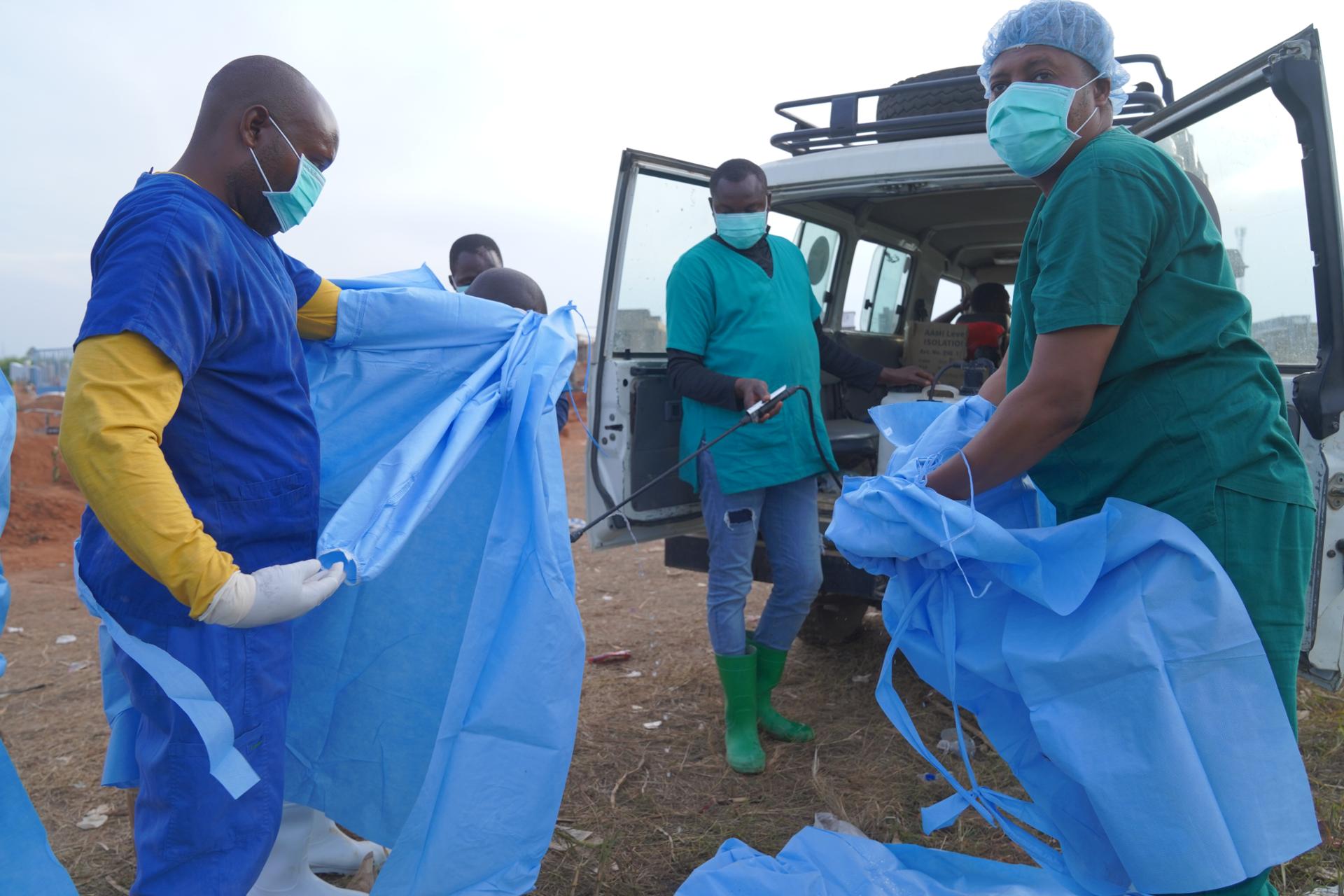
A health worker sprays a colleague with disinfectant after taking part in a burial service for 3-year-old Mave Mercienne, who died of Ebola, in Bunia, Ituri province, eastern Congo, Aug. 18. AP-Yonhap
BUNIA, Congo — Congo has taken delivery of more than 16,000 doses of the Ervebo vaccine as the country confronts the fastest Ebola outbreak in history, the country's health minister said.
The 16,250 doses landed late Friday at N'djili International Airport in the capital, Kinshasa. The shipment is part of 70,000 doses expected from the World Health Organization (WHO) and partners, an allocation announced on Thursday, with additional doses due to arrive early next week. WHO and partner agencies have maintained a global emergency stockpile of the vaccine since 2021, established to speed the delivery of doses when outbreaks erupt.
The current outbreak in Congo is caused by the rare Bundibugyo virus — first identified in Uganda's Bundibugyo district in 2007 — for which there is currently no approved treatment or vaccine. The virus can spread easily and go undetected because some of its symptoms are similar to those of other illnesses, such as malaria. Ervebo is licensed to treat Ebola and has been effective in past outbreaks, and the WHO said it may provide some protection against the Bundibugyo virus. The shot, developed by Merck and cleared by U.S. and European regulators in 2019, targets the Zaire species that drove the 2014-2016 West Africa epidemic, and how much cross-protection it offers against Bundibugyo is one of the questions hanging over the rollout.
As of Friday, the outbreak had recorded 2,516 deaths out of 5,290 confirmed cases. It is spreading at an unprecedented rate and is on track to surpass the deadliest outbreak on record, which killed more than 11,000 people across West Africa between 2014 and 2016. Data from the Africa Centre for Disease Control shows that transmission has not yet peaked and could reach three times its known rate. In past responses, including Congo's 2018-2020 epidemic in the east, Ervebo was administered through "ring vaccination," which prioritizes contacts of confirmed cases and frontline health workers.
Efforts to contain the outbreak have been hampered by armed conflict between the government and rebel groups, which control key cities in the hot spot; attacks on medical personnel and facilities; an itinerant labor population and people displaced by the armed conflict; and a lack of critical infrastructure. The challenges compound the biology of the disease itself: Ebola spreads through direct contact with the bodily fluids of sick or deceased people, which has long made funerals — like the one pictured above — high-risk settings, with disinfection a routine precaution for burial teams.
Source: The Korea Times
