Compound Foundation accused of diverting $52 million DAO reserves into COMP tokens
Key Takeaways
- •The disputed reserves were intended for protocol operations, remained DAO-owned, and were not authorized for speculative trading or Foundation expenses.
- •Ugurmersin alleges the COMP was returned to the treasury Safe shortly before voting ended on Proposals 580 and 582.
- •The accusation concerns control of DAO funds through the Treasury Management Committee and approval of a $52 million V4 program.
- •Compound Finance is listed with approximately $1.6 billion in total value locked, compared with nearly $18 billion for Aave V3.
- •The Foundation and other invited parties had not directly addressed the allegation when the article was published.
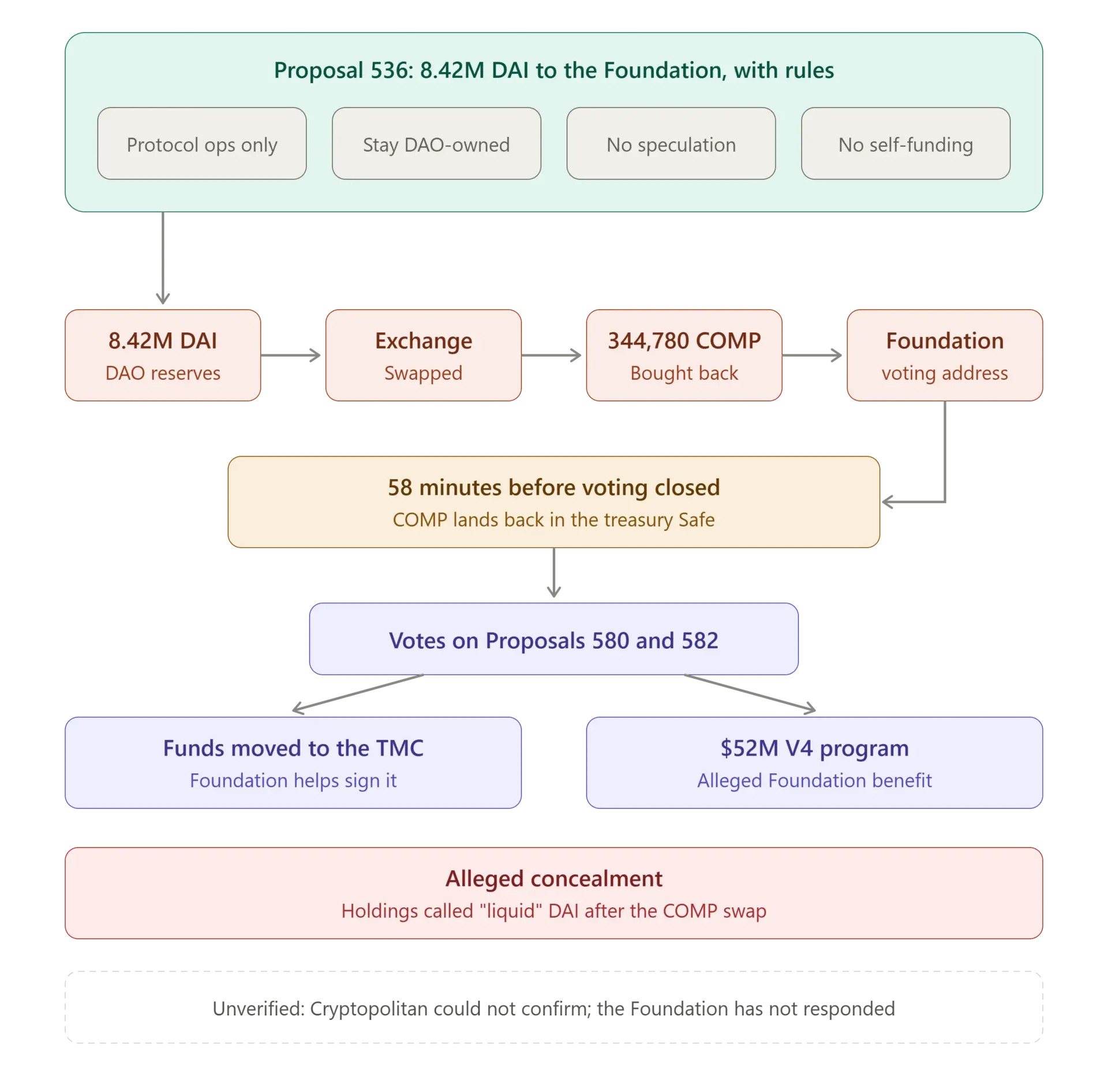
The Compound Foundation is facing a misappropriation accusation from a delegate who has publicly alleged that the Foundation moved to seize control of the DAO's $52 million spending program and treasury by quietly converting 8.42 million DAI from reserves into COMP tokens. According to the post on the Compound governance forum, the red flags centered on the secrecy surrounding the moves and the misrepresentation of holdings as “liquid” DAI even though the funds had already been swapped into COMP.
The accusation against Compound
The governance dispute traces back to what delegate Ugurmersin describes as the misuse of roughly 8.42 million DAI of DAO reserves handed to the Foundation under the strict stipulations of Proposal 536. Under those terms:
- The money was to back protocol operations only
- It was meant to stay entirely DAO-owned
- It was restricted from any speculative trading
- It should not be used to bankroll the Foundation's own costs
Ugurmersin cites blockchain records as evidence that the funds were used for unauthorized purposes. The 8.42 million DAI were allegedly swapped for 344,780 COMP on an exchange, returned, and then delegated to the Foundation's own voting address by the signers of the treasury multisig, the kind of wallet that requires multiple approved signers to authorize each transaction. COMP is Compound's governance token, and delegated COMP determines the voting weight an address carries on proposals. According to Ugurmersin, the COMP tokens were returned to the Safe 58 minutes before voting closed on Proposals 580 and 582.
The delegate alleges that the Foundation used those tokens to sway the governance process, shifting nearly all DAO funds under the Treasury Management Committee (TMC), a body it helps sign for, and pushing through a $52 million V4 program that benefits the itself. The Compound Growth Working Group, security firm Certora, and auditor ChainSecurity were all named as supporters of the moves.
Cryptopolitan could not independently verify the transaction claims, and the Foundation has not responded to the accusation. The delegate invited the Foundation, the working group's delegates PGov and AranaDigital, ChainSecurity, and Certora to reply. The dispute also lands on a broader question in decentralized finance: how DAO treasuries held in multisigs are monitored between formal proposals, when oversight depends on delegates reading on-chain movements.
Leading lending protocols face governance drama
The Compound accusation stoked comparisons with the Aave governance fight that began in December 2025, after delegates flagged how a proposed CoWSwap integration would redirect swap fees away from the Aave DAO treasury. The “Aave Will Win” proposal that was meant to end the dispute did not close cleanly either. Aave Chain Initiative founder Marc Zeller alleged that addresses linked to Aave Labs had swayed the outcome after the proposal cleared its first governance hurdle with 52.58% approval, as Crypt reported at the time.
Where Compound stands as the dispute opens
Compound is a smaller target than Aave and one of the longest-running lending protocols in decentralized finance. DefiLlama lists Compound Finance with about $1.6 billion in total value locked and a $230 million market capitalization, with COMP trading near $23 and an on-chain treasury of roughly $8.26 million. Aave V3, by comparison, holds close to $18 billion.
The parties named in the post have not directly addressed the misappropriation claim, but the working group has recently defended how Compound runs its votes. In a September 24 forum reply on a separate security-provider renewal, AranaDigital argued that Snapshot votes are a legitimate way for delegates to decide matters that require no on-chain transaction, calling the practice an operational efficiency rather than a lesser class of vote. Whether any of the invited parties respond on the forum, or put forward on-chain rebuttals, is the immediate development to watch in the dispute.

