Trump DOJ's Third Comey Case Faces Make-or-Break Courtroom Test
Key Takeaways
- •The Justice Department charged James Comey through a 'criminal information' filed without grand jury approval, a maneuver his lawyers argue is invalid because the Fifth Amendment generally requires serious federal crimes to be charged by indictment.
- •The department says it bypassed the grand jury to prevent the 10-year statute of limitations from expiring before it could secure a formal indictment.
- •The new allegation relates to a 2016 New York Times report on a secret Foreign Intelligence Surveillance Court order compelling Yahoo to scan emails, a leak that was investigated by John Durham and D.C. prosecutors and previously closed without charges.
- •U.S. District Judge Trevor McFadden, a Trump appointee in Washington, D.C., is scheduled to weigh Comey's dismissal motion on Friday, and a dismissal would end the prosecution before any trial.
- •This is the department's third case against Comey, following a Virginia prosecution thrown out because the prosecutor was appointed illegally and a pending indictment over an Instagram post displaying '86 47,' which Comey has also moved to dismiss.
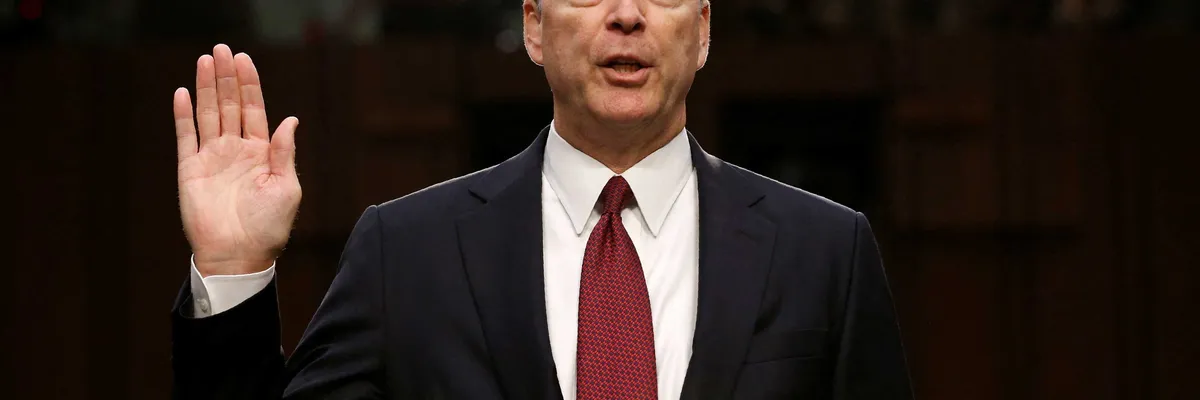
Lawyers for former FBI Director James Comey will ask a federal judge on Friday to halt the U.S. Justice Department's third attempt to bring criminal charges against their client, setting up a decisive early test for the unusual prosecution.
Comey, a vocal critic of Donald Trump and a frequent target of Republican ire since the president fired him in the early days of his first term, maintains his innocence. Documents unsealed on Monday indicate that the Trump administration this month bypassed a grand jury to file what is known as a “criminal information” — a charging document submitted without grand jury approval — over an alleged news media leak from ten years ago that had already been investigated. Under the Fifth Amendment, serious federal crimes generally must be charged through a grand jury indictment rather than by a prosecutor's filing alone.
The Justice Department says the maneuver was intended to prevent the 10-year statute of limitations — the legal deadline for bringing charges — from expiring before it could secure a grand jury indictment. Comey's counsel argues the case is legally invalid and wants it dismissed, an outcome that would end the prosecution before any trial. U.S. District Judge Trevor McFadden in Washington, D.C., a Trump appointee, is due to consider the matter on Friday.
The decision to prosecute Comey is one of several politically charged actions by the department ahead of next week's midterm elections.
President Barack Obama put Comey in charge of the FBI in 2013, and he stayed on when Trump came to power. In that capacity, he ran the probe into whether Trump's campaign conspired with Russia to put the Republican ahead of Hillary Clinton in 2016. The two men have been at odds ever since. In a book, Comey likened Trump to a mafia don “untethered to truth,” while the president has called him a traitor and called for him to be jailed.
The case now before McFadden is the department's third attempt. In Virginia, a federal court threw out the first case against Comey on the grounds that the prosecutor was appointed illegally; those charges stemmed from allegations that he lied to Congress in 2020. Another indictment is pending, alleging he threatened Trump with an Instagram post showing seashells arranged in the numbers “86 47” — 86 being slang for getting rid of something and 47 the number of the current president. Comey has moved to have that case dismissed as well.
The new allegation concerns a New York Times report in October 2016 about a secret order from the Foreign Intelligence Surveillance Court compelling Yahoo to scan emails for possible links to a foreign terrorist group. Two officials told the paper about it anonymously.
John Durham and other federal authorities began looking into the matter in early 2017. According to a recent filing by Comey's side, a December 2018 classified memo from Durham — who later turned his attention to the FBI's handling of the Russia inquiry — recommended against bringing criminal charges against anyone. The U.S. Attorney's Office for the District of Columbia tried again in 2019 under the code name Tropic Vortex, but closed the file without charges in February 2020.
Source: Alternet

