Coldcard Postmortem Details How a Seed-Generation Flaw Survived 15 Reviews
Key Takeaways
- •Coldcard firmware used MicroPython's Yasmarang software pseudo-random generator instead of the intended hardware RNG from March 2021 through July 2026, producing seeds with roughly 40 to 72 bits of effective randomness rather than the targeted 128 bits.
- •The flaw escaped at least 15 review efforts between 2021 and 2026, including two paid audits and an AI-assisted firmware review, because checks confirmed the hardware RNG code existed but never verified that seed generation actually used it.
- •Loss estimates remain uncertain: Coinkite received about 300 loss-related support tickets linked to 242 accounts, roughly 0.21% of its user base, while Galaxy Research attributed more than 8,600 addresses to the theft, and the company said the two figures cannot be combined.
- •Coinkite described AI-assisted discovery as a plausible hypothesis rather than an attribution, noting the first thefts began two days after the Kimi K3 model's full weights were released, and the Bitcoin Red Team later used that model in a 108-hour sweep across 501 Bitcoin projects.
- •Seed generation has been rebuilt with mandatory user entropy, multiple hardware sources, and build-time and boot-time checks, with Keylabs concluding the defect is fully closed in current firmware, but users whose seeds were created on affected devices must migrate because updates cannot repair them.
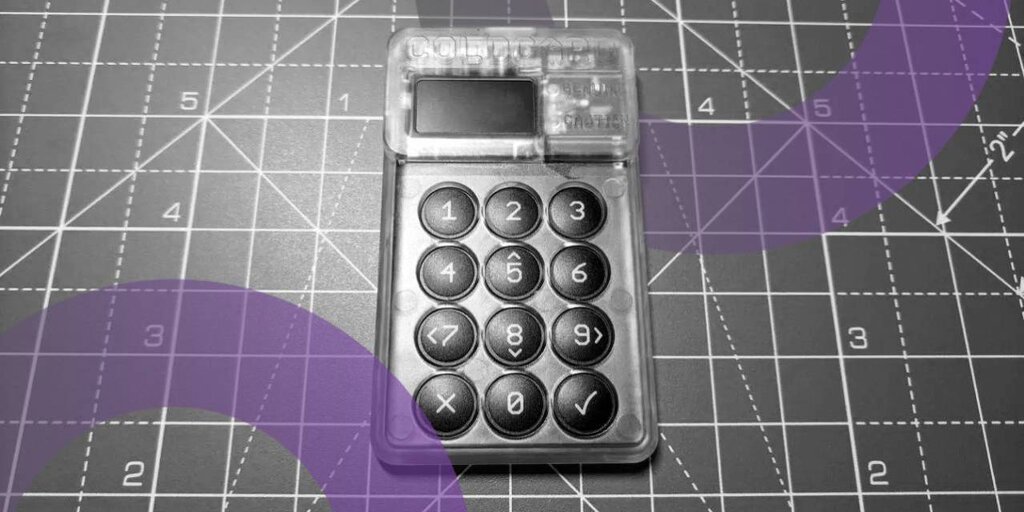
Coinkite’s postmortem has confirmed that Coldcard firmware generated wallet seeds with a weak software random-number generator from March 2021 through July 2026. The flaw left the seeds sufficiently predictable for attackers to regenerate private keys offline and steal funds without accessing the affected devices. Because a wallet seed is the root material from which private keys are derived, the weakness undermined the core protection hardware wallets are built to provide—keeping key material out of attackers’ reach even when the devices themselves are never touched.
The failure went undetected through at least 15 security reviews, including two paid third-party audits and an AI-assisted firmware review. According to Coinkite, the reviews verified that code for the device’s hardware random-number generator existed, but did not confirm that seed generation actually used it.
Four months after attackers drained Bitcoin from compromised Coldcard hardware wallets, Coinkite published a detailed account of the incident. The report, released Monday and modeled on an NTSB accident report, examines how a single configuration error remained undiscovered for more than five years before it was exploited.
When the vulnerability surfaced in July, investigators found that Coldcard firmware had been using MicroPython’s Yasmarang, a software pseudo-random number generator, instead of the device’s intended hardware random-number generator. The resulting wallet seeds contained roughly 40 to 72 bits of effective randomness, rather than the targeted 128 bits. That weakness made it possible for attackers to recreate private keys offline and move funds.
Coinkite’s postmortem says the flaw escaped at least 15 independent review efforts conducted between 2021 and 2026. Those efforts included two paid audits, physical-security work by Ledger Donjon and an AI-assisted firmware review that generated 85 findings, but none identified the seed-generation problem.
The report said each review “answered a nearby question rather than the critical one.” Release checks established that the hardware-RNG code was present, but not that seed generation reached it. Statistical tests also could not distinguish the defective generator’s output from output produced by a properly seeded generator. In addition, a safeguard intended to reject the faulty configuration—a guard in the underlying libNgU code—did not work.
The scale of the losses remains uncertain. Coinkite said it had received about 300 loss-related support tickets linked to 242 accounts, representing roughly 0.21% of its estimated user base. Galaxy Research, meanwhile, attributed more than 8,600 addresses to the theft. Coinkite cautioned that the figures measure different things and cannot be combined to produce a victim total.
The postmortem also discusses the possible role of artificial intelligence. Coinkite said the first thefts began two days after the full weights of the Kimi K3 model were released, describing AI-assisted discovery as “a plausible hypothesis, not an attribution.” After the vulnerability became public, the Bitcoin Red Team used Kimi K3 in a 108-hour, multi-model sweep that identified nearly 8,000 candidate findings across 501 Bitcoin projects.
Coinkite has since rebuilt its seed-generation process with mandatory user entropy, multiple hardware sources, and build-time and boot-time checks. An independent review by Keylabs concluded that the defect is “fully closed” in current standard firmware.
However, software updates cannot repair seeds that were already created on affected devices. Users with those seeds must migrate to new ones, and that migration—not the firmware fix—is what determines whether an existing holding remains exposed. Coinkite ended its report by asking whoever holds the stolen Bitcoin to return it. Whether that appeal is answered, and how many affected owners complete the migration, remain the open questions following the report.
“Some victims lost life-changing amounts, and returning the funds is the only action that can directly reduce that harm,” the company said.

