Denver Bitcoin Destroys ColdCard Q Over Firmware Vulnerability
Key Takeaways
- •The ColdCard Q firmware generated seed phrases using only 32 bytes of entropy, falling short of the standard needed to make brute-force reconstruction computationally infeasible.
- •Users who had enabled a passphrase were largely shielded from the vulnerability, while those relying solely on the default 24-word seed were left exposed.
- •Coinkite released patched firmware and instructed all affected users to create entirely new seeds, emphasizing that the hardware itself was not defective.
- •Adam, known as @denverbitcoin on X, publicly destroyed his ColdCard Q on August 2, 2026, as a gesture of solidarity with users he said were effectively robbed by the firmware flaw.
- •The incident has prompted debate over whether hardware wallet manufacturers should enforce stronger default security configurations rather than relying on users to opt into passphrase protection.
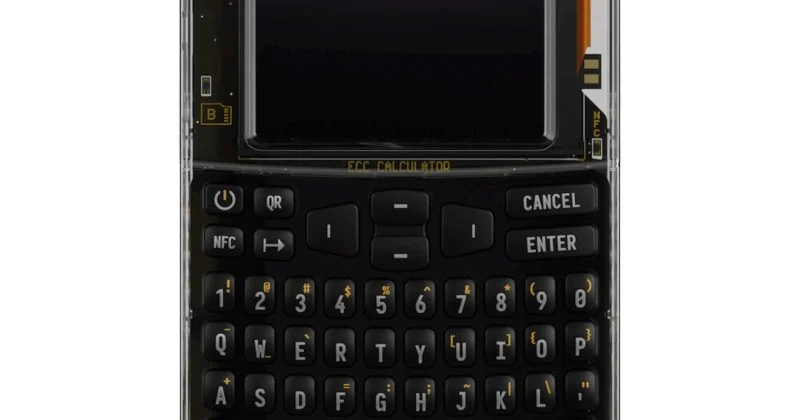
Hardware wallets are widely regarded as the benchmark for Bitcoin security. The core proposition is straightforward: private keys remain offline, isolated from hackers, exchanges, and other points of failure. When a firmware flaw undermines that foundational promise, the Bitcoin community takes notice — and when a user responds by physically destroying the device, the broader public does too.
That is precisely what occurred when Adam, known on X as @denverbitcoin, announced his intention to destroy his ColdCard Q on August 2, 2026. He characterized the act as a symbolic gesture of solidarity with users affected by the vulnerability.
The Vulnerability Explained
When a ColdCard Q automatically generated a seed phrase, the device drew from a pool of randomness limited to 32 bytes of entropy. For context, a seed phrase is the cryptographic recovery mechanism for Bitcoin funds: anyone who obtains it can control the associated wallet. The standard 24-word BIP39 seed phrase is designed to be backed by sufficient entropy to make brute-force guessing computationally infeasible. When a hardware wallet's random number generator falls short of that standard, the resulting seeds can become vulnerable to systematic reconstruction by an attacker — even without physical access to the device.
The real-world impact hinged largely on whether a user had enabled a passphrase — sometimes referred to as the 25th word — which adds an additional layer of protection on top of the standard 24-word seed phrase. Users who had set a passphrase were largely shielded from the vulnerability. Those who had not were the ones left exposed.
Coinkite, the manufacturer behind the ColdCard product line, acknowledged the issue and released patched firmware. The company advised all affected users to generate entirely new seeds and clarified that the hardware itself was not defective. Only the firmware's seed generation routine was responsible for the flaw.
Adam's Motivation
Adam stated that the destruction was explicitly an act of solidarity. He said he was honoring users who had been, in his words, effectively robbed due to the vulnerability — phrasing that places responsibility squarely on the firmware failure rather than on any user error.
Criticism has also been directed at influencers and educators who promoted ColdCard devices without, according to detractors, adequately stress-testing the underlying security assumptions or advocating more forcefully for passphrase adoption.
NVK, Coinkite's founder, has faced direct criticism throughout the ongoing discussions on X. Mainstream cryptocurrency media coverage of the incident has been limited, with most of the conversation remaining within Bitcoin-focused circles on the platform.
Implications for the Hardware Wallet Market
The ColdCard has long held a distinct position in the Bitcoin hardware wallet market as the preferred device among security-focused users. Competing products such as the Trezor, Ledger, and BitBox02 occupy different segments of the same market, each with distinct trade-offs around open-source firmware availability, air-gapping, and user interface design. The ColdCard's reputation for security-first engineering — including features like fully air-gapped signing — made the entropy flaw especially damaging given its core audience.
The broader question raised by the incident centers on product defaults. A firmware vulnerability affecting only users without passphrases can be read as a user education issue. Equally, it can be viewed as a product design shortcoming for not enforcing stronger default configurations. In the wider hardware wallet ecosystem, independent firmware audits and reproducible builds have become increasingly common practices aimed at detecting exactly this category of flaw before devices reach consumers.
The open question now is whether Coinkite's updated firmware and communication response will be sufficient to maintain trust among the security-conscious Bitcoin holders who form its core customer base — or whether the incident will accelerate migration toward competing hardware wallet manufacturers. Adam's destroyed ColdCard Q has already become a lasting image in the discussion surrounding the event.

