COLDCARD Hack Losses Climb to 2,055 BTC Across 7,700+ Wallets, Totaling $130M
Key Takeaways
- •Galaxy Research estimates that total losses from the COLDCARD exploit have reached 2,055 BTC, valued at approximately $130 million.
- •On-chain analysis has identified more than 7,700 affected Bitcoin addresses, with the number increasing as the investigation progresses.
- •COLDCARD, produced by Toronto-based Coinkite, was widely regarded as a premium hardware wallet offering air-gapped security through SD card and NFC interfaces.
- •The majority of major cryptocurrency thefts in recent years have targeted exchanges, cross-chain bridges, or DeFi protocols, making large-scale hardware wallet breaches uncommon.
- •Security experts recommend measures such as keeping firmware updated, purchasing devices directly from manufacturers, using BIP39 passphrases, and adopting multisignature wallet configurations to reduce risk.
The scope of the COLDCARD hardware wallet exploit continues to widen, with updated blockchain data revealing that losses far exceed initial reports. New on-chain analysis has identified thousands of additional affected wallets, making the incident one of the most significant hardware wallet breaches in recent memory. COLDCARD, produced by Toronto-based Coinkite, is widely used by Bitcoin holders specifically seeking air-gapped security through its SD card and NFC interfaces, dual secure element architecture, and open-source hardware design — features that had positioned it as a premium option for users prioritizing sovereign key control.
Estimated Losses Reach $130 Million
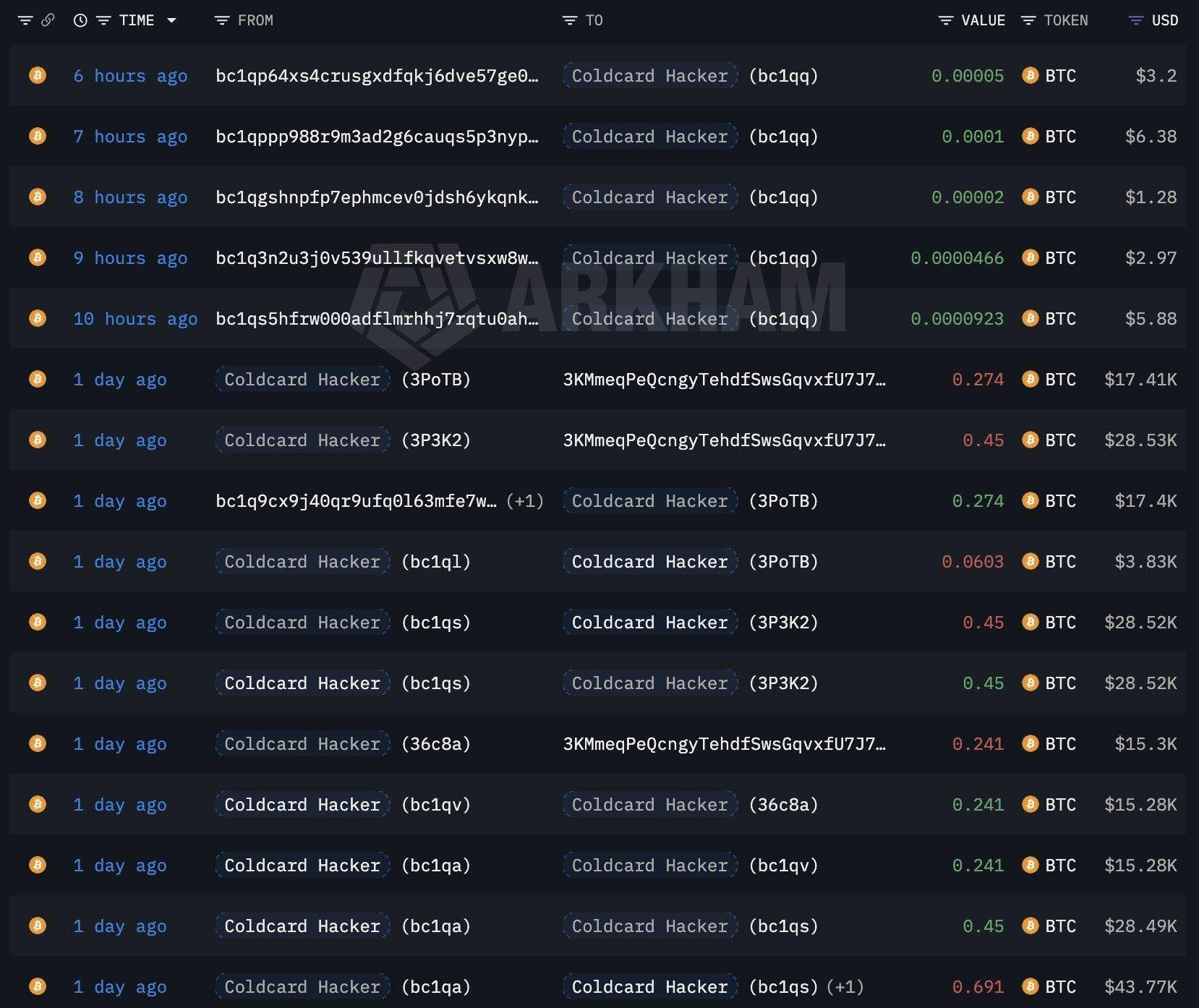
According to data from Galaxy Research, shared publicly by blockchain analytics platform Lookonchain, the total damage tied to the COLDCARD exploit has now reached 2,055 BTC, valued at approximately $130 million based on current market prices.
This is insane! According to @glxyresearch, the total losses from the #Coldcard hack may have reached 2,055 $BTC ($130M). More than 7,700 victim addresses have been affected. pic.twitter.com/GizWlDbYpz — Lookonchain (@lookonchain) August 4, 2026
The latest estimate identifies over 7,700 affected Bitcoin addresses. Earlier reports had indicated a smaller number of compromised wallets and lower overall losses, which suggests that investigators continue to uncover additional affected addresses as their blockchain analysis progresses. To put the figure in perspective, most major cryptocurrency thefts in recent years have involved exchanges, cross-chain bridges, or DeFi protocols rather than hardware wallet compromises — placing this incident in an uncommon category of large-scale self-custody losses.
On-Chain Analysis Reveals Broader Exposure
The updated figures were compiled by tracing transactions directly on the blockchain rather than relying on voluntary disclosures from affected users. Researchers have continued mapping the flow of stolen funds and identifying addresses connected to the exploit. Bitcoin's public ledger enables this kind of post-hoc tracing, though privacy-enhancing techniques can complicate fund-recovery efforts.
These revised statistics underscore the scale and significance of the theft, which continues to grow and affect a widening segment of the Bitcoin community.
Hardware Wallet Security Under Renewed Scrutiny
COLDCARD has long been regarded as a leading hardware wallet for Bitcoin users seeking maximum control over their funds. However, this incident has reignited debate over the security of self-custody devices.
Unlike centralized exchange hacks, attacks on hardware wallets can directly compromise individual users, particularly when vulnerabilities exist in firmware or wallet-creation processes. Security experts have consistently emphasized the importance of keeping firmware up to date, purchasing devices directly from manufacturers to avoid supply-chain tampering, and following manufacturer recommendations to reduce risk. Additional protective measures commonly recommended include BIP39 passphrase protection and multisignature wallet configurations that require multiple devices to authorize transactions.
Self-Custody Debate Intensifies
With several high-profile exchange failures in recent years, Bitcoin investors have increasingly gravitated toward self-custody solutions. While self-custody eliminates counterparty risk, it also places the burden of security squarely on the wallet owner and the device manufacturer.
The COLDCARD incident serves as a renewed reminder that hardware, firmware, and operational security practices are critical components of digital asset protection. As the on-chain investigation continues, both users and wallet providers face mounting pressure to strengthen security measures and mitigate the potential for future large-scale exploits.

