Air-Gapped Bitcoin Wallets Explained: How the Coldcard Exploit Exposed the Limits of Offline Security
Key Takeaways
- •A firmware vulnerability in Coinkite's Coldcard wallet has led to over $114 million in stolen Bitcoin, with losses continuing to climb.
- •The flaw, introduced in March 2021, caused certain Coldcard wallets to generate seed phrases with significantly reduced entropy, making them vulnerable to being guessed by attackers.
- •Despite Coldcard's open-source firmware and strong security reputation, the build error went undetected for roughly five years before disclosure in late July 2026.
- •Galaxy Research observed losses escalating from approximately $88 million to nearly $114 million within days and warned that additional vulnerable addresses remain at risk.
- •Security experts recommend multisignature setups to avoid single points of failure when securing larger Bitcoin holdings.
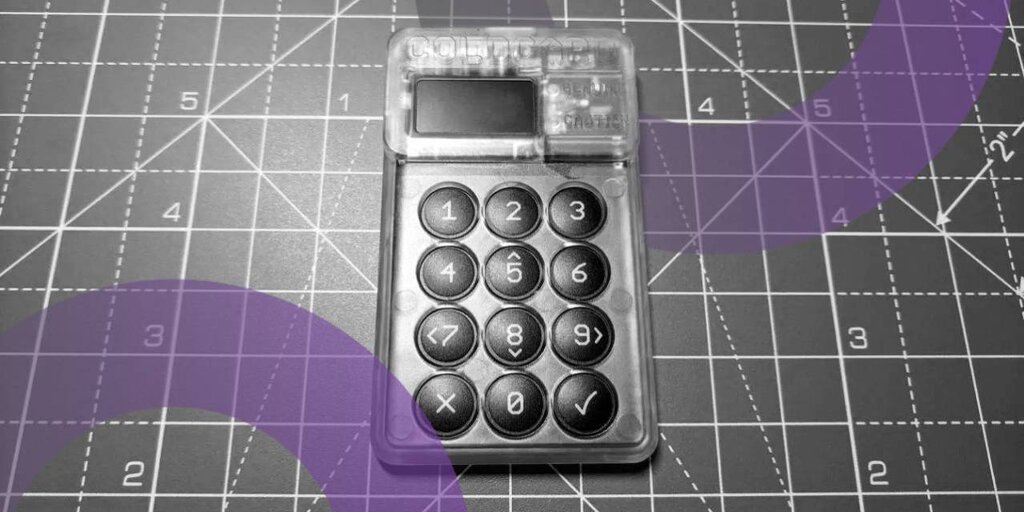
Air-gapped wallets are designed never to connect directly to the internet or any wireless network, keeping private keys isolated from online threats. They are widely regarded as offering some of the strongest self-custody protection available to individual cryptocurrency holders.
That reputation is precisely what makes the recent Coldcard exploit so alarming. The Bitcoin-only hardware wallet, manufactured by Coinkite, was compromised in a firmware vulnerability that has led to more than $114 million in stolen user funds—a figure that continues to climb.
Crypto Wallets: The Basics
Despite the name, cryptocurrency wallets do not actually store Bitcoin, Ethereum, or other digital assets. Instead, they hold the public and private keys needed to access and transfer funds recorded on a blockchain.
A public key functions much like an account number, allowing others to send cryptocurrency to a specific address. A private key acts as a password or digital signature that authorizes outgoing transactions. Anyone who obtains a private key gains full control over the associated assets.
Wallets come in multiple forms—printed paper wallets, software applications, mobile apps, and dedicated hardware devices. They fall into two broad categories: custodial and non-custodial.
Custodial wallets rely on a third party to hold private keys on the user's behalf. This is the arrangement when users store Bitcoin, Ethereum, Solana, or other assets on a centralized exchange such as Coinbase. Non-custodial wallets, also called self-custody wallets, give users complete control over their keys—and full responsibility for safeguarding them.
What Makes a Wallet Air-Gapped?
An air-gapped wallet is a non-custodial device engineered to remain entirely disconnected from the internet and all wireless communication protocols, including Wi-Fi, Bluetooth, and NFC. The term "air gap" denotes the physical separation between the wallet and any online network.
Because the device never establishes an internet connection, it presents a far smaller attack surface for hackers, malware, and phishing campaigns.
Who Builds Air-Gapped Wallets?
Several companies manufacture hardware wallets specifically designed to operate without a direct internet or wireless link.
Notable manufacturers include ELLIPAL, whose Titan wallet uses QR codes rather than USB or Bluetooth; Keystone, which also relies on QR-based communication; Foundation Devices, maker of the Bitcoin-focused Passport wallet; Blockstream, whose Jade wallet supports fully air-gapped Bitcoin transactions via QR codes; and Coldcard itself.
Coldcard, produced by Coinkite, is a Bitcoin-only device that supports offline transaction signing through microSD cards and optional QR codes. It is also the wallet at the center of the recent firmware exploit responsible for well over $100 million in stolen funds to date.
Companies such as Ledger and Trezor also produce hardware wallets, though their devices generally connect via USB or Bluetooth during routine use. Air-gapped wallets are differentiated by being designed from the ground up to keep private keys fully isolated from the internet.
As security experts have emphasized in the wake of the Coldcard incident, no wallet option is ever completely risk-free.
Are Air-Gapped Wallets Actually Safer?
Keeping a wallet permanently offline substantially reduces exposure to remote attacks. Malware cannot reach a device that never connects to the internet, and hackers cannot exploit network connections that do not exist.
However, air-gapped wallets are not immune to every category of threat. Users must still safeguard their recovery phrase, verify all transaction details before signing, and maintain physical control of the device. A lost or stolen recovery phrase can permanently compromise wallet access. Similarly, an attacker with physical access to the device may still be able to exploit it, depending on its built-in security features.
The trade-off is convenience. Sending funds from an air-gapped wallet typically involves scanning QR codes or transferring files between devices, a slower process than using a software wallet or exchange account.
No Wallet Is Immune
In late July 2026, Coinkite disclosed that a firmware build error introduced in March 2021 caused certain Coldcard wallets to generate seed phrases from a dramatically smaller pool of possible values than intended. The reduction in entropy weakened the randomness protecting users' private keys, making them susceptible to attackers who could guess the seed phrases—or use AI tools to guess them far more rapidly than would be possible manually.
Seed phrases, standardized under Bitcoin Improvement Proposal 39 (BIP39), are meant to draw from an enormous range of possible combinations—on the order of 2^128 or higher—precisely so that guessing them is computationally infeasible. When entropy is compromised, that cryptographic guarantee collapses, and the security model underlying the entire wallet unravels with it.
The consequences are severe. If an attacker obtains a private key—whether through inadequate security, a hack, a scam, or by correctly guessing a compromised seed phrase—they gain control of all funds associated with that address.
The Coldcard Incident Unfolds
Researchers at Galaxy Research reported that the Coldcard exploit played out in multiple waves, with observed losses climbing from approximately $88 million to nearly $114 million in Bitcoin within a matter of days. The escalation prompted large numbers of Coldcard users to relocate their Bitcoin after researchers warned that additional vulnerable addresses remained at risk.
The breach was particularly significant because Coldcard, launched in 2017, has long been regarded as one of the most security-focused Bitcoin hardware wallets on the market. The device's firmware is open-source, which in principle allows independent security researchers to audit the code—yet the build error went undetected for roughly five years, a gap that has prompted renewed debate over how effectively the community reviews hardware wallet firmware in practice.
The incident underscores that while keeping a wallet offline shields it from many online threats, offline storage cannot eliminate every risk. A wallet's overall security also depends on hardware quality, firmware integrity, random number generation, and software development practices. An air gap is a critical layer of defense—not proof that a device is free from vulnerabilities.
According to security experts, one way to reduce exposure is to avoid single points of failure—in other words, avoid concentrating all cryptocurrency holdings in one wallet or location. Multisignature, or multisig, setups—which require multiple independent devices or keys to authorize a single transaction—are one widely recommended approach for users securing larger amounts of Bitcoin, as a compromise of any one signer alone is not sufficient to move funds.

