Coinbase Stock Under Pressure as Crypto Slump, Falling USDC Supply and ETF Outflows Build
Key Takeaways
- •Coinbase stock has dropped to $130 after falling through the $139 support level, leaving it roughly 50% below its high this year and 70% under last year's peak.
- •Bitcoin's decline to $73,235, Solana's drop to $83, and a total crypto market cap contraction from nearly $3 trillion to $2.4 trillion have cut trading activity, with Coinbase's transaction revenue falling to $450 million last quarter from over $1.04 billion a year earlier.
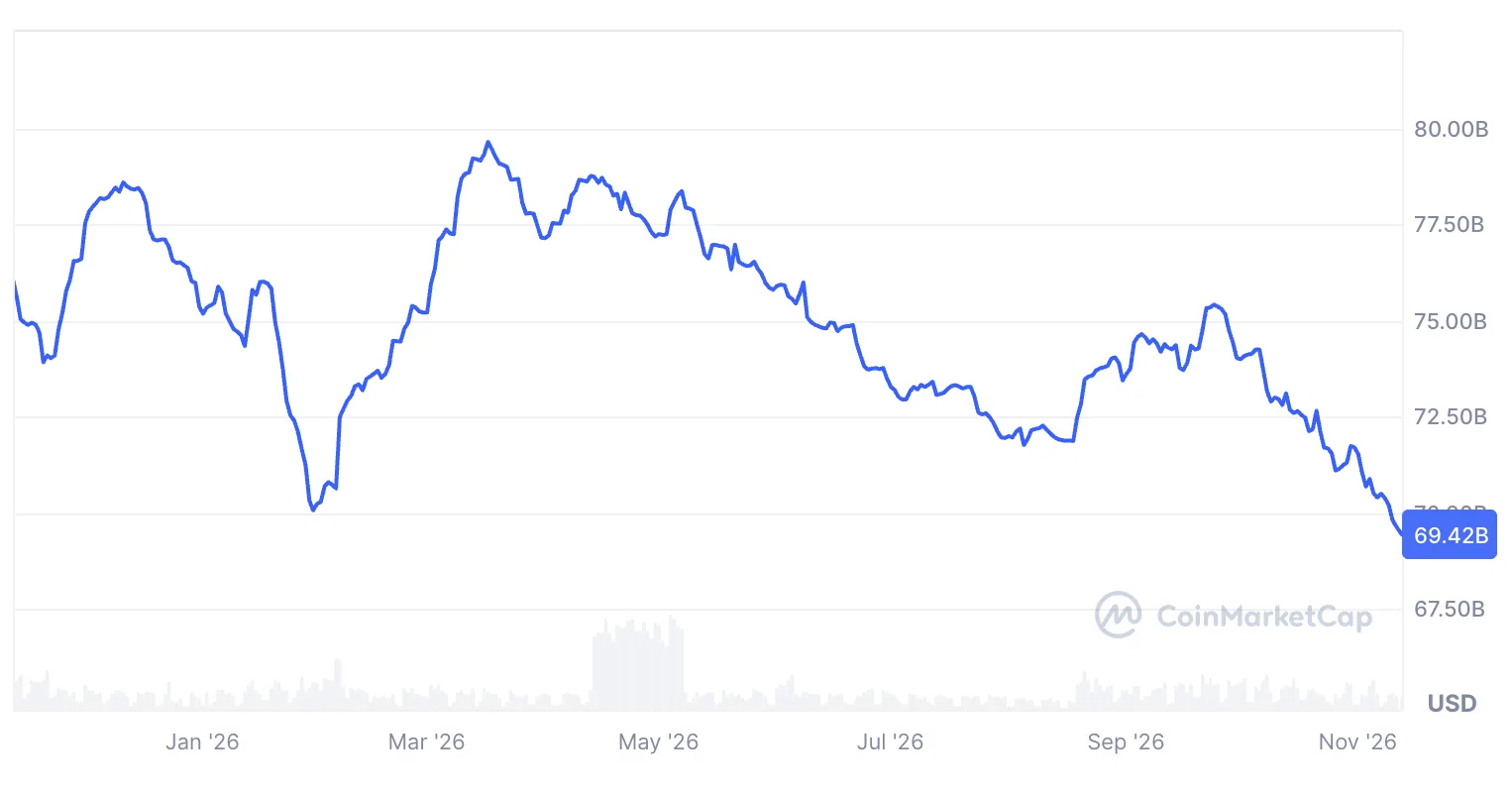
- •USDC circulating supply has shrunk to $69 billion from a year-to-date high of $80 billion, reducing the pool of coins backing the stablecoin interest income that generated more than $307 million of Coinbase's latest results.
- •Sustained ETF outflows — more than $1.88 billion from spot Bitcoin funds and $695 million from Ethereum funds this month — directly affect Coinbase, the largest custodian of crypto ETFs.
- •The stock trades below all its moving averages and is forming a bearish flag pattern, pointing to potential declines toward $100, while a move above $150 resistance would invalidate the bearish outlook.
Coinbase Stock Under Pressure as Crypto Slump, Falling USDC Supply and ETF Outflows Build
Coinbase shares remain stuck below a key support level, and a series of risks suggests the downtrend could extend. The stock has fallen to $130 — roughly 50% below its highest point this year and 70% under last year's peak — after dropping through the key support level of $139. The decline could continue in the near term as cryptocurrency prices fall, the supply of USDC slips below $70 billion and outflows from crypto ETFs continue to build. The convergence of these pressures matters because Coinbase's earnings are tied to crypto market activity across its trading, stablecoin and custody businesses, so weakness in one corner of the market can flow through several revenue lines at once.
Crypto Price Slump Weighs on Transaction Revenue
The biggest risk facing Coinbase is the ongoing retreat of Bitcoin and most altcoins, which have continued to fall throughout the month. Solana has dropped to $83, down 33% from its September high, while Bitcoin fell to $73,235, sharply below its October peak of $87,400. The total market capitalization of all cryptocurrencies has slid from nearly $3 trillion in October to $2.4 trillion.
Crypto exchanges tend to underperform when Bitcoin and other cryptocurrencies fall. Lower prices typically reduce trading activity, which in turn lowers transaction revenue — the fees an exchange collects on customer trades. Coinbase's most recent earnings report showed transaction revenue dropped to $450 million last quarter from more than $1.04 billion in the same period a year earlier, a gap that illustrates how directly market weakness feeds into exchange earnings.
The company is working to offset that volatility by expanding into other markets. It aims to become an exchange for everything — a platform where investors can trade assets such as stocks, ETFs and commodities — and has rolled out additional services, including predictions and on-chain lending. The challenge, however, is that these newer businesses will need time to grow large enough to overtake transaction revenue. Until they scale, the company's results remain sensitive to swings in crypto prices.
USDC Supply Falls From Record High
Coinbase has grown into one of the largest distributors of USD Coin (USDC), the world's second-biggest stablecoin. In its latest results, the company generated more than $307 million in stablecoin revenue, with the bulk of that coming from USDC. The average amount of USDC held in Coinbase products also jumped to a record high during the month.
The challenge, however, is that the amount of USDC in circulation has continued to fall this year. Data from CoinMarketCap shows the stablecoin's valuation has dropped to $69 billion, down from its year-to-date high of $80 billion. The circulating supply matters for that revenue line because the interest income behind it is generated on the coins outstanding — as the supply contracts, the pool of USDC available to earn from shrinks with it.
It remains unclear exactly how much USDC is held across Coinbase products. However, with the overall supply shrinking, the amount held within its ecosystem has likely declined as well. If that is the case, the interest income the company earns on all the USDC it holds would also continue to fall.
Crypto ETF Outflows Accelerate
Data also shows investors selling out of their cryptocurrency ETFs. Spot Bitcoin ETFs have lost more than $1.88 billion so far this month, after losing $515 million last month. Ethereum funds have shed $695 million this month, following losses of $1.6 billion the month before. Other spot altcoin ETFs have also given up assets over the past few months.
The trend matters for Coinbase because it is the biggest custodian of crypto ETFs, meaning the sustained outflows will have a direct impact on its custody business. In a custody arrangement, the provider safeguards the assets backing the funds, so when redemptions pull assets out of the ETFs, the pool of holdings the custodian manages shrinks alongside them.
Technicals Point to Further Downside
Technical indicators also suggest Coinbase is exposed to further downside. The stock has already dropped below the important support level of $140, which marked the lowest swing of June and August. Shares have also remained below all their moving averages and are slowly forming a bearish flag pattern — a structure made up of a vertical line followed by a horizontal channel — which in most cases leads to additional losses.
If those fundamental risks persist, Coinbase shares may continue to fall, potentially toward the psychological level of $100. On the other hand, a move above the key resistance level of $150 would invalidate the bearish outlook. Against that backdrop, the markers to watch are the same ones driving the fundamentals: whether Bitcoin and the broader crypto market stabilize, whether USDC's circulating supply stops shrinking, and whether monthly ETF flow data shifts from outflows to inflows.
This article provides financial market analysis, not investment advice. Stock prices and cryptocurrency markets carry substantial risks, and technical scenarios or revenue projections do not guarantee future results.
Source: The Market Periodical

