Coinbase Stock Plunges After Weak Crypto Market Drives Third Straight Quarterly Loss
Key Takeaways
- •Coinbase reported a Q2 net loss of $359 million versus a $1.43 billion profit in the year-ago period, significantly worse than the $0.44 per share loss analysts had anticipated.
- •Net revenue fell 17% year over year to $1.15 billion, with transaction revenue declining 22% to $600 million amid softer cryptocurrency prices and reduced market volatility.
- •Non-trading subscription and services revenue, including stablecoin income, staking, and custody fees, represented 48% of total quarterly revenue at $555 million, helping offset weaker trading volumes.
- •Mizuho lowered its Coinbase price target from $200 to $155, and the stock has declined more than 32% year to date.
- •The Clarity Act, which would shift crypto trading oversight away from securities regulation, faces diminishing odds of Senate passage this year, though CEO Brian Armstrong said it remains business as usual either way.
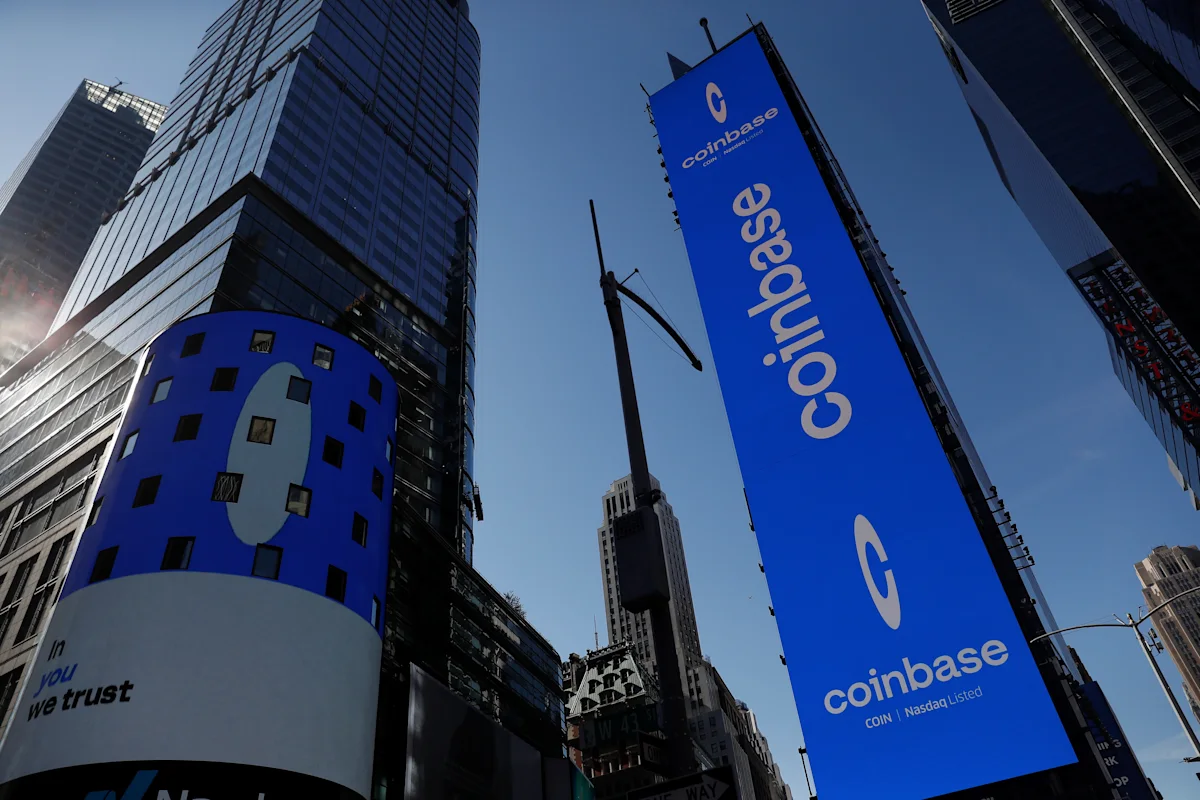
Coinbase Stock Plunges After Weak Crypto Market Drives Third Straight Quarterly Loss
Shares of Coinbase Global (COIN) tumbled more than 14% in early trading on Friday, one day after the cryptocurrency exchange reported a wider-than-expected second quarter net loss. The result marks the company's third consecutive quarter in the red since the broader crypto market began retreating from its October highs. As the largest U.S.-based cryptocurrency exchange by trading volume, Coinbase's results are widely viewed as a barometer for the digital asset industry's health.
Coinbase posted a net loss of $359 million, or $1.36 per share, for the second quarter. In the same period a year earlier, the company recorded a profit of $1.43 billion, or $5.14 per share. Analysts surveyed by consensus estimates had anticipated a significantly smaller net loss of $0.44 per share. Coinbase's stock has declined more than 32% year to date.
The impact of falling cryptocurrency prices extended beyond Coinbase's investment holdings to its core revenue streams. Net revenue fell 17% year over year to $1.15 billion. Adjusted EBITDA dropped 59% from the year-ago period to $208 million, falling short of analyst expectations by roughly a third.
"We like the direction … but the near-term setup is tough," Mizuho analyst Dan Dolev told clients on Friday. Mizuho lowered its price target for Coinbase shares from $200 to $155.
During the second quarter, a sharp rally in semiconductor and other AI-related stocks, combined with rapid geopolitical developments surrounding the ongoing Iran war, generated strong results for investment bankers and equity traders at major Wall Street firms. Coinbase's less crypto-dependent competitors, including Robinhood (HOOD) and Charles Schwab (SCHW), also reported significantly higher revenue from trading fees.
The cryptocurrency market, however, contended with softer asset prices and reduced volatility, leading to muted trading activity on the exchange. Coinbase said transaction revenue declined 22% year over year to $600 million.
CFO Alesia Haas acknowledged what she described as a crypto "down market" but pointed to record paid membership in the Coinbase One subscription program as evidence that customers remained active during the quarter.
Non-trading subscription and services revenue — which includes income from stablecoins, interest and financing fees, crypto staking, and custody services — fell 12% from a year ago to $555 million. Nevertheless, the segment helped offset declining trading fees, accounting for 48% of Coinbase's total quarterly revenue. That share has grown steadily as the company works to reduce its dependence on the cyclical trading fees that traditionally defined the exchange business model.
"At any given time in trading, there's always something that's up and something that's down," CEO Brian Armstrong told analysts on Thursday. He emphasized that part of the firm's strategy involves "having all the shelves stocked" to capture demand across whichever market is performing well.
Coinbase also indicated that, at its current second quarter pace, the company's newer prediction markets offering is projected to generate $100 million in revenue this year — unchanged from the expectation it communicated last quarter.
In May, Coinbase became the first U.S. exchange granted approval to offer customers crypto perpetual futures, contracts that allow traders to speculate on digital asset prices using leverage with no fixed maturity date. The company is now awaiting regulatory clearance to offer an equivalent product for equities. The expansion into new asset classes and product categories comes as rival exchanges have sought to capture retail trading volume that Coinbase once dominated.
Coinbase is also monitoring the progress of the Clarity Act, a major piece of crypto legislation awaiting a Senate vote. The bill's passage would shift most crypto trading oversight away from securities regulation, following a period in which federal securities regulators pursued enforcement actions against Coinbase and other crypto exchanges under the previous administration. The odds of passage this year have diminished notably in recent days.
Armstrong stated that if the bill does not pass, it remains "business as usual" for Coinbase, while noting that "on margin, it's better if the Clarity Act passes."
"It creates durability through multiple administrations. People can make longer-term investments," Armstrong added.

