Brian Armstrong Says CLARITY Act Could Protect Consumers and Curb Regulatory Overreach
Key Takeaways
- •Armstrong said clearer crypto rules could both protect consumers and shield the industry from government overreach.
- •The CLARITY Act passed the House in July 2025 by a 294–134 bipartisan vote and is now before the Senate.
- •The bill would generally give the CFTC oversight of digital asset commodity spot markets while the SEC would retain authority over digital assets treated as securities.
- •House-passed provisions include requirements for trading platforms to segregate customer assets and disclose conflicts of interest.
- •The legislation also includes a process for recognizing sufficiently decentralized blockchain networks, which could move associated tokens outside securities registration requirements.
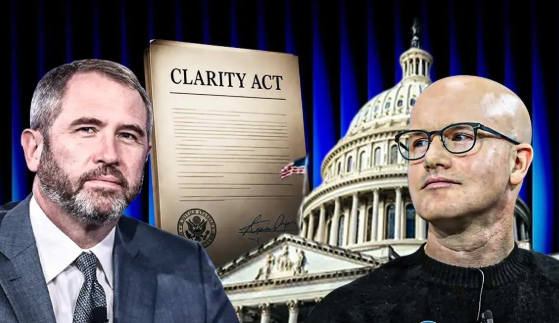
Coinbase CEO Brian Armstrong said the CLARITY Act could provide clearer rules for the cryptocurrency industry while protecting consumers and limiting the potential for excessive government intervention, according to information shared on X by @CoinMarketCap.
Armstrong said the legislation's "clear rules" would serve two purposes: protecting consumers and protecting the industry from what he described as "bad government or overreach."
The comments come as U.S. lawmakers continue to consider how digital assets should be regulated and which federal agencies should oversee different parts of the cryptocurrency market. The CLARITY Act — formally the Digital Asset Market Clarity Act — has been a central vehicle for that debate, passing the House with bipartisan support in a 294–134 vote in July 2025 and moving to the Senate for further consideration.
Armstrong Highlights Need for Clear Crypto Rules
Armstrong's remarks place regulatory clarity at the center of the industry's agenda. Introduced in 2025 through the House Financial Services and Agriculture Committees, the CLARITY Act is intended to establish a clearer regulatory framework for digital assets and to define responsibilities among U.S. financial regulators.
For companies operating in the cryptocurrency sector, regulatory uncertainty can make it difficult to determine which rules apply to particular products, services, or digital assets. Armstrong's statement suggests that clearly defined requirements could benefit both businesses and consumers by establishing more predictable standards.
The information shared on X does not provide further details about the specific provisions Armstrong was referring to, nor does it identify which parts of the legislation he considers most important.
Consumer Protection at the Center of the Debate
Armstrong said clear rules would help protect consumers. Consumer protection has become an important part of discussions surrounding cryptocurrency regulation, particularly as digital assets have become more widely used.
Clear regulatory requirements can establish standards that companies must follow when providing financial products or services to customers. Such rules can also help determine what information companies must provide and which practices may be subject to regulatory oversight. The version of the bill passed by the House includes measures along these lines, such as requirements that trading platforms keep customer assets segregated and disclose conflicts of interest.
Armstrong's comments position the CLARITY Act as a potential mechanism for establishing those standards while creating a more defined regulatory environment. The post does not specify particular consumer protections included in the legislation.
Armstrong Warns Against Government Overreach
The Coinbase CEO also argued that clear rules could protect the industry from "bad government or overreach." The comment reflects a broader concern among some cryptocurrency industry participants that regulators could exercise authority without sufficiently defined limits.
Regulatory agencies hold significant powers under existing U.S. financial laws, but the precise application of those laws to digital assets has remained a subject of debate. That debate has included prominent enforcement actions, among them the SEC's 2023 lawsuit alleging that Coinbase operated as an unregistered exchange, broker, and clearing agency — a case the agency agreed to dismiss in early 2025. The suit and its eventual dismissal became a reference point in discussions about how existing securities laws apply to digital asset platforms.
A clearly defined legislative framework could establish boundaries around regulatory authority and clarify which agencies are responsible for specific areas of the cryptocurrency market.
Armstrong's statement does not identify a particular agency or regulatory action that he considers an example of overreach. Instead, the comment frames clear legislation as a way to establish predictable limits on government intervention.
CLARITY Act and U.S. Crypto Regulation
The CLARITY Act has emerged as part of the broader U.S. debate over cryptocurrency regulation. Digital assets can involve characteristics associated with several areas of financial markets, creating questions about whether particular activities fall under securities, commodities, or other regulatory frameworks.
As passed by the House, the bill would generally assign oversight of digital asset commodity spot markets to the CFTC, while the SEC would retain authority over digital assets deemed to be securities. It also includes a process for certifying that a blockchain network is sufficiently decentralized, a threshold that would place associated tokens outside securities registration requirements. The legislation advanced alongside the GENIUS Act, the stablecoin oversight law enacted in July 2025, with lawmakers treating stablecoins and broader market structure as the two main tracks of digital asset policy.
The absence of clear statutory definitions can create uncertainty for businesses and investors. The legislation seeks to provide greater clarity around the regulatory structure governing digital assets.
For cryptocurrency companies, the potential impact could extend to exchanges, token issuers, decentralized platforms, and other businesses operating in the sector. The exact effects would depend on the final legislation and how its provisions are implemented.
Coinbase's Position on Regulatory Clarity
Armstrong's comments are consistent with Coinbase's broader focus on establishing clearer cryptocurrency regulations in the United States. As one of the major cryptocurrency companies operating in the U.S., Coinbase has a direct interest in how lawmakers define the rules governing digital assets and trading platforms.
A more predictable regulatory environment could make it easier for companies to determine their legal obligations and plan future products and services. At the same time, consumer protection remains a key consideration for policymakers evaluating new digital asset legislation. Armstrong's comments connect these two objectives, arguing that clear rules can simultaneously protect consumers and establish limits on government authority.
Broader Debate Over Government and Digital Assets
The debate surrounding the CLARITY Act reflects a larger question about the appropriate role of government in regulating cryptocurrency. Supporters of clearer rules argue that well-defined regulations can provide certainty for businesses while improving protections for consumers. Critics of excessive regulation have raised concerns that overly broad requirements could restrict innovation or make it more difficult for companies to operate.
Armstrong's statement emphasizes the balance between those competing considerations. His comments suggest that the objective should not simply be more regulation, but clearer rules that define responsibilities and limits.
CLARITY Act Remains a Key Focus for Crypto Policy
Brian Armstrong's latest comments place regulatory clarity at the center of the debate over the CLARITY Act. He said clear rules could protect consumers while also protecting the cryptocurrency industry from "bad government or overreach."
The statement highlights two competing priorities in the U.S. digital asset debate: establishing safeguards for consumers while ensuring that regulators operate within clearly defined boundaries. With the bill now before the Senate, the division of authority between the SEC and CFTC and the treatment of sufficiently decentralized networks are among the provisions most likely to shape its practical effect, alongside how any final requirements are implemented.
For now, Armstrong's comments add to the ongoing discussion about how the United States can establish a regulatory framework that provides greater certainty for cryptocurrency companies, investors, and consumers.
Reported by Victoria Hale, Technology & Blockchain Writer, Hokanews.

