Cleveland Fed Nowcasts Point to Renewed Cost-of-Living Pressure
Key Takeaways
- •Cleveland Fed inflation nowcasts released on July 23 indicate renewed upward pressure across cost-of-living measures.
- •The nowcasts incorporate U.S. Energy Information Administration gasoline price data through July 22, with energy costs significantly influencing headline CPI readings.
- •Econbrowser reviewed both CPI and PCE deflator projections, with PCE inflation carrying particular weight as the Federal Reserve's formally targeted gauge.
- •Despite cautioning that nowcasts are only estimates, Econbrowser suggested that rising gasoline prices make it unlikely the projections are overstating inflationary trends.
- •The Cleveland Fed's nowcasting model serves as a closely monitored bridge between official data releases for policymakers assessing progress toward the 2% inflation target.
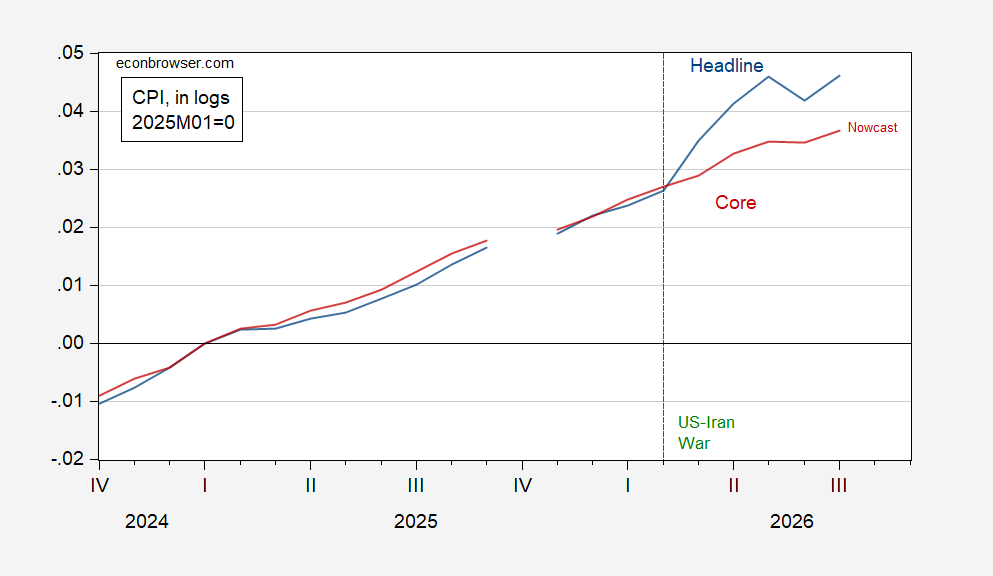
Cleveland Fed inflation nowcasts released on July 23 indicate renewed upward pressure in cost-of-living measures, according to Econbrowser's review of the data. The Cleveland Fed's nowcasting model produces real-time inflation estimates between official government data releases, making it a closely watched indicator for policymakers and analysts tracking whether the Fed's 2% inflation target remains within reach.
For the consumer price index, Econbrowser cited a chart showing CPI in blue and core CPI in red, both expressed in logs with 2025M01 set equal to 0. The July reading is identified as the July 23 month-over-month nowcast. The sources listed for the figure are the Bureau of Labor Statistics, the Cleveland Fed, and the author's calculations.
The nowcasts incorporate U.S. Energy Information Administration gasoline price data through July 22, along with oil prices. Gasoline is a significant component of headline CPI, so energy cost movements can materially shift near-term inflation readings even when underlying core measures show more stability.
Econbrowser also reviewed the Federal Reserve's preferred inflation gauge. A second chart shows the PCE deflator in blue and the core PCE deflator in red, again expressed in logs with 2025M01 set equal to 0. June and July are identified as the July 23 year-over-year nowcasts. The sources listed for that figure are the Bureau of Labor Statistics, the Cleveland Fed, and the author's calculations. The Fed formally targets PCE inflation rather than CPI, meaning these readings carry particular weight in monetary policy deliberations.
The post cautioned that nowcasts are only nowcasts. However, it added that, with gasoline prices rising without an apparent stop, it seemed unlikely that the nowcasts would ultimately prove to be overshooting.

