CleanSpark May Sell More Bitcoin Than It Mines to Reduce Treasury Risk After $987 Million Loss
Key Takeaways
- •CleanSpark will sell nearly all of the bitcoin it produces each month or quarter to fund operations, with possible off-cycle sales to limit treasury exposure as market conditions warrant.
- •The company posted a fiscal 2026 net loss of $987.1 million on revenue of $576.5 million, down 25%, with roughly two-thirds of the earnings swing attributed to non-cash bitcoin mark-to-market adjustments.
- •CleanSpark ended September with 13,530 BTC worth about $1.1 billion, including 6,299 BTC pledged as loan collateral, exceeding the 7,253 BTC it mined during the fiscal year.
- •Management identified selling and pledging bitcoin as non-dilutive funding alternatives to issuing new equity and sold additional bitcoin after fiscal year-end to strengthen cash ahead of potential acquisitions.
- •The company produced 7,253 BTC in fiscal 2026, down from 7,637 the prior year, and is shifting its Sandersville facility from bitcoin mining to AI data center operations as part of a $177 million non-cash charge.
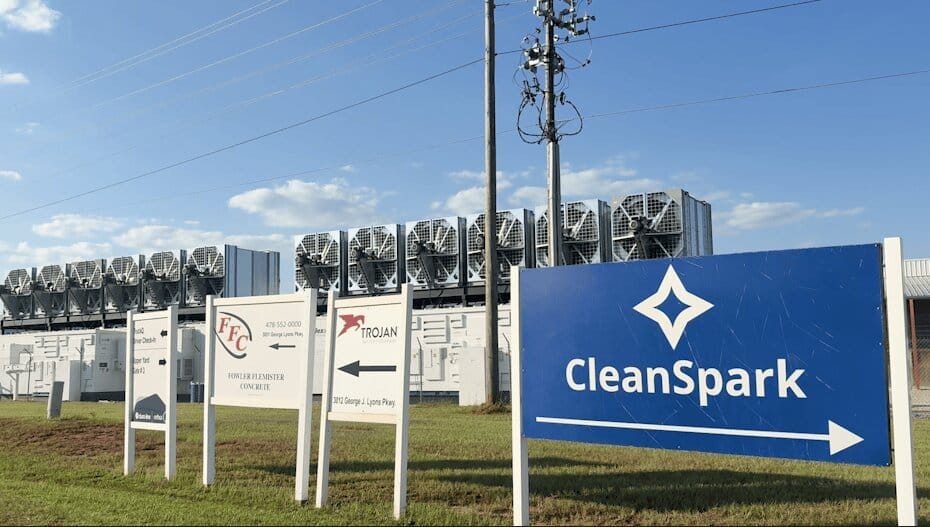
Bitcoin miner CleanSpark said it may sell roughly as much bitcoin as it produces in some quarters — and at times more than that — as it adopts a more flexible approach to managing its bitcoin treasury. The company said the shift follows a difficult fiscal year marked by a decline in mining revenue and severe price volatility in the value of its BTC holdings. Proceeds from the sales would be used to fund operations and growth without reliance on new equity or debt, according to the company.
The approach was discussed on the company's earnings call alongside the release of its fiscal fourth quarter and full-year 2026 financial and operating results (PDF), which showed an annual net loss of $987.1 million even as the miner ended the fiscal year in September with 13,530 BTC worth approximately $1.1 billion at the year-end bitcoin price.
CleanSpark Signals More Active Bitcoin Selling
Speaking on the earnings call, Chief Executive Officer Gary Vecchiarelli said the company will sell nearly all of the bitcoin it produces each month, or within any given quarter, to fund day-to-day operations. He added that CleanSpark may need to sell a small portion of its production outside the quarterly cycle in order to limit treasury exposure as market conditions warrant.
Unlike fixed formulas, the company said its bitcoin selling decisions are guided by liquidity needs, prevailing market conditions, and risk management considerations. Under the approach, CleanSpark treats bitcoin more dynamically as working capital that supports the business, rather than as a reserve asset to be held indefinitely.
The stance sets CleanSpark apart from the accumulate-and-hold treasury model that many publicly listed miners have favored in recent years — a model whose risks became visible over the company's own fiscal year, as bitcoin's slide from roughly $114,000 to about $83,600 flowed through miner balance sheets and reported earnings.
Bitcoin Becomes a Source of Non-Dilutive Capital
CleanSpark said it had already sold additional bitcoin after the September fiscal year-end to strengthen its cash position ahead of potential acquisitions. Management identified selling BTC and pledging BTC as loan collateral as alternatives to issuing new equity. According to the company, these measures would provide non-dilutive funding sources.
For a miner holding more than a year's worth of production on its balance sheet, the distinction is material: every bitcoin sold or pledged substitutes for shares that would otherwise be issued, leaving existing holders' stakes intact while still funding operations.
The company also generated $30.6 million in derivative-related proceeds during fiscal 2026 through its digital asset management program.
CleanSpark Ends Fiscal 2026 With 13,530 BTC
At the end of September, which marked the close of its fiscal 2026, CleanSpark held 13,530 BTC in its vault, including 6,299 BTC pledged as collateral. Those holdings were valued at roughly $1.1 billion at the fiscal year-end bitcoin price.
The pledged portion now represents nearly half of the vault, and the total balance exceeds the 7,253 BTC the company mined across the entire fiscal year. Under the new policy, selling close to full production would keep treasury growth roughly flat, with off-cycle sales drawing it down further — making the size and composition of CleanSpark's vault a key figure to track in coming quarterly disclosures.
The company produced 7,253 BTC during fiscal 2026, down from the 7,637 BTC it mined in fiscal 2025. Average hashrate declined 21% to 36 EH/s, while miner efficiency improved to 14.8 joules per terahash from 16.7 joules per terahash one year earlier. CleanSpark also reduced its operating fleet to approximately 200,000 machines over the course of the year.
Management said mining operations will continue for as long as the economics remain profitable.
Bitcoin Price Swings Hit CleanSpark's Results
Full-year revenue slipped 25% to $576.5 million, and CleanSpark recorded a net loss of $987.1 million, a reversal from the net income of $364 million it reported in fiscal 2025. Adjusted EBITDA came in at a loss of $304.2 million.
Management attributed roughly two-thirds of the year-over-year earnings shift to a mix of non-cash bitcoin mark-to-market adjustments. Because held bitcoin is marked to market each reporting period, treasury swings hit reported earnings even when no coins are sold — the mechanism behind the outsized loss. Bitcoin was valued at approximately $83,600 at the end of fiscal 2026, compared with roughly $114,000 a year earlier.
CleanSpark also posted a $177 million non-cash item during the year, driven by the company's decision to shift its Sandersville facility away from bitcoin mining and toward AI data center operations. That move places the company among a growing group of bitcoin miners repurposing sites and power capacity for AI data center demand, a diversification path that reduces reliance on mining revenue alone.

