CleanSpark Closes $2.276 Billion Senior Secured Notes Offering
Key Takeaways
- •CleanSpark closed a $2.276 billion senior secured notes offering through its wholly owned subsidiary, CSDC Finance I, LLC, one of the largest capital raises linked to a Bitcoin infrastructure firm this year.
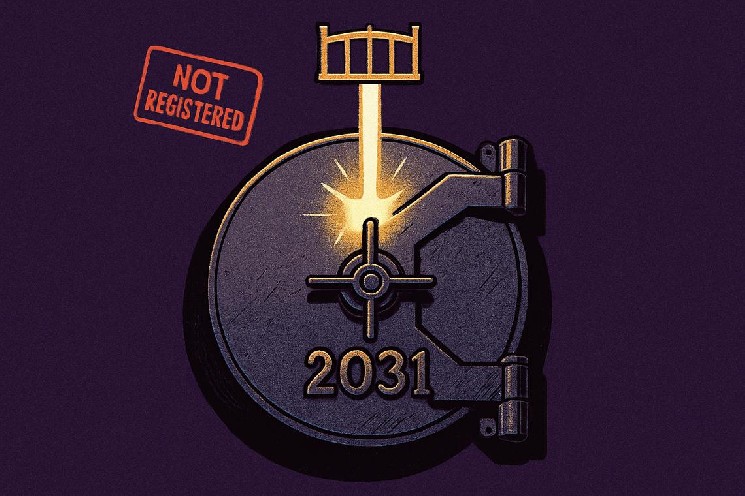
- •The notes bear a fixed interest rate of 7.875% and mature in 2031, giving CleanSpark roughly five years before repayment obligations begin.
- •The notes were not registered under the Securities Act of 1933 and may only be sold in the United States under an exemption, restricting ownership largely to institutional players.
- •CleanSpark says it controls a portfolio of more than 1.8 GW of power, land, and data centers across the United States, positioning it to expand without negotiating new power deals from scratch.
- •The company flagged risks including securities price volatility, regulatory and competitive shifts, and execution uncertainty, directing readers to its fiscal 2025 Form 10-K and several quarterly reports for full disclosures.
CleanSpark Closes $2.276 Billion Senior Secured Notes Offering
CleanSpark, Inc. has closed a $2.276 billion senior secured notes offering, securing fresh financial muscle behind its Bitcoin mining and data center ambitions. The Nasdaq-listed company confirmed that its subsidiary, CSDC Finance I, LLC, finalized an offering of $2.276 billion in aggregate principal amount of senior secured notes — one of the largest capital raises tied to a Bitcoin infrastructure firm this year. The completed transaction gives the company a sizable new pool of capital to work with as it continues expanding its footprint in energy-driven data center development.
Structure of the Debt Issuance
CSDC Finance I, LLC, described as a wholly owned subsidiary of CleanSpark, is the entity that formally closed the offering. This structure is common in large corporate debt deals, where a dedicated financing subsidiary issues notes on behalf of the parent company.
The deal had been announced prior to closing, meaning CleanSpark had already signaled its intent to raise the capital before finalizing the terms. With the offering now complete, the company has considerable dry powder to deploy across its Bitcoin mining and energy infrastructure operations.
Terms and Maturity of the Notes
The headline number is hard to miss: $2.276 billion. That is the aggregate principal amount CSDC Finance I, LLC secured through the note issuance, according to CleanSpark's own announcement. The notes carry a fixed interest rate of 7.875% and come due in 2031, giving CleanSpark roughly five years before repayment obligations begin. Because the coupon is fixed, the company's debt servicing obligations are locked in for the life of the notes.
In standard corporate debt practice, the senior secured designation behind this offering means holders' claims rank ahead of unsecured creditors in the repayment order, with the notes supported by collateral. That positioning, combined with a fixed coupon and a 2031 maturity, gives the debt a clearly defined profile over its roughly five-year life.
The interest rate reflects the cost of capital for a company operating at the intersection of energy markets and Bitcoin mining. Raising more than $2 billion through a securities offering of this scale also reflects institutional lenders' willingness to participate in the transaction, with the 7.875% rate capturing both the size of the deal and the risk profile associated with Bitcoin-linked energy businesses.
Regulatory Framework of the Offering
The notes are not available to the general public in the traditional sense. They sit outside standard US securities registration, which limits who can buy and trade them. CleanSpark stated plainly that the notes "have not been registered under the Securities Act of 1933 and may not be offered or sold in the United States absent registration or an applicable exemption from registration."
This is a routine but important distinction in large private note offerings. Without registration, the securities rely on specific legal exemptions to be sold within the US — a structure typically used for institutional or private placement transactions rather than retail investor access. Because the notes fall outside standard registration, distribution is inherently restricted, shaping who can actually hold or trade the debt: largely institutional players rather than everyday retail investors. For observers tracking CleanSpark's data center financing activity, the arrangement matters because it determines the pool of eligible holders for the.
CleanSpark's Strategic Positioning
CleanSpark describes itself as a market-leading data center developer, and the numbers behind that claim are notable. The company says it controls a portfolio of more than 1.8 GW of power, land, and data centers spread across the United States, positioned to take advantage of what it calls globally competitive energy prices.
According to the company, its business sits "at the intersection of Bitcoin, energy, operational excellence, and capital stewardship," with infrastructure optimized "to deliver superior returns" to shareholders. That framing places CleanSpark squarely within the broader trend of Bitcoin energy infrastructure firms working to turn cheap, reliable power into a scalable computing resource.
The 1.8 GW figure is significant in an industry where power access is often the biggest constraint on growth. Securing energy capacity at this level gives CleanSpark room to expand operations without having to negotiate new power deals from scratch — a competitive advantage in a sector where energy availability can make or break expansion plans.
Forward-Looking Statements and Associated Risks
CleanSpark was careful to frame much of the announcement within the forward-looking statement language required under US securities law. The company noted that statements about the notes, the offering's completion, and the intended use of proceeds are inherently uncertain and based on assumptions that may not hold.
Among the risks CleanSpark flagged: volatility in the price of its own securities, shifts in the competitive and regulatory environment in which it operates, changes to its business model or strategic initiatives, and variation in how competitors perform. The company also pointed to changes in laws and regulations affecting its operations, along with uncertainty over whether it can successfully execute its business plans and capture new opportunities. These factors, the company indicated, could cause actual outcomes to differ from current expectations.
SEC Filings Cited for Risk Disclosures
For a more complete picture of these risks, CleanSpark directed readers to its Annual Report on Form 10-K for the fiscal year ended September 30, 2025, submitted to the SEC on November 25, 2025, along with several Quarterly Reports on Form 10-Q covering the fiscal quarters ended December 31, 2025, March 31, 2026, and June 30, 2026. The company said these filings, together with subsequent SEC submissions, identify and address risks that could cause actual results to differ from what is described in its forward-looking statements.
In practice, this level of disclosure is standard for a company issuing debt at this scale. Regulators expect firms to spell out the uncertainties tied to evolving business models, energy price swings, and shifting regulatory frameworks governing both securities law and energy operations. It is also a reminder that even a successful $2.276 billion raise does not erase the underlying volatility that comes with operating in the Bitcoin mining and data center space.
For readers following the story from here, CleanSpark's subsequent SEC submissions are the practical marker to watch, as the company has pointed to those filings for the fullest picture of its risks and the execution of its plans on the back of the new capital.
Source: CryptoNewsNet
Related coverage: Cryptonomist

