Anthropic Claude Opus 5 tops ARC-AGI-3 benchmark with 30.2% score
Key Takeaways
- •Claude Opus 5 scored 30.2% on ARC-AGI-3, compared with the previous record of 7.8% set by OpenAI’s GPT-5.6 Sol (Max).
- •ARC Prize said Opus 5 solved five previously unsolved environments, including four at or above human-level performance.
- •ARC-AGI-3 evaluates a model’s standalone ability to infer rules, plan actions, and solve unfamiliar interactive environments without external software assistance.
- •Opus 5 also matched previous top scores on ARC-AGI-2 and ARC-AGI-1, reaching 90.4% and 97.5%, respectively, though at slightly higher costs.
- •On the private Witness benchmark, Opus 5 scored 43.4 and showed narrower gains, statistically tying Kimi K3 and Fable 5.
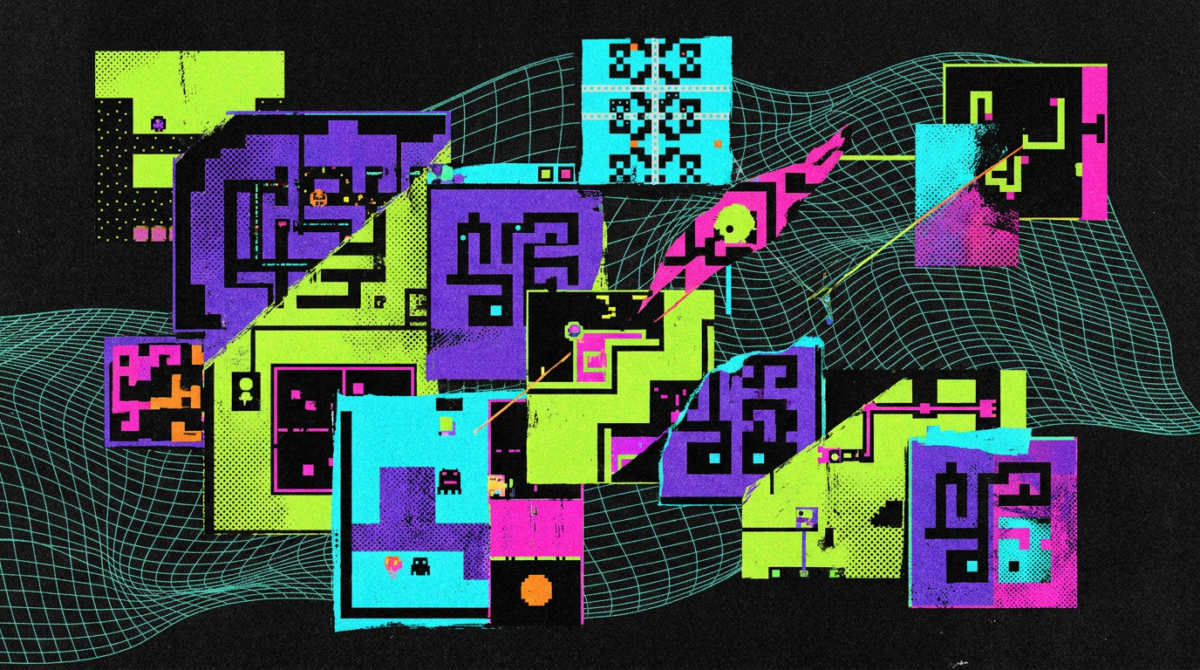
Anthropic's Claude Opus 5 has become the top-performing model on ARC-AGI-3, a benchmark designed to test whether AI systems can solve unfamiliar tasks rather than rely on stored knowledge or patterns seen during training.
According to ARC Prize, Claude Opus 5 scored 30.2 percent on ARC-AGI-3, nearly four times the previous record of 7.8 percent set by OpenAI's GPT-5.6 Sol (Max). The result also places Opus 5 ahead of Anthropic's "Fable-class" models, which reached around 20 percent, according to ARC Prize.
Opus 5 solved five environments that had not previously been solved, including four at or above human level. Six of the 25 public demo environments have now been solved. ARC Prize has made the full results, scorecard, and benchmarking code publicly available.
ARC Prize's analysis attributes Opus 5's lead to stronger logical reasoning, "which enables more autonomous exploration, planning, and execution across unfamiliar environments." During testing, researchers also observed behavior they said had not previously appeared in an AI model, including translating tasks into algebraic notation and independently formulating reflection equations.
On older versions of the benchmark, Opus 5 reached 90.4 percent on ARC-AGI-2 and 97.5 percent on ARC-AGI-1. ARC Prize said both scores match previous top results, although at slightly higher costs.
ARC-AGI-3 focuses on unfamiliar interactive tasks
ARC-AGI-3 measures how well AI models handle new tasks they did not encounter during training, including tasks that humans can usually solve with little difficulty. The current version is structured like a game: the model must infer the rules of an interactive environment, plan actions, and execute those actions step by step.
The benchmark is intended to test general reasoning rather than memorized knowledge. ARC Prize distinguishes between a model's standalone performance and systems that use additional software, known as a harness. Some AI systems may already have passed the benchmark with such external assistance, but official scores count only the language model's own performance. ARC Prize argues that future AGI systems should not require outside help to solve new tasks. The article notes that Opus 5 would likely score higher if used within Claude Code.
That distinction is important for comparing benchmark claims, because an assisted system can combine a language model with tools, scaffolding, or other execution support, while ARC-AGI-3's official ranking is meant to isolate the model's own ability to explore and solve new environments.
Independent tests point to narrower gains
Anthropic has not explained the improvement. The source article says targeted data labeling and reinforcement learning are plausible factors, while noting that Opus 5 was developed after ARC-AGI-3 and its format became public. That timing may have allowed Anthropic to focus on the benchmark's skills and puzzle formats, though it does not show that the company trained on the exact tasks.
Annotators could have labeled reasoning traces, useful actions, failed attempts, and recovery steps from similar puzzles. Reinforcement learning could then reward exploration, planning, rule discovery, and self-correction.
Tests on Witness, Guanghan Ning's private benchmark for interactive puzzle games, suggest more limited gains. Opus 5 scored 43.4, statistically tying Kimi K3 and Fable 5, while improving much less over Opus 4.8 than it did on ARC-AGI-3. In those tests, Opus 5 identified the hidden rules of a conventional puzzle before taking any action, but it trailed Opus 4.8 on a game with less familiar mechanics.
Ning said that pattern is consistent with training on genre-specific data, although Witness cannot identify what data Anthropic used. His comments were posted on X at https://x.com/quietnning/status/2080786711861407883.
Greg Kamradt, one of the researchers behind ARC-AGI-3, said the results do not rule out broader reasoning gains. A game built on familiar mechanics does not test adaptation to novelty, and one weak result does not outweigh the model's overall improvement without detailed scores for that task. Kamradt's comments were posted on X at https://x.com/GregKamradt/status/2081031602596200614.
Witness was also designed around ARC-AGI-3-style puzzles, so stronger performance could reflect genuine transfer rather than memorization. Ning later clarified that Opus 5 did generalize to Witness, but far less than it did on ARC-AGI-3. He compared the process to the evolution of coding benchmarks, saying that as a major target for interactive reasoning, ARC-AGI-3 will likely attract the most training effort first.
Ning said that covering more edge cases could then help models generalize to a wider range of abstract reasoning tasks. He compared the pattern to coding, which moved from saturated benchmarks such as HumanEval to frequently updated competitions and today's coding agents. His later clarification was posted at https://x.com/quietnning/status/2081073990614061084.

