CLARITY Act's September 15 Senate Vote Is Just the Start of the Process, Digital Chamber CEO Says
Key Takeaways
- •The September 15 Senate vote on the Clarity Act is a procedural cloture vote, not a final vote on the bill.
- •After the vote, senators would still need to complete amendments and additional floor votes before final passage.
- •Carbone said ethics is the biggest obstacle and argued the bill cannot reach 60 votes without resolving that issue.
- •He said new ethics language from Senators Thom Tillis and Ruben Gallego was sent to the White House before the August recess and is still under review.
- •Carbone said BRCA is in a good position and that the bill could move quickly if remaining issues are settled in time.
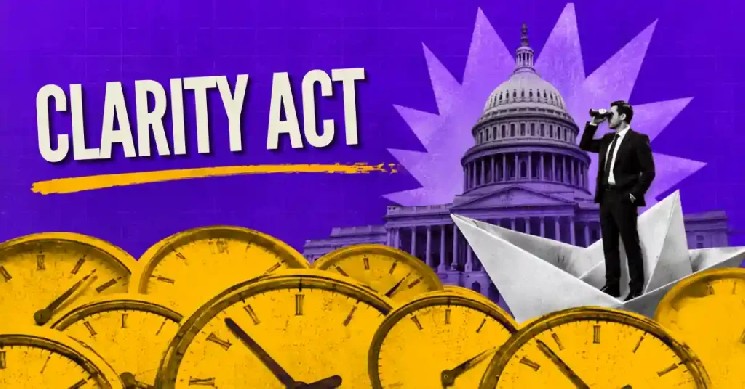
Cody Carbone, CEO of The Digital Chamber, has laid out a detailed preview of what to expect from the Senate's September 15 vote on the Clarity Act, cautioning that the date marks the start of a legislative process rather than a final outcome.
What the September 15 Vote Actually Is
Senate Majority Leader John Thune scheduled the vote before the August recess. Carbone said he feels "very confident that we're going to start the process on September fifteenth," but was explicit about what that vote does — and does not — mean.
"That vote on September fifteenth, it's very important for people watching, is not the final passage vote," Carbone said. He explained that it will be a procedural cloture vote around debate, not a vote on the bill itself. "We are not going to know when they kickstart that… what the ultimate fate of this bill is."
Following that vote, Carbone said, senators would need to work through an amendment process and additional votes before reaching a final floor vote. "It's just kickstarting the process," he said. "It is a great first step. It is a required first step."
That sequencing matters because the Clarity Act is still moving through the normal Senate bargaining process, where the first procedural vote only determines whether debate can advance. The real test, Carbone suggested, comes in the days that follow as lawmakers negotiate changes that can hold together enough support to reach the 60-vote threshold.
A Three-Week Window
Carbone noted that lawmakers will be in session for three weeks after September 15 before breaking ahead of the election, and he outlined two possible scenarios.
In a fast-moving version, the bill "could move very, very quickly" if outstanding issues are resolved beforehand — potentially clearing the Senate within 48 to 72 hours of the vote, passing the House the following week, and reaching the president's desk shortly after.
Alternatively, the process could stretch closer to the full three-week deadline. "We're still up in the air on where this bill sits," he said.
Ethics: The Biggest Roadblock
Asked which of the bill's remaining challenges — ethics provisions, stablecoin yield rules, and the Blockchain Regulatory Certainty Act (BRCA) — poses the greatest risk, Carbone was direct. "To me, it's ethics," he said. "Ethics is the biggest challenge by far. You're not gonna get sixty if you don't have ethics figured out. Ethics is the linchpin here."
He said Senators Thom Tillis and Ruben Gallego sent new ethics language to the White House before the August recess, and that language remains under review. "We have not heard any public comment from the White House," Carbone said, adding that a previous, more robust ethics provision from the White House was rejected by Democrats early on.
Where the Other Issues Stand
Carbone said BRCA is "in a good place," citing recent support from law enforcement groups that has helped build bipartisan momentum.
"I feel pretty good about the support we have in the Senate" on that front, he said, though he acknowledged that crypto advocates still need to do more direct education with senators outside the Banking Committee, many of whom are hearing from community bankers with decades-long relationships.
That outreach piece could shape how the bill fares once it leaves the core committee audience and enters the broader floor debate, where members who have not been in the details of crypto legislation will still need to decide whether the current language is workable.
The Stakes, in Carbone's Words
Carbone framed the moment as a narrow window for the United States to lead on crypto policy. "If we don't do this now, other countries are going to continue to do this," he said, pointing to how Europe fell behind the US during the dot-com boom.
"This crypto needs to be the next frontier where the US leads from the very beginning… We can't squander this chance," he said.
He added that failing to pass the bill would not leave the industry without a path forward, noting confidence in regulators Paul Atkins and Michael Selig to continue rulemaking at the SEC and CFTC. "But we need the durability of legislation," he said. "Now is the time."
Source: CryptoNewsNet | Coinpedia
