CLARITY Act Faces September 15 Senate Procedural Vote as Passage Odds Decline
Key Takeaways
- •The CLARITY Act's September 15 cloture vote requires 60 Senate votes to advance, meaning Republican supporters must secure Democratic backing even with full party unity.
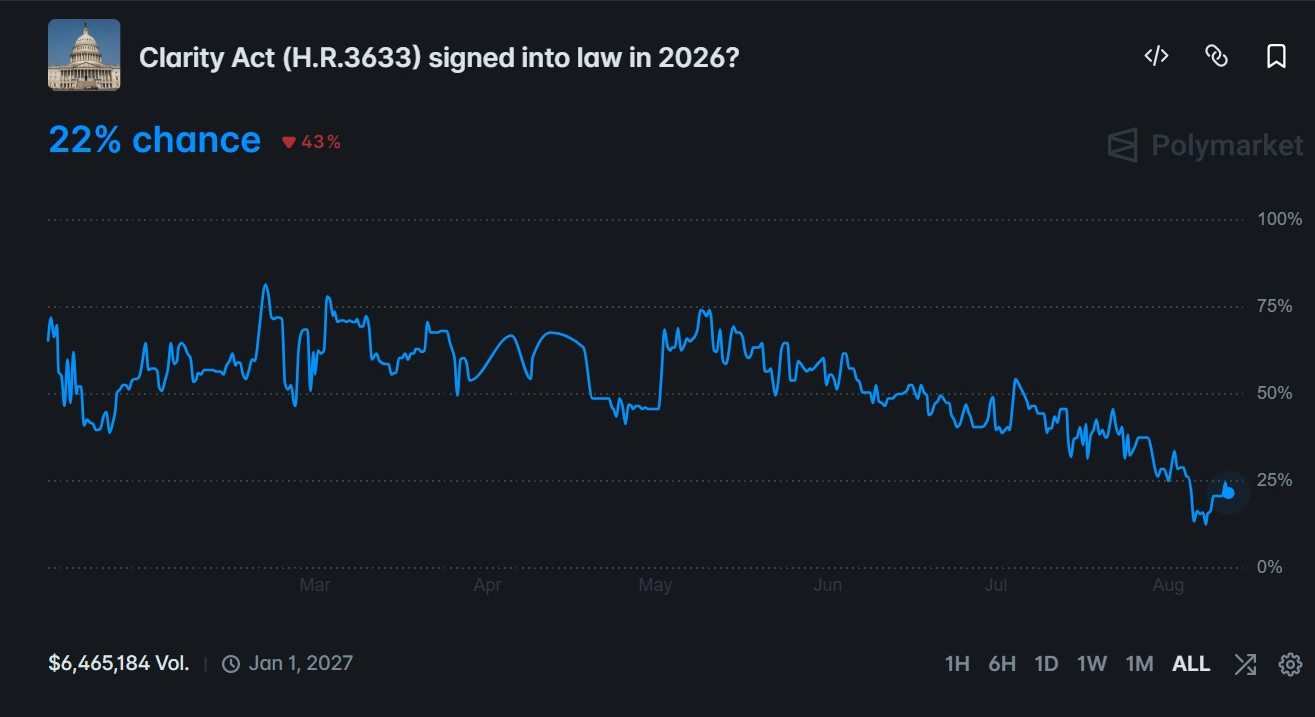
- •TD Cowen analyst Jaret Seiberg estimates only a 25% probability of the bill becoming law, while Polymarket prediction data places the odds at 22%, down 43% from earlier levels.
- •The legislation would establish the first federal market structure for digital assets by splitting regulatory jurisdiction between the Securities and Exchange Commission and the Commodity Futures Trading Commission.
- •Unresolved disagreements over ethics provisions regarding President Trump's crypto holdings, anti-money-laundering protections, and stablecoin-related banking concerns continue to complicate bipartisan negotiations.
- •The Senate has just 14 session days remaining before its October election recess, intensifying pressure to resolve outstanding disputes before campaign activity dominates the fall calendar.
The CLARITY Act is set for a critical Senate procedural vote on September 15 at 2:15 PM ET, after lawmakers departed Washington without holding the expected August vote. Senate Majority Leader John Thune filed cloture on the motion to proceed before the chamber began its August recess, setting up the vote for one day after senators return on September 14.
The cloture motion requires 60 votes, meaning Republicans will need Democratic support even if every voting Republican backs it. The outcome will determine whether the Senate can limit debate and advance the crypto market structure bill toward full floor consideration.
The delay has narrowed the bill's legislative window before the November midterm elections. Reuters reported that the Senate has only 14 session days before its October election recess.
Senate Lines Up September 15 Test
The Senate Banking Committee advanced the CLARITY Act in May 2026 through a 15-9 bipartisan vote. Lawmakers now face a compressed legislative calendar ahead of the November midterms.
TD Cowen analyst Jaret Seiberg assigns the bill a 25% chance of becoming law and a 75% chance of failure. His failure scenarios include a failed follow-up cloture vote, no September vote at all, or Senate action stalling after the first procedural step. Seiberg cited disputes over ethics rules and anti-money-laundering provisions as factors that could shape the September 15 vote and subsequent Senate negotiations.
Polymarket data showed a 22% chance that the CLARITY Act will become law in 2026, down 43% from earlier levels. The prediction market has recorded approximately $6.47 million in trading volume, with odds falling sharply since July.
Trump Administration Pushes for September Passage
Patrick Witt, executive director of the President's Council of Advisors for Digital Assets, said the administration is "fully committed" to passing the CLARITY Act in September. He urged Democrats to continue working with Republicans on the bill and said the White House will keep negotiating before the vote.
Witt argued that Congress needs to establish durable digital asset rules through legislation, linking the bill to law enforcement powers, U.S. financial market leadership, and competition with other nations. His remarks followed the Senate delay, which frustrated several Republican supporters who had expected action before the recess. The push for congressional action comes as other jurisdictions have moved ahead with their own frameworks, including the European Union's Markets in Crypto-Assets regulation, which began full implementation in 2024.
Ethics and Banking Concerns Remain Unresolved
Lawmakers remain divided over ethics provisions tied to President Donald Trump's crypto business interests. Democrats have sought stronger restrictions, while a bipartisan counteroffer would give state attorneys general a role in enforcement. Trump has stated he does not oppose a blind trust for family crypto businesses but objects to rules that single him out specifically.
Community banks have also raised concerns about stablecoin rewards and potential deposit competition. Senator Cynthia Lummis has pushed back on those claims, pointing to FDIC data for the first quarter showing domestic deposits rising 2.1% for a seventh consecutive quarterly increase.
Anti-money-laundering rules also remain part of the negotiations. Some lawmakers are demanding stronger Bank Secrecy Act protections before supporting final passage. These issues could shape amendment votes if the Senate clears the first cloture motion in September.
Narrow Senate Window
The CLARITY Act would create a federal market structure for digital assets, dividing oversight between the Securities and Exchange Commission and the Commodity Futures Trading Commission. The bill's core policy question — which digital assets are regulated as securities under the SEC and which fall under CFTC commodity jurisdiction — addresses a regulatory ambiguity that has persisted without congressional action for years. The House passed H.R. 3633 in July 2025. Lummis released updated Senate text on July 22, with her office stating the draft combines work from both committees and reflects bipartisan negotiations.
The Senate now has limited floor time to resolve remaining disputes before campaign activity intensifies in the fall. The September 15 vote will not send the bill directly to President Trump; rather, it will test whether supporters can secure enough votes to begin the next stage of Senate debate. If cloture succeeds, senators can proceed toward amendments and another vote to end debate before final passage.
Meanwhile, regulators are continuing their own crypto policy work. The SEC has scheduled an August 14 meeting to consider a proposed framework for certain crypto investment contract offerings. The CFTC has also planned an August 20 meeting of its Innovation Advisory Committee, with members from both crypto and traditional finance firms.

