CLARITY Act Faces Key September 15 Senate Cloture Vote as Passage Odds Fall
Key Takeaways
- •The House passed the CLARITY Act 294–134 in July 2025, with 78 Democrats joining Republicans in support.
- •The Senate Banking Committee advanced the bill 15–9 in May 2026, but a full Senate vote was delayed by a Democratic push for ethics rules tied to President Trump's crypto profits.
- •A Senate cloture vote is scheduled for September 15, and the bill needs 60 votes to advance past that procedural threshold.
- •Polymarket's estimated probability of the bill's passage has fallen from 82% in February to about 14%.
- •The CLARITY Act aims to clarify the SEC–CFTC jurisdictional split over digital assets, following the GENIUS Act stablecoin law signed in July 2025.
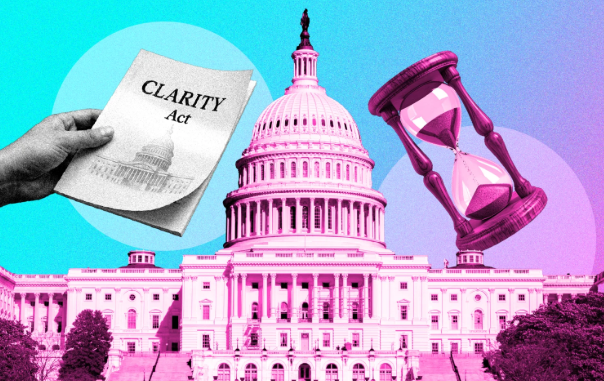
The CLARITY Act is approaching a critical test in the U.S. Senate, where lawmakers are scheduled to consider the legislation on September 15 as the cryptocurrency industry awaits a clearer federal regulatory framework. According to information shared on X by @coinbureau, the bill now faces significantly weaker passage expectations than it did earlier this year.
The House of Representatives approved the legislation 294–134 in July 2025, with 78 Democrats joining Republicans in support. The measure later advanced through the Senate Banking Committee by a 15–9 vote in May 2026, but progress toward a full Senate vote was delayed amid a dispute involving ethics rules and President Donald Trump's crypto profits.
The upcoming vote is expected to be a major test for the legislation because the bill requires 60 votes to advance.
House Approved the CLARITY Act in 2025
The CLARITY Act has already secured substantial support in the House. Lawmakers approved the measure 294–134 in July 2025, with 78 Democrats joining Republicans in voting in favor.
The House vote marked a significant initial step toward the bill becoming federal law. However, House approval did not guarantee passage in the Senate, where the bill faces a different political environment and a higher procedural threshold.
The legislation is intended to establish clearer rules for the U.S. cryptocurrency market, an area that has remained subject to regulatory uncertainty and overlapping oversight from federal agencies. At the center of that uncertainty is the divide between the Securities and Exchange Commission and the Commodity Futures Trading Commission over which digital assets count as securities and which fall under commodities law—a jurisdictional question that has shaped U.S. crypto enforcement and litigation for years. The CLARITY Act is part of a broader congressional effort to resolve that split; it followed the GENIUS Act, a stablecoin regulatory law signed in July 2025, which addressed one segment of the digital-asset market while leaving broader market-structure questions open.
Senate Banking Committee Advances Legislation
The bill cleared another major hurdle in May 2026 when the Senate Banking Committee voted 15–9 to advance it.
Despite that committee approval, the legislation did not immediately proceed to a full Senate vote. According to the information shared on X, Democrats refused to move forward without ethics rules addressing Trump's crypto profits.
The disagreement created an additional political obstacle as lawmakers negotiated the conditions under which the broader legislation could advance. The delay has left the bill facing a compressed timeline ahead of the September vote.
September 15 Vote Requires 60 Votes
The Senate is scheduled to hold a cloture vote on September 15, the day after senators return from recess. Cloture is a procedural mechanism used in the Senate to end debate and move toward a vote.
The CLARITY Act needs 60 votes to survive the cloture stage, making bipartisan support particularly important. The 60-vote requirement is higher than a simple majority, meaning the bill's future will depend on whether enough senators from both parties are prepared to support moving the legislation forward.
The September 15 vote therefore represents an important procedural milestone even before the Senate considers the legislation's final passage.
Passage Expectations Have Fallen Sharply
Market-based expectations for the legislation have also changed significantly. According to Polymarket data cited in the X post, the estimated probability of passage has fallen from 82% in February to roughly 14% today.
The decline reflects growing uncertainty surrounding the bill's prospects as the Senate vote approaches. The prediction-market figure does not determine the outcome, but it provides an indication of how market participants currently assess the likelihood of passage. The change is particularly notable because the legislation previously appeared to have a much stronger chance of advancing.
Why the CLARITY Act Matters for Crypto Regulation
The legislation is being closely watched because it could establish a more defined regulatory framework for digital assets in the United States. For cryptocurrency companies, investors, and financial institutions, clearer rules could help establish how different digital assets and businesses are treated under federal law. The precise impact, however, would depend on the final legislation approved by Congress and how its provisions are subsequently implemented.
The bill's progress has demonstrated both bipartisan support and political disagreement. Its strong House vote and Senate Banking Committee approval show that the legislation has gained significant congressional backing, while the Senate delay and the dispute over ethics requirements illustrate the remaining obstacles.
With the cloture vote scheduled for September 15 and a 60-vote threshold required, the next stage will determine whether the CLARITY Act can overcome its current political challenges. For the U.S. crypto industry, the vote could become an important milestone in determining the direction of federal digital-asset regulation. If cloture fails, the bill would remain stalled in the Senate, while success would set up a final passage vote—making the September 15 outcome the key detail to watch for anyone following U.S. crypto market-structure policy.
