Clarity Act Stalls in US Senate Ahead of Summer Recess
Key Takeaways
- •The Clarity Act would assign the CFTC exclusive jurisdiction over spot and cash markets for digital commodities while leaving securities under SEC oversight, marking the first comprehensive federal crypto statute.
- •TD Cowen analyst Jaret Seiberg estimates that supporters remain approximately ten votes short of the 60 required to invoke cloture, with Republicans needing roughly seven Democratic votes to advance the bill.
- •Senators Gallego and Tillis proposed an ethics compromise that would bar officeholders and spouses from issuing or sponsoring digital assets, enforced by the Justice Department and state attorneys general, with a sunset clause expiring January 2029.
- •The National Sheriffs' Association and Senator Cortez Masto have objected to broad exemptions in the bill's money laundering, sanctions, and know-your-customer provisions, arguing they could undermine criminal investigations.
- •If the Clarity Act does not pass, the principal regulatory framework remains a joint SEC-CFTC interpretive guideline issued in March 2026, which carries no binding authority over future administrations.
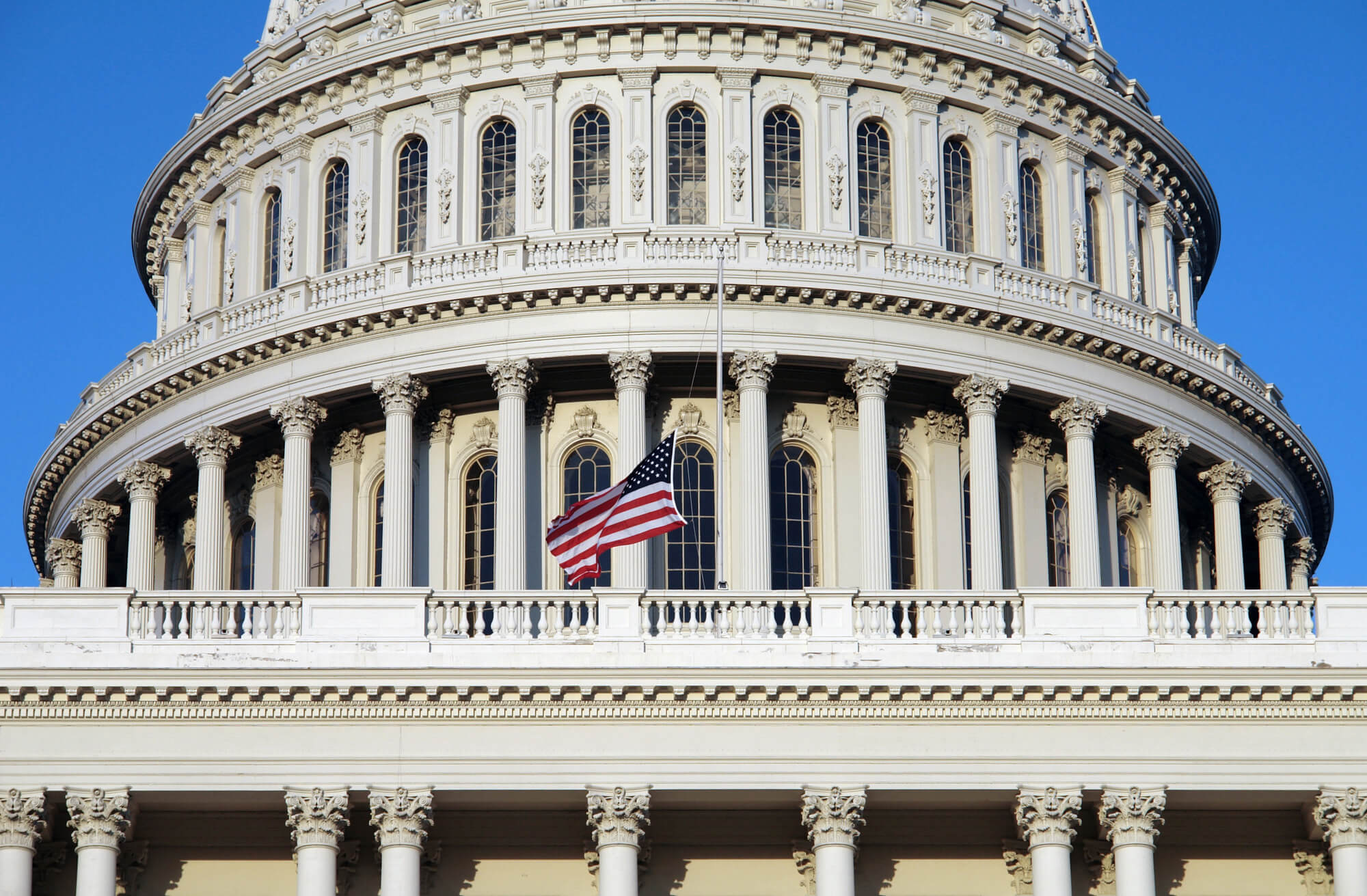
The Clarity Act faces mounting risk of failure in the US Senate, with 7 August marking the final session day before the chamber's summer recess. Majority Leader John Thune has yet to schedule a cloture vote, while two major unresolved issues — ethics rules addressing President Trump's cryptocurrency business interests and law enforcement concerns over money laundering controls — continue to divide lawmakers. The legislation would be the first comprehensive federal statute for digital assets, filling a void that has persisted even as the US crypto industry has grown to serve tens of millions of users.
Federal Framework at Stake
The Clarity Act, formally known as the Digital Asset Market Clarity Act, would establish the first comprehensive federal regulatory framework for the US cryptocurrency industry. Under the proposed legislation, the Commodity Futures Trading Commission (CFTC) would oversee digital commodities, while securities would remain under the jurisdiction of the Securities and Exchange Commission (SEC). Until now, US crypto firms have navigated a patchwork of SEC and CFTC enforcement actions, administrative guidance, and court rulings rather than a unified statutory regime — an environment industry groups argue pushes business toward jurisdictions with clearer rules.
The House of Representatives passed the bill in July 2025 by a vote of 294 to 134. In the Senate, the Agriculture Committee advanced its portion in January 2026, followed by the Banking Committee in May on a 15-to-9 vote. On the Senate floor, however, the filibuster raises the effective threshold to 60 votes. TD Cowen analyst Jaret Seiberg recently estimated the vote gap at approximately ten.
Trump's Crypto Holdings Complicate Ethics Negotiations
A central point of contention involves the president's own cryptocurrency holdings. In late July, Senators Ruben Gallego (D-Ariz.) and Thom Tillis (R-N.C.) submitted an ethics compromise to the White House. The proposal would prohibit officeholders and their spouses from issuing or sponsoring digital assets, though other family members would be exempt.
Enforcement would fall to the Justice Department, with state attorneys general retaining independent authority. A sunset clause would cause the restrictions to expire in January 2029 — notably coinciding with the end of the current presidential term, after which no new cases could be brought.
President Trump had previously agreed to a narrower version of the rule. The inclusion of state attorneys general, however, goes further by creating a second enforcement layer outside the federal government. The provision would apply to a president whose inner circle is itself active in the crypto business. Financial disclosures from June 2026 revealed payments in the millions to Trump in connection with the crypto company World Liberty Financial.
The White House did not initially respond to a request for comment on the ethics question. For Democrats, the ethics clause serves as a precondition; only once it is resolved does the caucus intend to negotiate the actual market structure.
Senator Elizabeth Warren (D-Mass.) released a fact sheet the same week, criticizing what she characterized as Trump's ability to profit from his own crypto dealings. She also cited inadequate investor and consumer protections. One Democratic Senate aide, however, contended that White House approval was not essential.
"Honestly, we don't need the White House for it to pass the Senate." — Democratic Senate aide
Law Enforcement Raises Concerns Over Money Laundering Gaps
The second major dispute centers on illicit finance — specifically money laundering, terrorist financing, and sanctions evasion. Senator Catherine Cortez Masto (D-Nevada) has repeatedly opposed the draft in its current form, arguing that the Clarity Act does not go far enough on law enforcement and consumer protection. Her vote is among those Republicans need to reach the 60-vote threshold.
The National Sheriffs' Association, which represents US sheriffs, has raised similar objections. The organization has criticized what it considers overly broad exemptions in money laundering rules, sanctions law, and know-your-customer requirements — the latter mandating that financial service providers identify customers and report suspicious transactions. According to the association, investigators risk losing critical leads when crypto service providers partially fall outside this regime.
Warren's fact sheet similarly identifies loopholes that could facilitate criminal abuse of digital assets. The objections from law enforcement and lawmakers converge on the same section of the draft. Unlike the ethics clause, these concerns target the statutory text itself, meaning any fix would touch the core of the bill rather than an accompanying provision.
Cloture Remains the Critical Hurdle
The decisive obstacle is cloture — the procedural vote that ends Senate debate and allows a vote on the substance of the bill. Without it, a minority can delay legislation indefinitely through a filibuster. The 60-vote threshold means Republicans need approximately seven Democratic commitments. By Seiberg's estimate, secured votes recently stood about ten short of that mark. Thune had promised a vote before the recess, yet by midweek he had not filed the necessary motion.
A third negotiating track runs in parallel through the Senate Agriculture Committee. Because the bill touches both securities and commodities oversight, two Senate committees worked on separate versions. Senator Cory Booker (D-N.J.) now leads discussions on integrating the agriculture text into the overall bill. The committee passed its version in January 2026 without a single Democratic vote, and the caucuses continue to negotiate its integration.
A Democratic Senate aide described the state of talks as a "standstill," identifying ethics, illicit finance, and the agriculture committee text as the principal open items. The aide summarized the situation bluntly: "We're all kind of waiting to see what will happen." September was cited as a realistic window, provided the contested points can be resolved by then. Summer Mersinger, CEO of the advocacy group Blockchain Association, has nonetheless expressed optimism about the bipartisan negotiations.
Stakes for US Crypto Regulation
After 7 August, the Senate pauses for a month. When the chamber returns, little time remains before the November elections, and political attention will increasingly shift to the campaign trail, narrowing the window for legislation of this magnitude.
The House passed the bill in July 2025 during what was dubbed "Crypto Week," immediately following the GENIUS Act, the stablecoin law. Alongside the Republicans present, 78 Democrats voted in favor — but that level of bipartisan support has not materialized in the Senate.
The bill's predecessor, FIT21, cleared the House in an earlier Congress before stalling in the Senate. The FTX collapse and resistance to curtailing SEC jurisdiction contributed to that failure. Core structural elements from that earlier draft remain in the Clarity Act today, including the classification of assets into "digital commodities" and "investment contract assets," as well as the expansion of CFTC authority.
At stake is the supervisory architecture for the entire US crypto market. The CFTC would gain exclusive jurisdiction over spot and cash markets for digital commodities, while securities would remain with the SEC. Stablecoins would fall under shared oversight by both agencies. The EU implemented its own comprehensive crypto framework, the Markets in Crypto-Assets Regulation (MiCA), in 2024, giving European firms a defined rulebook while US counterparts continue to await comparable federal legislation.
Absent passage, the primary regulatory anchor would remain a joint interpretive guideline issued by the SEC and CFTC in March 2026. That guideline replaced the SEC's 2019 framework and currently governs the classification of digital assets. As an administrative measure, however, it is not binding on future administrations, and new agency leadership could revoke it at any time.

