Senate Releases Revised 630-Page Clarity Act Ahead of September 15 Vote
Key Takeaways
- •The Senate’s September 15 cloture vote requires 60 votes, while Republicans hold 53 seats and no Democrat currently supports the revised text.
- •The bill would assign securities oversight to the SEC, futures oversight to the CFTC, and establish classifications for crypto assets.
- •Certain DeFi trading protocols deemed insufficiently decentralized would need CFTC registration for specified spot and cash-settled digital-commodity transactions.
- •The revised ethics provision would be enforced by the Justice Department and expire in January 2029.
- •The Clarity Act previously passed the House 294-134 in July 2025 but stalled after the House approved the GENIUS Act, which President Trump signed.
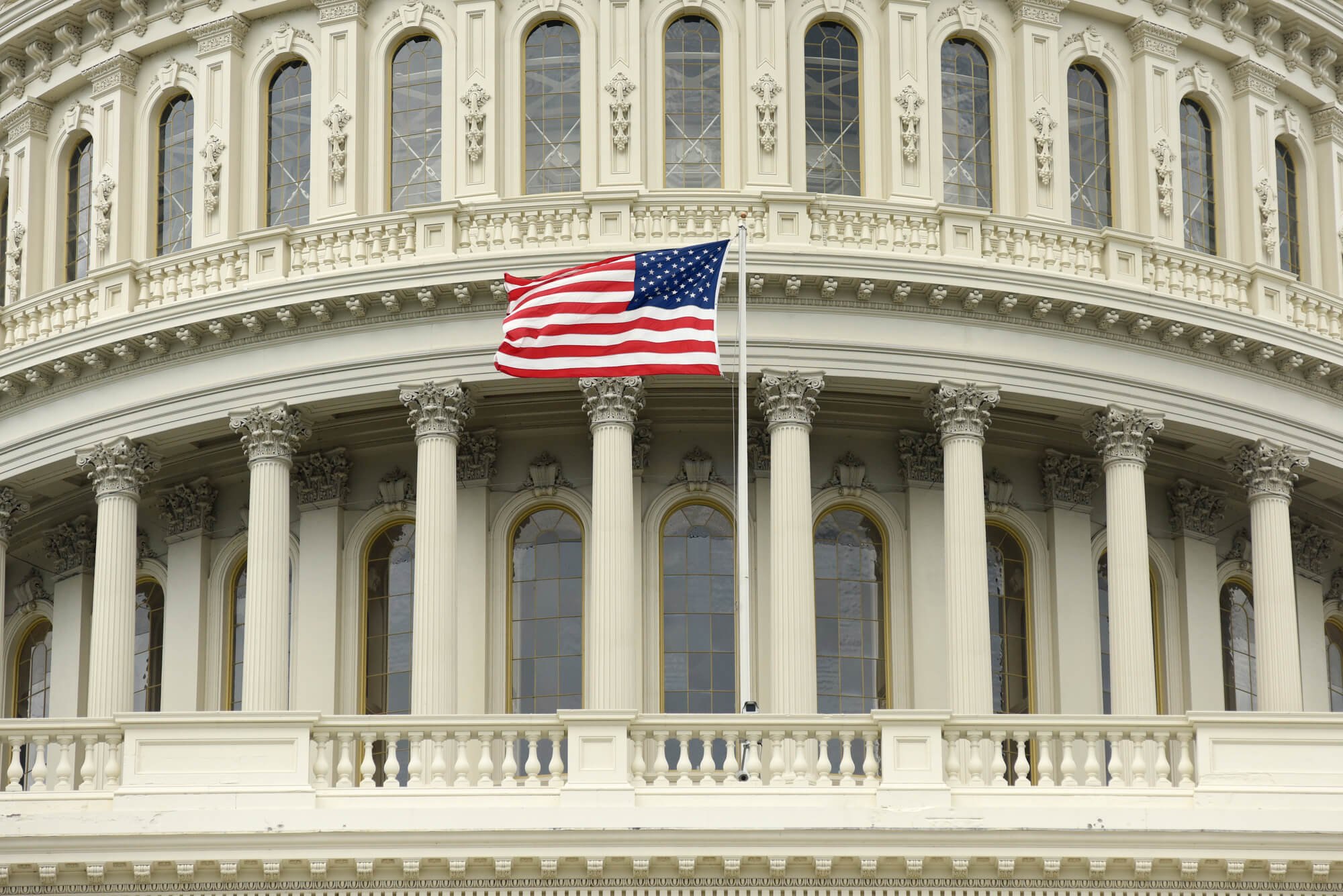
Republicans in the US Senate have released a revised, 630-page version of the Clarity Act, with the chamber’s first vote scheduled for September 15. According to Crypto Valley Journal, the bill still lacks Democratic support, which would be decisive for passage. Politico also reported that Democrats do not currently back the revised text.
The Clarity Act would be the first comprehensive US legislation focused on crypto market structure. It seeks to divide regulatory oversight between the Securities and Exchange Commission (SEC), which oversees securities, and the Commodity Futures Trading Commission (CFTC), which oversees futures. The bill would also define when a crypto asset is considered a security and when it qualifies as a digital commodity.
The legislation originally passed the House of Representatives with a bipartisan majority of 294 to 134 votes in July 2025. On the same day, the House approved the GENIUS Act on stablecoin regulation. President Donald Trump signed that legislation one day later. The Clarity Act subsequently stalled.
The latest draft incorporates more than 114 provisions requested by Democrats. It also introduces a registration requirement with the CFTC for certain decentralized finance, or DeFi, trading protocols.
Revised draft adds DeFi registration requirement
Republicans are seeking opposition votes with the revised text. Senator Cynthia Lummis described the incorporated requests as the basis for a strong, bipartisan product. The draft, however, goes beyond concessions by introducing new obligations for parts of the DeFi sector.
DeFi refers to financial applications in which blockchain-based smart contracts settle transactions without a central intermediary. Under the draft, trading protocols that do not meet the required standard of decentralization would have to register with the CFTC. The bill refers to these entities as “non-decentralized finance trading protocols.” The CFTC and the US Treasury Department would be responsible for issuing implementing rules.
The degree of decentralization would therefore determine whether a trading protocol falls under federal oversight. At the same time, the revised text narrows the scope of the DeFi provisions. They would apply only to spot trades and cash-settled transactions involving digital commodities. In a cash-settled transaction, only the difference in value is transferred as money; the underlying asset does not change hands.
Lummis said the restriction is intended to address concerns raised by tribal governments of Indigenous peoples about prediction markets. On those platforms, users bet on the outcomes of real-world events.
Senate procedural vote requires 60 votes
The September 15 vote will be a procedural step known as a cloture vote. It will determine whether the Senate takes up the bill for debate. Cloture requires 60 of the chamber’s 100 votes, preventing a simple majority from forcing debate on a bill over the minority’s objection.
Republicans hold 53 Senate seats and cannot reach the 60-vote threshold without support from the other party. No Democrat currently supports the revised version.
The bill previously received bipartisan support in the Senate Banking Committee in May 2026. Democrats Ruben Gallego of Arizona and Angela Alsobrooks of Maryland voted for the earlier version, which passed the committee by 15 votes to 9. That support applied to the committee text rather than the latest draft. Even if every Republican votes for the bill, at least seven Democratic votes would still be required.
The political calendar also affects the legislation’s prospects. Lummis is not seeking reelection in the 2026 midterm elections, and her Senate term ends in January 2027. She announced her retirement in December 2025, leaving the senator leading the bill only a few months remaining in office.
The treatment of stablecoin yields is another central dispute between banks and the crypto industry. The Banking Committee draft prohibits interest and yield payments for simply holding stablecoins but permits rewards tied to activity.
Ethics clause would expire in January 2029
The bill’s ethics clause is politically sensitive. In July 2026, President Trump agreed to the underlying provision, which bars officials, employees and their spouses from issuing or sponsoring digital assets.
The revised bill leaves enforcement authority with the federal Department of Justice (DOJ), rather than state attorneys general. State attorneys general operate independently of Washington and can bring their own cases, while the DOJ is a federal department that reports to the President. Democrats had therefore sought authority for state attorneys general to prosecute violations as well.
The clause also contains a built-in expiration date. It would expire in January 2029, the same month in which President Trump’s current term ends. Lummis has argued that legislation, unlike a regulation, would give the crypto industry a lasting solution and protect it from regulatory changes under successive administrations. That permanence would not extend to the ethics provisions.
US framework compared with Europe and Switzerland
Lummis has cited international competition over crypto regulation as one reason for urgent action. One day before the revised text was released, she called for passage of the Clarity Act on X, writing that the United States has a long tradition of leadership that it must not abandon.
“The Clarity Act allows the United States to write these rules instead of watching from the sidelines while Singapore or the UAE write them for us.” — Cynthia Lummis, US Senator (Wyoming)
The European Union’s Markets in Crypto-Assets (MiCA) regulation entered into force in June 2023. Under MiCA, crypto firms can access all 27 EU member states with a single license through a system known as passporting.
Switzerland has taken a different, principles-based approach to crypto activities. Its framework relies on the token taxonomy of the Swiss Financial Market Supervisory Authority (FINMA) and the Anti-Money Laundering Act. The country’s DLT Act, which has been in force since August 2021, also forms part of the framework. Swiss law therefore does not provide a single crypto license modeled on MiCA.
The United States is comparatively advanced on stablecoins because the GENIUS Act establishes a comprehensive federal law in that area. However, the law will take effect on January 18, 2027, or 120 days after regulators issue the implementing rules, whichever date comes first.
The broader US crypto market still lacks a crypto-specific legal boundary dividing authority between the SEC and the CFTC. That division will not be established until the Clarity Act takes effect. If the cloture vote fails on September 15, the regulatory gap will remain open for the time being.

