CLARITY Act Could Get Another Shot During Lame-Duck Session, Policy Advocate Says
Key Takeaways
- •The CLARITY Act failed a Senate cloture vote on Tuesday, falling short of the 60 votes needed to end debate under the Senate's filibuster rule.
- •Adrian Wall of the Digital Sovereignty Alliance said senators from both parties told him they are considering a renewed push to advance the bill during the lame-duck session.
- •Wall described Tuesday's outcome as a huge blow but said a lame-duck attempt would be complicated and is a long shot.
- •If the lame-duck effort fails, the bill would need to be reintroduced in the next Congress because unfinished legislation does not carry over.
- •The CLARITY Act, which cleared the House in July 2025, seeks to establish a federal framework dividing digital asset oversight between securities and commodities regulators.
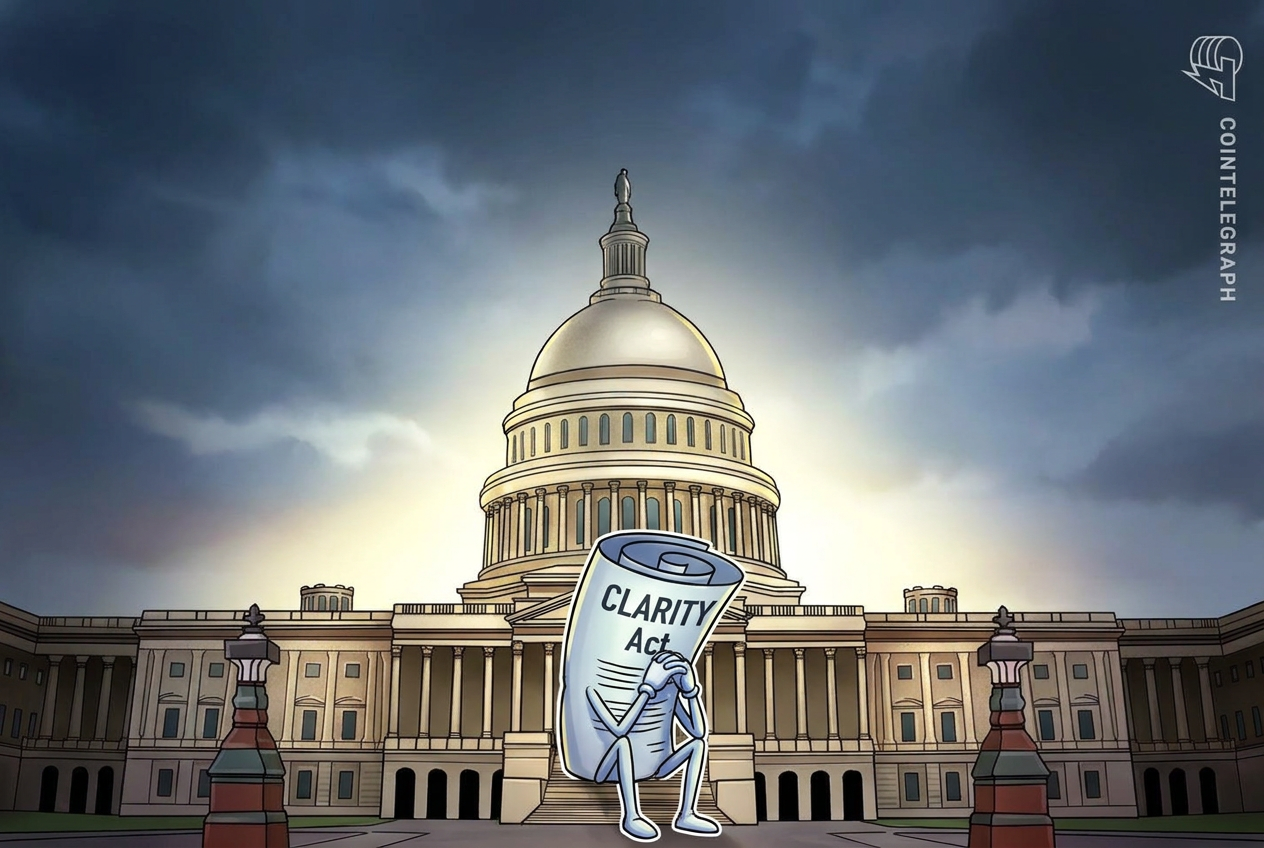
The CLARITY Act could receive another opportunity in Congress during the post-election lame-duck session, despite failing to advance in the Senate earlier this week, according to Adrian Wall, managing director of the Digital Sovereignty Alliance.
Wall said on Wednesday that he has spoken directly with senators from both parties who are weighing another attempt to advance the crypto market structure legislation before the current Congress ends. He made the remarks during an appearance on Cointelegraph's Chain Reaction show on X.
“There is an appetite to put this forward even during the lame duck period of Congress,” Wall said. “Is it easy? No. It’s going to be very complicated. It’s a long shot.”
He added that he had heard the possibility from senators themselves rather than from congressional staff. “I’ve heard it directly from senators on both sides [...] saying they have a strategy to engage the other side and see if there’s a last chance to do it,” Wall said.
The comments follow Tuesday's failed Senate cloture vote, which left the CLARITY Act short of the 60 votes required to move forward. Cloture is the procedural step used to end debate on a bill, and the 60-vote requirement stems from the Senate's filibuster rule, under which a minority of senators can block most legislation from reaching a final vote. Any renewed attempt during the lame-duck session would have to clear the same threshold — the hurdle on which the bill stalled this week.
Wall described Tuesday's outcome as a “huge blow,” but said it was not necessarily the end of the legislation. If another attempt during the lame-duck session falls short, he said, the next Congress could “pick up the pen” on crypto market structure legislation. That would amount to fresh start rather than a continuation: legislation that has not passed by the time a Congress ends does not carry over, so the bill would need to be reintroduced and move through the process again.
A lame-duck session is the period following an election in which the outgoing Congress can still consider and pass legislation before newly elected members are sworn in, making the session the current Congress's final opportunity to act on the measure.
The CLARITY Act, which previously cleared the House of Representatives in July 2025, is a market structure bill designed to establish a federal regulatory framework for digital assets, setting out how oversight would be divided between securities and commodities regulators in the United States. That division is the crux of the legislation: how a digital asset is classified determines which regulator's rules apply to it, and the bill's central aim is to settle that question within a single federal framework.
The Digital Sovereignty Alliance is a nonprofit advocacy group that works with lawmakers and regulators on digital asset policy.

