CLARITY Act Stalls in Senate After 49-50 Cloture Vote Falls Short of 60-Vote Threshold
Key Takeaways
- •The Senate voted 49-50 against invoking cloture on the CLARITY Act on Sept. 15, falling short of the 60 votes required to open formal debate on H.R. 3633.
- •Several Democratic negotiators, including Kirsten Gillibrand, Mark Warner, and Cory Booker, opposed the motion, along with Republicans Susan Collins, Josh Hawley, Jerry Moran, and Thom Tillis.
- •An ethics dispute blocked a bipartisan agreement, as Democrats sought restrictions covering dependent children of federal officials while Republicans rejected their counterproposal despite 126 changes to the bill.
- •The legislation previously won broad House approval by a 294-134 vote in July 2025, and the Senate Banking Committee backed its version 15-9 in May 2026.
- •With limited time before the election recess, focus shifts to the SEC and CFTC, which are developing crypto rules under existing authority, including the SEC's proposed Regulation Crypto Assets.
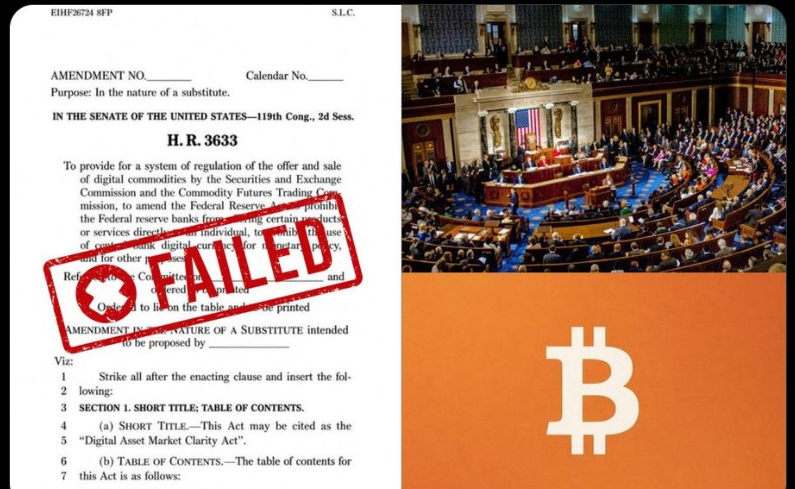
The CLARITY Act failed its most significant Senate test on Sept. 15, when lawmakers fell short of the 60 votes needed to advance the crypto market structure legislation. Senators voted 49-50 against invoking cloture on the motion to proceed to H.R. 3633, preventing the chamber from opening formal debate on the bill.
The defeat followed more than a year of negotiations spanning digital asset regulation, ethics rules, stablecoin provisions, and federal oversight. Although the legislation remains procedurally alive, its near-term path has become considerably more difficult.
Cloture Fails in First Full Senate Floor Test
Tuesday's cloture vote marked the first full Senate floor test for the Digital Asset Market Clarity Act. The measure required 60 votes to move forward, but support fell well short of that threshold. The bill also failed to secure a simple majority, leaving Senate leaders without sufficient backing even to begin debate. Cloture is the Senate's mechanism for cutting off debate, and the 60-vote filibuster threshold means most major legislation must clear a supermajority bar before the chamber can begin formal consideration.
The legislation previously advanced with broad support in the House, which passed H.R. 3633 by a 294-134 vote in July 2025, with 78 Democrats joining Republicans. The Senate Banking Committee approved its version in a 15-9 vote in May 2026. Lawmakers then spent months working through more than 600 pages of legislative text before the measure reached the Senate floor Tuesday afternoon.
Democratic Negotiators Vote No
Several Democrats who participated in months of negotiations ultimately opposed cloture. According to reporting by Eleanor Terrett on X, Senators Kirsten Gillibrand, Mark Warner, Cory Booker, Raphael Warnock, Ruben Gallego, Angela Alsobrooks, and Catherine Cortez Masto all voted no. Terrett also said an industry leader texted her after the vote with a two-word message: "It died."
Some Republicans also crossed party lines to oppose the motion. Senators Susan Collins, Josh Hawley, Jerry Moran, and Thom Tillis voted no, according to the reported tally. Mitch McConnell, who returned to the Senate this week, voted to advance the crypto regulation. Even with most GOP senators in support, Republican votes alone could not reach the 60-vote threshold required under Senate rules.
Following the outcome, Ripple CEO Brad Garlinghouse said on X: "There is still reason for optimism for crypto in the United States. Now, the SEC, under Chair Atkins, and the CFTC, under Chair Selig, will continue to work hard to issue rules to fill the legislative gap and we will continue to actively engaged in that rulemaking process."
Ethics Dispute Blocked a Bipartisan Deal
Negotiators made 126 changes to the latest proposal in an effort to build bipartisan support. The revised package addressed ethics rules for senior federal officials, state attorney general enforcement, protections for non-custodial developers, miners, and validators, and provisions tied to stablecoin rewards.
The two parties remained at odds over the ethics section. Democrats sought broader restrictions that would also cover dependent children of federal officials, while Republicans rejected a Democratic counterproposal ahead of the vote. Senator Ruben Gallego later said Republican leaders ended negotiations while both sides were still discussing the ethics language.
Senator Cynthia Lummis made a final appeal on the Senate floor before the vote, urging lawmakers to back the motion and continue working on the legislation. The appeal did not bring enough senators into the yes column.
Attention Shifts to Regulators
Senate leaders can file another cloture motion, leaving the CLARITY Act on the legislative calendar. However, the current session provides limited time for another attempt before the election recess and the end of the year, and any new push would still need bipartisan support to clear the same 60-vote hurdle.
In the meantime, the outcome shifts attention back to the Securities and Exchange Commission and the Commodity Futures Trading Commission, both of which continue developing crypto rules under their existing authority. The SEC has proposed Regulation Crypto Assets, and regulators are also working on securities tokenization and other digital asset policies.
The CLARITY Act seeks to define how federal agencies oversee cryptocurrencies and blockchain projects and would give the CFTC new authority over parts of the crypto spot market. That boundary carries weight for market participants because the SEC generally oversees securities while the CFTC regulates commodities and futures, and the line between the two mandates is precisely what the bill was written to draw.
This article is for informational purposes only and does not constitute legal, financial, or investment advice. Legislative proposals can change during negotiations and may not become law in their current form.
Source: The Market Periodical — Breaking: CLARITY Act Stalls in Senate After Failing Crucial 60-Vote Cloture Test

