US Senate Delays CLARITY Act Vote, Potentially Benefiting Asian Crypto Hubs
Key Takeaways
- •The Senate will not vote on the CLARITY Act before the August recess, with leadership citing Democratic opposition as the reason for the delay.
- •The proposed legislation aims to define the respective regulatory jurisdictions of the SEC and CFTC over digital assets, covering areas such as market structure, custody, and oversight.
- •Hong Kong has operated a licensing regime for virtual asset trading platforms since 2023, while Singapore regulates digital payment token services under its Payment Services Act.
- •Legal experts warn that failure to pass the bill could result in a return to regulation through enforcement actions, agency interpretations, and fragmented state-level rules.
- •The European Union's Markets in Crypto-Assets Regulation is already in effect, offering a contrasting regulatory environment with greater clarity for market participants.
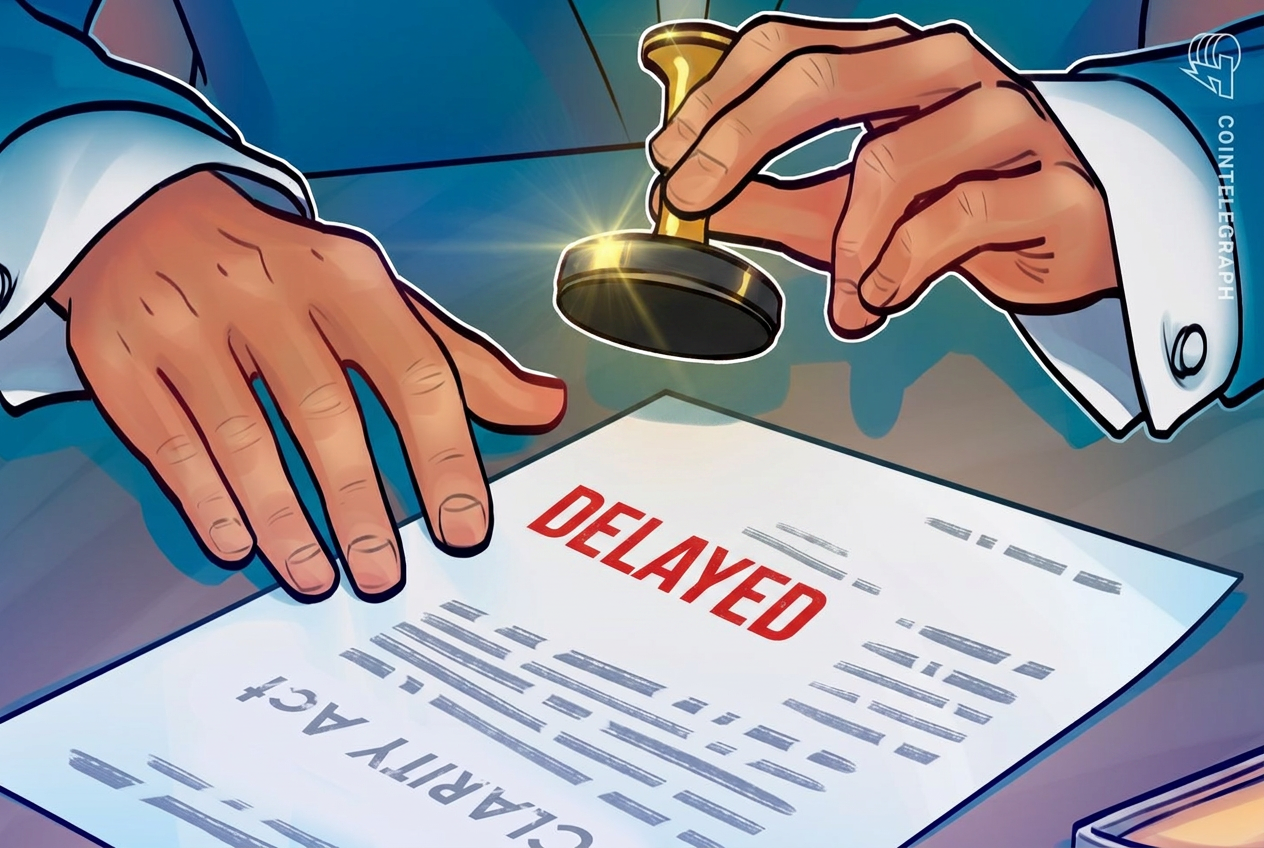
The United States Senate's postponement of a vote on the CLARITY Act, legislation that would establish a clearer regulatory framework for digital assets by defining the respective jurisdictions of the Securities and Exchange Commission and the Commodity Futures Trading Commission, could provide Hong Kong and Singapore with additional runway to solidify their standing as digital asset hubs, according to Vincent Chok, founder and CEO of First Digital, the company behind the FDUSD stablecoin.
Thune's office confirmed to Cointelegraph on Friday that the Senate would not bring the legislation to a vote ahead of the August recess. Thune attributed the delay to Democratic opposition and stated that the bill would become a priority when lawmakers reconvene in September.
Chok said the postponement leaves financial institutions without definitive guidelines on market structure, custody, and oversight, potentially giving jurisdictions with more established regulatory frameworks an edge in attracting both capital and talent while US institutional adoption contends with ongoing uncertainty.
"Markets can adapt to slower timelines, but what they struggle with is prolonged uncertainty," Chok said in a statement shared with Cointelegraph.
Enforcement Concerns and Offshore Innovation
Hong Kong has operated a licensing regime for virtual asset trading platforms through its Securities and Futures Commission since 2023, while Singapore has regulated digital payment token services under its Payment Services Act. Regulatory advancement outside the United States will proceed irrespective of the CLARITY Act's legislative timeline, Chok noted. "For Asia, this delay gives regional financial hubs like Hong Kong and Singapore additional time to demonstrate that clear regulation can coexist with innovation," he said.
Maylea Ma, deputy general counsel at decentralized exchange aggregator 1inch, cautioned that if Congress ultimately fails to pass the legislation, the industry could see a resurgence of "regulation by enforcement." Market participants would remain reliant on agency interpretations, case-by-case enforcement actions, and a fragmented landscape of state-level money transmitter and securities regulations, she explained.
Related: CLARITY Act failure could send crypto valuations lower: Bernstein
Ma drew a contrast with the European Union, where the Markets in Crypto-Assets Regulation (MiCA) is already in effect. She stated that 1inch would maintain its conservative, non-custodial, self-custody-oriented operating model while awaiting greater legal clarity in the US.
James E. Thorne, chief market strategist at Wellington-Altus, struck a more politically pointed tone, characterizing the postponement as a "fold" by Thune and a win for Senator Elizabeth Warren and the regulatory establishment. He argued that persistent ambiguity would drive innovation offshore as other jurisdictions build clearer regulatory regimes.
"Regulation should have been passed years ago," Thorne wrote on X. "Instead, Washington chose to live in ambiguity, letting Warren and the bank lobby weaponise uncertainty, the SEC and the Fed went along for the ride, and now Thune is keeping the CLARITY Act stuck in procedural limbo."

