Circle Stock Eyes $100 Rebound as USDC Supply Slips and Arc Activity Cools
Key Takeaways
- •CRCL shares traded near $85 in October, well below the $103.25 peak reached in September, amid investor reassessment of stablecoin growth and Treasury yields.
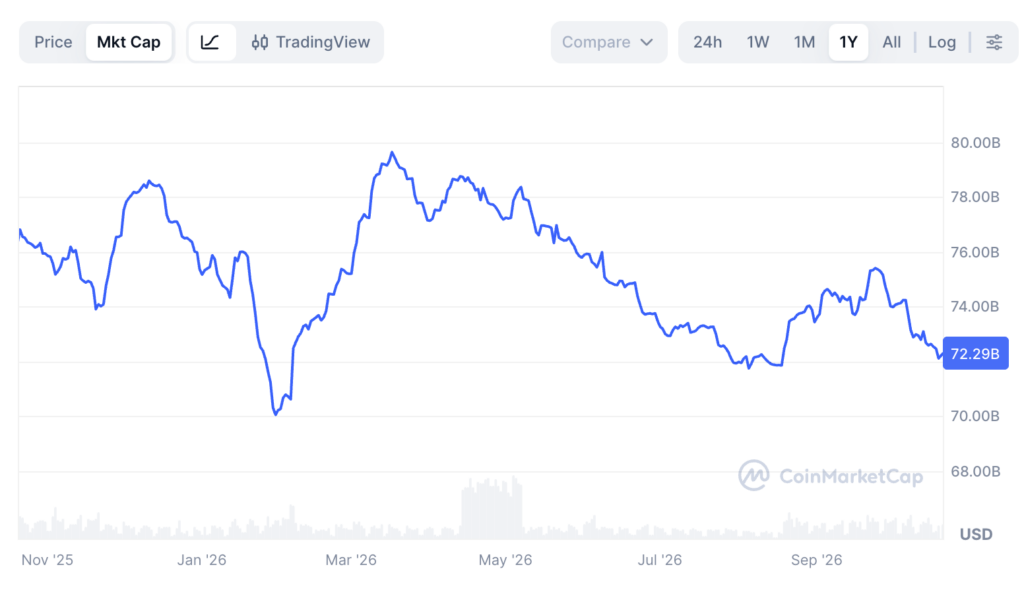
- •USDC has fallen from $80 billion in March to about $72 billion, compounding pressure on Circle's revenue, which depends on both reserve size and interest rates.
- •The three-month US Treasury yield has declined to 4.18%, reducing the income Circle earns on USDC reserves held in short-dated government bonds.
- •Analysts expect Circle's November earnings report to show revenue up 6.25% to $785 million.
- •Arc blockchain metrics have weakened, with weekly DEX volume dropping to $222 million from a $437 million September peak and active addresses falling to 22,360, while its stablecoin market cap rose above $750 million.
Circle Internet Group's stock (CRCL) remained under pressure in October, changing hands near $85 in the latest market snapshot — well below the $103.25 peak reached in — as investors reassessed the pace of stablecoin growth and a shifting US Treasury yield landscape.
The company was also contending with mixed activity across its Arc blockchain ecosystem: decentralized exchange volume weakened and active addresses fell, although stablecoin capitalization on the network continued to climb.
Technical analysis, however, has identified a potential falling wedge formation that could support a recovery toward $100 if confirmed.
Revenue Engine Under Strain as USDC Supply Falls
Circle Internet Group operates a portfolio of products that includes USDC, its dollar-pegged stablecoin; USYC, a tokenized money market fund; the Circle Payments Network; and the Arc blockchain. USDC remains the company's largest cash generator, with its revenue funding development of the other offerings.
The business functions much like a bank. Customers buy USDC, and Circle invests the proceeds in short-term government bonds. Banks do the same thing, except they are permitted to deploy client funds more broadly, into areas such as commercial paper and lending.
As a result, Circle's revenue hinges on two variables: the size of USDC reserves and interest rates. In an ideal scenario, revenue rises when both USDC supply and short-term government bond yields are climbing. When both levers move lower at once — as they are now — the pressure on the top line compounds.
Recently, however, USDC circulation has been contracting. Supply has fallen from $80 billion in March to about $72 billion in the latest market snapshot, after an attempted rebound in recent months lost traction this month.
One likely driver of the decline is the stalled crypto market rally, with Bitcoin and most major altcoins in the red. Bitcoin has dropped from its monthly high of $87,200 to $84,000.
A shrinking USDC market points to near-term pressure on revenue growth. Analysts expect the company's November earnings report to show revenue up just 6.25% to $785 million — a print that will show how much of this squeeze has already flowed through to reported results.
Falling Treasury Yields Weigh on Reserve Income
Beyond the contraction in USDC supply, Circle faces headwinds from the US bond market. Although yields rallied strongly this year, there are signs that momentum has stalled.
The ten-year yield has slipped to 5.125% from this year's high of 5.35%. More importantly for the company's income, the three-month yield has fallen to 4.18% — meaning Circle now earns less on its reserves. Because those reserves sit in short-dated government paper, the three-month rate is the closer proxy for what each dollar of USDC backing actually earns.
On the positive side, fundamentals suggest US bond yields may have more room to move: US inflation remains sticky, and the US public debt has continued rising this month.
Arc Blockchain Loses Momentum on Several Metrics
Meanwhile, the Arc blockchain is cooling across several key gauges, according to DefiLlama data. Total value locked has dropped to $530 million from a record high of $564 million.
Weekly DEX volume has continued to slide, falling from a September peak of $437 million to $222 million last month. Active addresses have declined to 22,360 from a record of more than 46,000.
The lone bright spot is Arc's stablecoin market cap, which has jumped to more than $750 million. Whether that growing pool of on-chain capital translates into renewed trading and user activity is likely to shape how the network's metrics read in the weeks ahead.
Technical Picture Points to Potential $100 Breakout
The daily chart suggests CRCL may have more upside. The stock has formed a falling wedge — a pattern of two descending, converging trendlines that typically resolves in a strong bullish breakout.
The wedge developed after an upward move, giving it the character of a bullish flag, a common continuation signal. In addition, the Supertrend indicator has stayed in the green.
Taken together, these signals suggest the stock is positioned for a potential bullish breakout toward the psychological $100 level, with a decisive move above that mark pointing to further gains.
This article is for informational purposes only and does not constitute financial or investment advice. Stocks and cryptocurrency-related businesses involve substantial market risks and potential capital losses. Investors should conduct independent research and consult a qualified financial adviser before making investment decisions.
This article first appeared on The Market Periodical.

