Circle Stock Nears Record Low as USDC Supply Falls to $68 Billion and Arc Momentum Fades
Key Takeaways
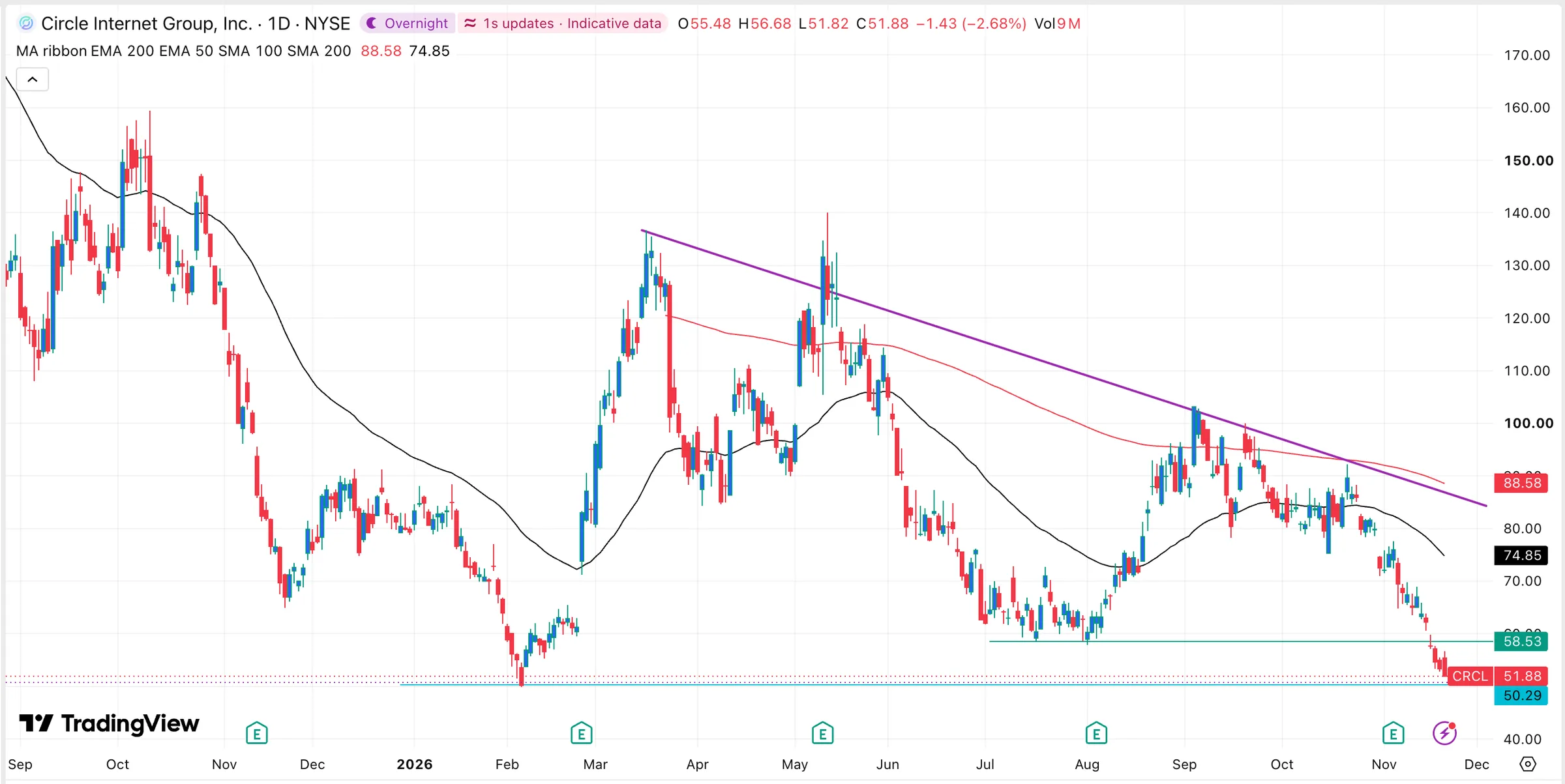
- •Circle's stock reportedly fell toward $51 on Nov. 19, leaving it close to its historical low near $49 after breaking below the $58.53 support level.
- •USDC supply has contracted to $68 billion from a peak above $80 billion, a trend that pressures Circle because its reserve income scales directly with stablecoin circulation under the GENIUS Act framework.
- •Usage of Circle's Arc Layer-1 blockchain has weakened, with daily active addresses dropping to about 10,000 from more than 25,000 and monthly DEX volume falling to $378 million from $765 million.
- •Circle's most recent results showed revenue growth of 17% to $865 million, but analysts project a 5.36% decline to $728 million for the fourth quarter.
- •Technical analysis identifies $40 as the next downside target, while a move above $60 would be required to invalidate the bearish setup.
Key points
- Circle stock extended its decline on Thursday, Nov. 19, reportedly falling toward $51 and approaching its historical low near $49.
- USDC supply has declined to $68 billion from a record high of more than $80 billion, while EURC supply has fallen to $444.2 million from a year-to-date high of $475 million.
- Activity across Circle's Arc blockchain has weakened, with daily active addresses and decentralized exchange volume both falling this month.
- Circle's latest results showed revenue growth of 17% to $865 million, although analysts expect fourth-quarter revenue to decline to $728 million.
Circle Internet Group's stock has continued to fall as weakness across the cryptocurrency market raises concerns about demand for stablecoins. The decline has brought CRCL close to its historical low and coincided with lower USDC circulation, weaker activity on Circle's Arc blockchain and technical indicators that point to continued pressure on the shares.
The company's latest financial results showed revenue growth despite the broader downturn in cryptocurrency markets. However, the reduction in stablecoin supply and weaker blockchain activity have added to concerns about the company's growth outlook. Even near its lows, CRCL remains well above the $31 price at which Circle went public on the New York Stock Exchange in June 2025.
USDC and EURC supplies decline
Circle stock has been under significant selling pressure this year as Bitcoin and most altcoins have continued to move lower. Weakness in the cryptocurrency industry has encouraged investors to sell digital assets and has contributed to a substantial decline in stablecoin supply.
The total supply of USDC has fallen to $68 billion from an all-time high of more than $80 billion. EURC supply has also declined to $444.2 million from its year-to-date high of $475 million. USDC remains the second-largest dollar-pegged stablecoin by circulation, behind Tether's USDT.
The decline in stablecoin supply affects Circle because of its business model. As a stablecoin company, and under the GENIUS Act, Circle generates most of its revenue by investing stablecoin holdings in government bonds. The GENIUS Act, signed into law in July 2025, created the first federal regulatory framework for payment stablecoins in the United States and requires issuers to back tokens with liquid reserves, such as short-term US Treasuries. When the amount of stablecoin in circulation falls, the company's revenue growth faces pressure. Higher interest rates can offset that effect to some extent, but US bond yields have largely stagnated recently.
USDC supply has continued to fall amid weakness in the cryptocurrency market, with Bitcoin and most altcoins remaining in bear markets. Bitcoin has dropped to $61,000, while the total valuation of all cryptocurrencies has fallen by nearly $1 trillion from its peak. Market weakness typically leads investors to reduce their stablecoin holdings.
The continuing decline in USDC's market capitalization differs sharply from forecasts issued by some analysts last year. At that time, some analysts expected total stablecoin supply to reach $4 trillion by 2030.
The contraction in USDC supply has contributed to Circle's slower revenue growth. The company's most recent results showed revenue rising 17% to $865 million. However, data from Yahoo Finance indicates that analysts expect Circle's upcoming report to show a 5.36% decline in fourth-quarter revenue, to $728 million. Because reserve income scales directly with the amount of stablecoin in circulation, the path of USDC supply heading into that report will be a key metric to watch.
Arc blockchain activity weakens
Arc Blockchain represents another factor that could weigh on Circle stock. The network is Circle's own Layer-1 blockchain, built for stablecoin-based finance, and Circle has positioned Arc as a central piece of its push to build revenue beyond reserve-backed income, making its usage figures a public measure of how that push is progressing. The network has continued to lose momentum this month. Daily active addresses have fallen to just 10k this month from more than 25k last month. The figure peaked at 44.7 after Arc's September launch.
Decentralized exchange, or DEX, volume on the network has also continued to decline. DEX platforms in the Arc ecosystem processed $378 million this month, down from $765 million last month. The figure has fallen from one month to the next.
Total value locked, or TVL, in Arc's decentralized finance ecosystem has continued to decrease as well. These figures indicate that the ARC token could struggle to gain traction after its public launch next year.
CRCL technical analysis
The daily chart shows that CRCL has come under pressure in recent weeks and is trading near its all-time low. The stock has already fallen below the key support level of $58.53, which marked its lowest level in July and August.
CRCL is trading below all moving averages, while its Relative Strength Index (RSI) has declined. The RSI indicates that the downward trend is accelerating. The next key target identified in the analysis is $40, although technical forecasts do not guarantee future performance. The bearish outlook would become invalid if the stock moves above $60.
Between the current price and the historical low near $49, little in the way of identified support remains on the chart, and a move above $60 would be required to reverse the bearish technical setup.
This article provides financial information and market analysis, not investment advice. Stock and cryptocurrency prices remain volatile.
Source: The Market Periodical

