Circle Stock Falls 9% as CLARITY Act Fails to Advance in Senate Vote
Key Takeaways
- •Circle stock dropped about 9% on Sept. 15 after the U.S. Senate rejected a 49–50 cloture vote on the CLARITY Act, a digital asset market-structure bill that would move regulatory authority from the SEC to the CFTC.
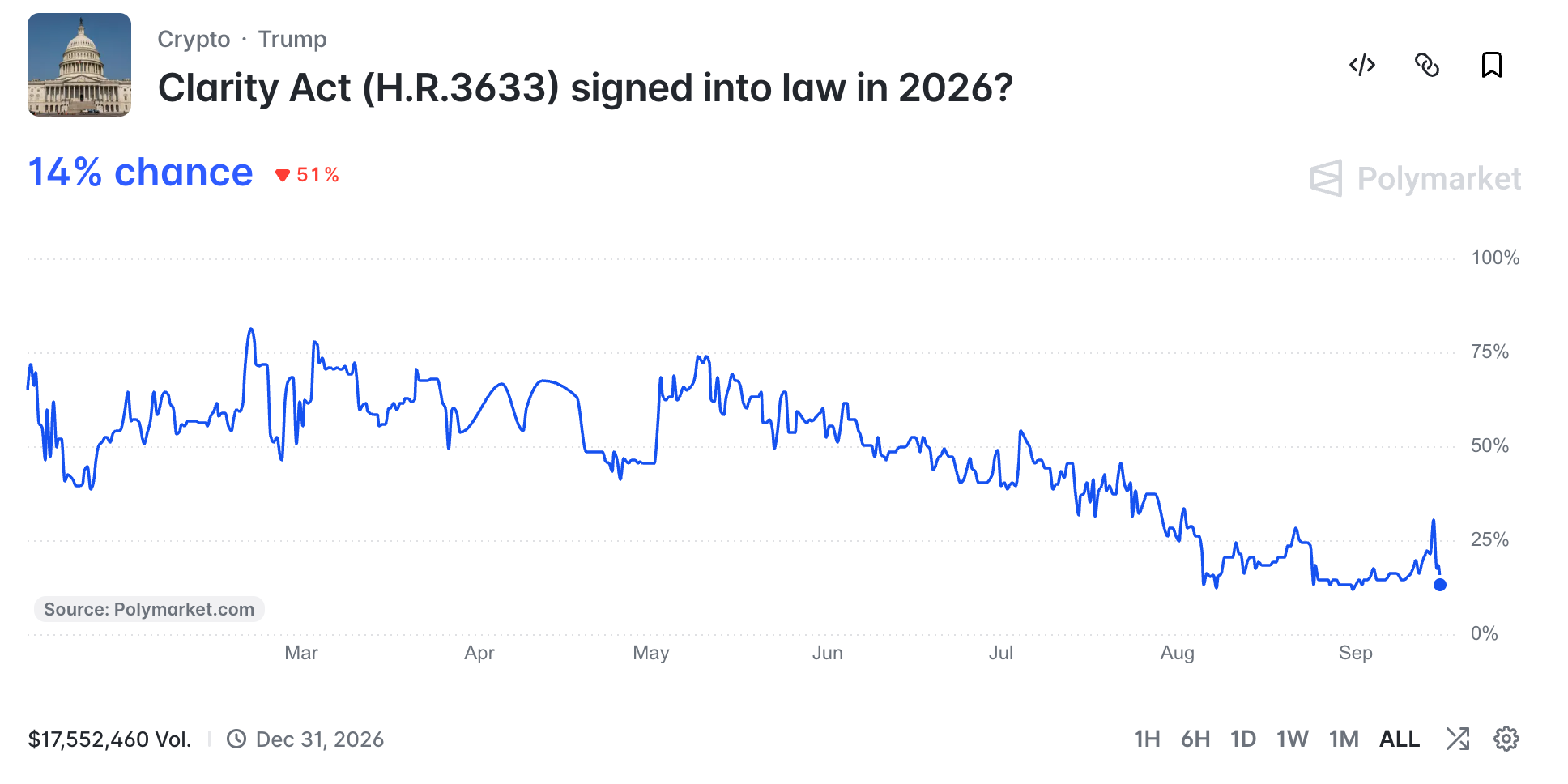
- •Polymarket traders now assign only a 14% probability to the CLARITY Act becoming law this year, as many Democrats remain opposed despite President Trump's support for their ethics amendments.
- •Rising Treasury yields—the two-year at 4.65% and the ten-year at 5.023%, multi-year highs—could increase Circle's reserve-based income, though higher rates also pressure growth-stock valuations.
- •USDC has accumulated over $74 billion in assets and EURC has gained more than $455 million, with the ECB's 25-basis-point hike and signals of further increases supporting European reserve returns.
- •Technical analysis shows a bearish breakout below an ascending channel, with a potential decline toward $80 support unless the stock reclaims resistance at $103.52.
Circle stock (CRCL) fell about 9% on Sept. 15 after the U.S. Senate failed to advance the CLARITY Act, a digital asset market-structure bill. Shares traded around $88–$90 during the session after closing at $97.42 on Sept. 14, as crypto-related stocks sold off following the failed 49–50 cloture vote — the procedural step needed to end debate and move a bill toward final passage.
The decline coincided with a sharp climb in U.S. Treasury yields to multi-year highs, creating a mixed setup for the stablecoin issuer. Higher short-term yields can support income from USDC reserves, while rising bond yields can also pressure growth-stock valuations.
CLARITY Act Odds Drop on Polymarket
Traders on Polymarket are increasingly betting against the United States passing the CLARITY Act, which faced a crucial Senate vote. A Senate committee was set to vote on cloture after President Donald Trump decided to support ethical amendments advocated by Democrats.
Those ethical concerns grew more prominent after Trump revealed his earnings for last year. He made more than $2 billion over the period, even as many people who invested in his tokens lost a fortune. Democrats hope the law will bar future presidents and policymakers from launching such tokens.
Despite the concessions, there are signs that many Democrats will not vote in favor of the bill. The odds of it becoming law this year have dropped to just 14% on Polymarket.
Circle is highly exposed to the CLARITY Act because of its business model. The company operates USDC, the second-largest stablecoin. If passed, the bill would benefit Circle by addressing a key stablecoin issue that has been a concern for some time. It would also simplify cryptocurrency regulation by shifting authority from the Securities and Exchange Commission (SEC) to the Commodity Futures Trading Commission (CFTC). Market-structure legislation of this kind has been a longstanding priority for crypto firms seeking clearer rules on which federal regulator oversees which digital asset activities.
Rising Treasury Yields Could Support Reserve Income
A key catalyst for Circle shares is rising bond yields. The two-year yield rose to 4.65%, its highest level since July 2024, and has been in a strong upward trend after bottoming at 3.36% in March this year. The ten-year yield jumped to 5.023%, its highest level in nearly 20 years.
These figures matter because Circle makes money by investing in the bond market, and higher yields lead to higher revenues over time. In practice, the model means the company's revenue base expands both as more capital flows into its stablecoins and as the yields on its investments climb — a dynamic that contrasts with the valuation pressure higher rates place on growth stocks.
The yield climb comes as investors move assets into the company's stablecoins. USDC has accumulated over $74 billion in assets, while the EURC stablecoin has gained more than $455 million, positioning it to benefit from rising European bond yields. The European Central Bank (ECB) hiked interest rates by 25 basis points last week and signaled it would deliver further hikes this year.
Another notable catalyst for CRCL is the scheduled public mainnet launch of the Arc Layer-1 blockchain on Wednesday, Sept. 16, a near-term company event that gives investors a specific development to track as the CLARITY Act's path in Congress remains uncertain.
Technical Analysis Points to Further Downside
According to The Market Periodical's daily chart analysis, CRCL peaked at $103.52 earlier this month before retreating to $89.98. The stock has dropped below the lower side of an ascending channel, confirming a bearish breakout.
A bearish divergence pattern has formed as the Relative Strength Index (RSI) continued falling to its current 52, and the two lines of the Percentage Price Oscillator (PPO) have formed a bearish crossover. The analysis suggests the stock may continue falling, potentially toward the support level of $80. The bearish outlook would be invalidated if the stock rises above the crucial resistance level of $103.52, its highest level this month.
This article is based on reporting by The Market Periodical.

