Circle and Kakao Group Sign MOU to Explore USDC Integration and Blockchain Payments in South Korea
Key Takeaways
- •Circle and Kakao Group have signed a non-binding MOU to collaboratively evaluate blockchain payment solutions and potential USDC integration within South Korea's digital economy.
- •Kakao Group brings established blockchain experience through its subsidiary Ground X, which developed the Klaytn network that later merged with Finschia under the Kaia network initiative.
- •Circle's expansion in the Asia-Pacific region has been supported by a Major Payment Institution license granted by the Monetary Authority of Singapore in 2023.
- •South Korea enacted the Virtual Asset User Protection Act in July 2024, but a comprehensive stablecoin-specific regulatory framework has not yet been finalized.
- •The collaboration could eventually enable applications such as consumer payments, merchant settlements, cross-border commerce, and digital wallet services across Kakao's extensive user ecosystem.
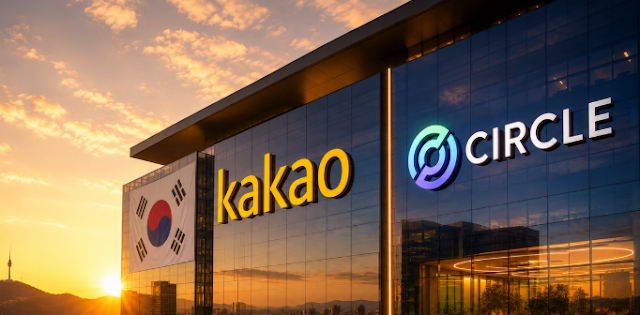
Circle and Kakao Group Sign MOU to Explore USDC Integration and Blockchain Payments in South Korea
Circle, the global financial technology company that issues the USDC stablecoin, has signed a memorandum of understanding (MOU) with South Korea's Kakao Group to jointly explore blockchain-based payment infrastructure and the potential integration of USDC into Korea's digital economy.
Under the agreement, the two organizations will evaluate opportunities to develop blockchain-powered payment solutions and assess how USDC could facilitate faster, more efficient, and globally connected digital transactions across South Korea. The partnership drew wider attention after being highlighted on Cointelegraph's X account: Cointelegraph on X.
While the MOU does not constitute a final commercial deployment, industry observers view the collaboration as a signal that stablecoins are increasingly entering mainstream financial infrastructure discussions among major technology companies. The agreement also comes as Circle accelerates its Asia-Pacific expansion, having received a Major Payment Institution license from the Monetary Authority of Singapore in 2023, enabling broader regulated stablecoin services in the region.
A Strategic Partnership Between Finance and Technology
Circle has established itself as a leading developer of regulated digital payment infrastructure through USDC, the second-largest dollar-backed stablecoin by market capitalization after Tether's USDT. Kakao Group, meanwhile, operates one of South Korea's most extensive digital ecosystems, anchored by KakaoTalk, the country's dominant messaging platform with tens of millions of monthly active users, alongside businesses spanning digital payments through Kakao Pay, mobility, entertainment, financial technology, cloud computing, and online commerce.
Kakao is not new to blockchain. Its subsidiary Ground X developed the Klaytn blockchain network, which subsequently merged with Finschia (the Line Blockchain) under the Kaia network initiative, giving the group years of experience operating distributed ledger infrastructure. Combining Circle's regulated stablecoin expertise with Kakao's broad digital platform and existing blockchain background could open new avenues for blockchain adoption in one of Asia's most technologically advanced markets. The memorandum establishes a framework for both companies to explore these possibilities collaboratively.
Understanding the Memorandum of Understanding
A memorandum of understanding is a formal agreement expressing the intention of organizations to cooperate on future initiatives. Unlike a legally binding commercial contract, an MOU typically outlines areas of mutual interest while enabling both parties to conduct research, technical evaluations, and feasibility studies before committing to long-term arrangements.
In this case, Circle and Kakao Group will examine how blockchain infrastructure and stablecoin technology could support payment innovation within South Korea. Any future commercial implementation would likely depend on technical development, regulatory approval, and additional agreements.
The Role of USDC in Global Payments
USDC has become one of the most widely used stablecoins in the global cryptocurrency ecosystem. Unlike highly volatile cryptocurrencies, USDC is designed to maintain a value closely pegged to the U.S. dollar, with reserves held in cash and short-duration U.S. Treasury instruments. This stability makes it suitable for payments, international transfers, decentralized finance, digital commerce, treasury management, and cross-border settlements.
Businesses increasingly view stablecoins as practical instruments for reducing transaction costs and improving settlement speed relative to certain traditional payment systems. Expanding USDC into additional markets remains a long-term strategic priority for Circle, which has pursued payment institution licenses and registrations across multiple jurisdictions to support regulated growth.
South Korea's Blockchain and Digital Technology Landscape
South Korea ranks among the world's most active digital technology markets. Consumers have demonstrated strong adoption of mobile payments, online banking, digital commerce, and financial technology services. The country has also emerged as a significant hub for blockchain innovation, cryptocurrency trading, gaming, and Web3 development, with exchanges like Upbit and Bithumb handling some of the highest spot trading volumes globally.
Technology companies in South Korea continue investing heavily in blockchain research as regulators gradually develop frameworks governing digital assets. The Circle-Kakao collaboration reflects growing interest in integrating blockchain infrastructure into established financial services.
Stablecoins Enter Mainstream Financial Infrastructure
Stablecoins have evolved considerably since their introduction. Originally serving primarily as trading instruments within cryptocurrency markets, they now support a widening range of financial applications. Financial institutions increasingly recognize stablecoins for international settlements, business payments, treasury operations, programmable finance, and tokenized asset transactions.
Several governments worldwide are evaluating how privately issued stablecoins may coexist with central bank digital currencies and existing banking infrastructure. The Circle-Kakao partnership aligns with this broader trend.
Potential Efficiency Gains from Blockchain Payments
Blockchain-based payment infrastructure offers several potential advantages over conventional payment systems. Transactions can settle more rapidly, operate across borders with fewer intermediaries, and remain available around the clock. Businesses may also benefit from greater transparency, programmable transaction logic, and lower processing costs under certain circumstances.
Implementation varies depending on regulatory requirements and technical architecture, but blockchain payments continue to attract interest from major financial institutions and multinational corporations. Projects exploring these capabilities have expanded significantly in recent years.
Regulatory Considerations
Despite growing industry interest, stablecoin adoption remains heavily dependent on regulatory developments. Governments worldwide are working to establish legal frameworks addressing reserve requirements, consumer protection, anti-money laundering compliance, operational resilience, and financial stability.
South Korea has been actively evaluating digital asset regulation. The country implemented the Virtual Asset User Protection Act in July 2024, establishing legal definitions for digital assets and rules protecting investors against unfair trading practices. However, a comprehensive stablecoin-specific framework is still under discussion among lawmakers and financial authorities, meaning any future deployment arising from the Circle-Kakao memorandum would likely require compliance with evolving regulations before broader commercialization.
Potential Implications of the Partnership
Although the memorandum does not guarantee immediate product launches, the collaboration could influence blockchain payment development throughout Asia. Successful integration of stablecoin infrastructure into widely used consumer platforms could accelerate broader digital asset adoption.
Given Kakao's extensive user ecosystem and Circle's established blockchain payment expertise, potential applications may eventually include consumer payments, merchant settlements, cross-border commerce, financial services, digital wallets, and enterprise payment infrastructure.
Outlook
The MOU between Circle and Kakao Group represents a further step toward integrating blockchain technology into mainstream financial infrastructure. By jointly exploring blockchain payment systems and the potential use of USDC within South Korea, both companies are positioning themselves to participate in the next generation of digital financial services.
Commercial implementation remains subject to further development, regulatory review, and technical evaluation. The partnership highlights a broader global trend in which stablecoins are evolving beyond cryptocurrency exchanges into practical financial infrastructure supporting payments, commerce, and international transactions. For South Korea's growing digital economy, the collaboration could serve as a foundation for future blockchain-powered financial innovation.
Source: Hokanews

