White House Intensifies Scrutiny of 'Black Box' Intelligence Spending After Ex-CIA Officer's Guilty Plea
Key Takeaways
- •David Rush, a former senior CIA officer, pleaded guilty to defrauding U.S. government officials and contractors of nearly $200 million through fabricated authorities, including a fake top-secret program.
- •Rush also admitted to disclosing a clandestine source's identity to a foreign government official, conduct that potentially endangered U.S. national security and the source's life.
- •The White House has intensified an inquiry into secret intelligence spending, with the Office of Management and Budget under Russell Vought reviewing intelligence agencies' classified black budget.
- •U.S. intelligence agencies requested $115.5 billion for fiscal year 2026, comprising $81.9 billion for national intelligence programs and $33.6 billion for military intelligence.
- •A White House source described Rush's case as the tip of the iceberg, while CIA and intelligence community watchdogs separately investigate how his deception went undetected and what damage resulted.
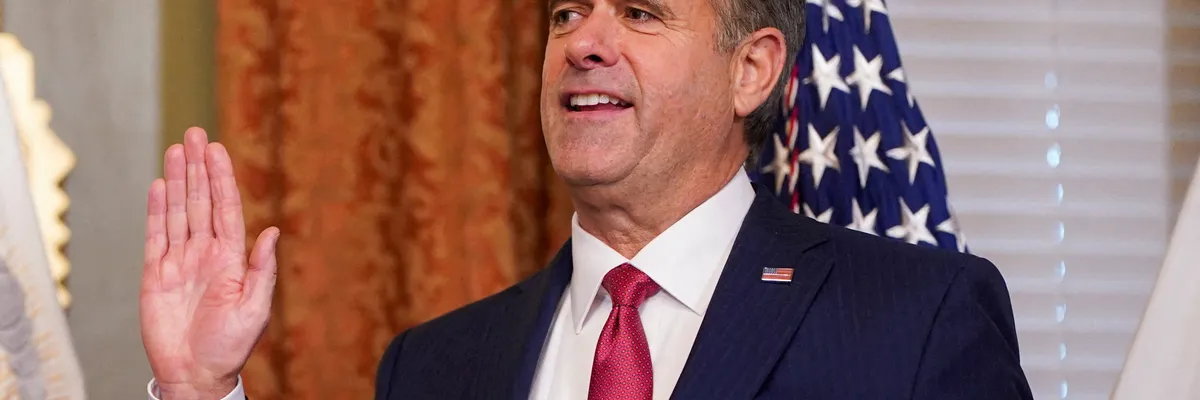
The White House is intensifying an "inquiry" into secret intelligence spending after former senior CIA officer David Rush pleaded guilty to a fraud scheme involving government funds, gold bars and luxury property.
According to NBC News, the case now moves to sentencing for Rush, but the plea raises a larger question: how was he able to deceive colleagues when financial oversight should have been in place? For a system built to stay out of public view, the plea has pushed that usually invisible oversight question into the open.
The Office of Management and Budget (OMB), run by Russell Vought, controls how and when money appropriated by Congress reaches its intended destination. The office has been reviewing U.S. intelligence agencies and their "black budget," the details of which are unknown to the public.
Intelligence agencies conceal detailed spending in order to protect operations and sources, but their budgets are not entirely free from oversight. Congressional committees review classified funding requests behind closed doors, and the agencies maintain internal auditing systems. In fiscal year 2026, intelligence agencies requested $115.5 billion: $81.9 billion for national intelligence programs and $33.6 billion for military intelligence. Beyond those topline figures, there are no real specifics on where the funds went — the annual totals are effectively the only part of the intelligence budget that surfaces publicly, with everything beneath them handled inside classified channels.
"Rush, who was eventually fired, admitted he swindled U.S. government officials and contractors out of nearly $200 million in cash and luxury items by creating fake government authorities, including a phony top-secret program," the report noted.
The fabrications were a significant embarrassment for the CIA. More serious still, Rush admitted to sharing a clandestine source's identity with a foreign government official — conduct that potentially endangered both U.S. national security and the source's life, according to the report. The intelligence community and CIA watchdogs are separately investigating how his deception went undetected and what damage resulted. The findings from those probes, together with Rush's sentencing, are the concrete near-term markers to watch in a process that otherwise unfolds out of public sight.
"They're seeking to determine whether money has been misspent over years of clandestine operations," the NBC report said. The administration of President Donald Trump, however, is also making its own judgments. A White House source described Rush's case as the "tip of the iceberg."
Congress, meanwhile, is watching Vought closely. Over the past two years, he has refused to allocate appropriated funds, and Democrats on the committee have publicly criticized the administration for it. The standoff sits on one of the oldest fault lines in the U.S. system: Congress holds the power of the purse, while the executive branch controls the machinery that actually releases the money. Among OMB's complaints is that when the CIA meets with the office, agency officials are often unprepared and unable to answer questions — an assertion the CIA denies. The White House released a statement on the matter, blaming the media for trying to "sow internal division."

