Christian Writer Argues Biblical Case Against Serving Trump as 'Master'
Key Takeaways
- •Christian writer Martin Thomas Johnson published an essay in Patheos arguing that President Trump's behavior conflicts with biblical teachings and that evangelicals should reexamine their political allegiance.
- •Johnson cited Trump's retaliation against U.S. Attorney Janine Pirro after she dismissed four vandalism cases related to the Reflecting Pool project as evidence of the president's demand for unquestioning loyalty.
- •The FBI and EPA had reportedly warned Trump about infrastructure threats before cyberattacks targeted water treatment facilities, but Johnson wrote that the president disregarded the guidance.
- •Johnson characterized Trump as prideful, oppressive, dishonest, and selfish, traits he said are incompatible with servant leadership as described in Scripture.
- •The essay contributes to a growing body of religious commentary weighing whether the evangelical-Trump coalition will hold or fracture as the 2026 midterm elections approach.
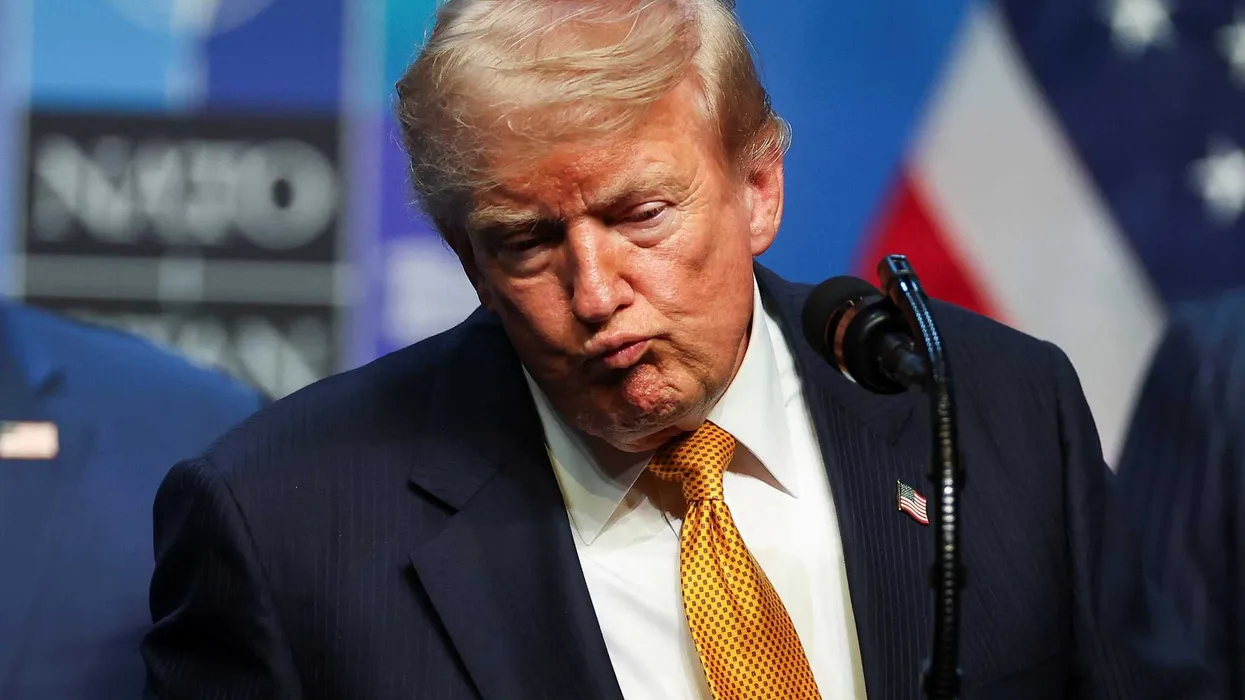
For more than a decade, President Donald Trump's political movement has depended heavily on the backing of American Christians, particularly Evangelicals—roughly 80 percent of whom supported Trump across all three of his presidential campaigns. That overwhelming support has persisted despite periodic dissent from pastors, theologians, and faith-based commentators who argue that the alliance compromises Gospel witness, a debate that has deepened within evangelicalism since Trump first secured the Republican nomination in 2016. On Friday, a Christian writer urged those faithful voters to reexamine their Bibles more carefully.
Writing in the spiritual publication Patheos, Martin Thomas Johnson argued that Scripture speaks directly to recent political developments and that Trump functions as a "Master" whom no one should be eager to serve. Johnson drew a connection between the president's ego, the Reflecting Pool controversy, and a series of recent cyberattacks on infrastructure.
Regarding the Reflecting Pool matter, Johnson wrote: "This week there's been a lot of news about U.S. Attorney Janine Pirro over the alleged vandalism of the reflecting pool. At first she was adamant that it was vandalism that damaged the pool after Trump's nearly $16 million beautification project." However, "she did a 180 and dismissed four of the cases of vandalism … Once she realized there was no legal standing for the cases, she quickly disagreed with the president, who has since attacked and retaliated against his own choice for U.S. attorney, just because she isn't doing his will."
Johnson observed that "the president demands loyalty and compliance to his will above all else" and that it is "well documented that he will use his power to terminate anyone whom he doesn't deem fit." He concluded: "The president's ways contradict the teachings and ways of God," enumerating four traits he attributed to Trump—prideful, oppressive, dishonest, and selfish.
"President Trump is so used to being a boss of his own businesses," Johnson wrote, "but he doesn't understand that being a leader is different (Exodus 18:21, Matthew 20:25-28, Philippians 2:3). Mankind's sinful nature corrupts our hearts and distorts our motivation (Genesis 6:5, Jeremiah 17:9-10). That is why we must be aware of power, because too much will corrupt us, regardless of political affiliation. People who tried to politicize sin and hell are biblically ignorant and bring judgment upon themselves (Isaiah 5:20-23, Matthew 23:13-15). Only God is our Lord and Master (Deuteronomy 6:4-5, Matthew 4:10)."
Johnson emphasized that the Bible is explicit: Christians can "only have and serve one Master; everything else is just idols (Matthew 6:24, Luke 16:13)." He explored the Old Testament concept of "Adonai," a term signifying both "God" and "Master"—language that places his critique within a long tradition of Christian ethical teaching on idolatry and divided allegiance, themes that have surfaced repeatedly in faith-based debates over political loyalty.
Johnson then addressed a wave of cyberattacks targeting water treatment facilities in Minnesota. "Although President Trump tried to blame the problems on its democratic governor and how the state was being run, skeptics in the intelligence community know better," he wrote. After the attacks spread to facilities nationwide, "it was revealed that both the FBI and the EPA had already warned the president about potential threats to the American infrastructure."
"Of course," Johnson continued, "the president disregarded his own administration's advice, because he believes he knows better; instead of caring for the sheep, he is looking out for his own interests. Just as Scripture warns us of what false Christs would do in the last days (Matthew 24:4-5, John 10:1-42, 2 Corinthians 11:13-15)."
"Trump has always demanded loyalty above all, because he wants to be in control," Johnson wrote. "He wants to be served himself instead of serving others. The president has forgotten that the office of president is a public servant who is supposed to serve the people, not his own selfish interests."
Concluding his argument, Johnson stated: "The president and his followers are focused on only a temporary kingdom, instead of serving God and His Kingdom purposes. We need to remember that we cannot serve two masters; we either serve idols or Adonai!" His essay joins a growing body of religious commentary framed around the 2026 midterms, as faith leaders across denominations weigh whether the evangelical-Trump coalition that defined the past three election cycles will endure or fracture under renewed theological scrutiny.
