Report Accuses Christian Nationalist Finance Network of Self-Dealing With Public Funds
Key Takeaways
- •The State Financial Officers Foundation convenes Republican state financial officials, activists and Christian finance executives to oppose ESG investing and support fossil fuel interests.
- •Former SFOF CEO Derek Kreifels remains a board member while lobbying officials to use faith-aligned products from his firm, Prospr Aligned.
- •Kreifels’s firm has already secured business from the Kentucky auditor’s office, according to the report.
- •The report says Alaska’s Permanent Fund, worth about $80 billion, has been a major target for Kreifels and his allies.
- •Zeteo reported that SFOF covered travel and event-related costs tied to Kreifels’s business activities, which may conflict with IRS rules against nonprofit self-dealing.
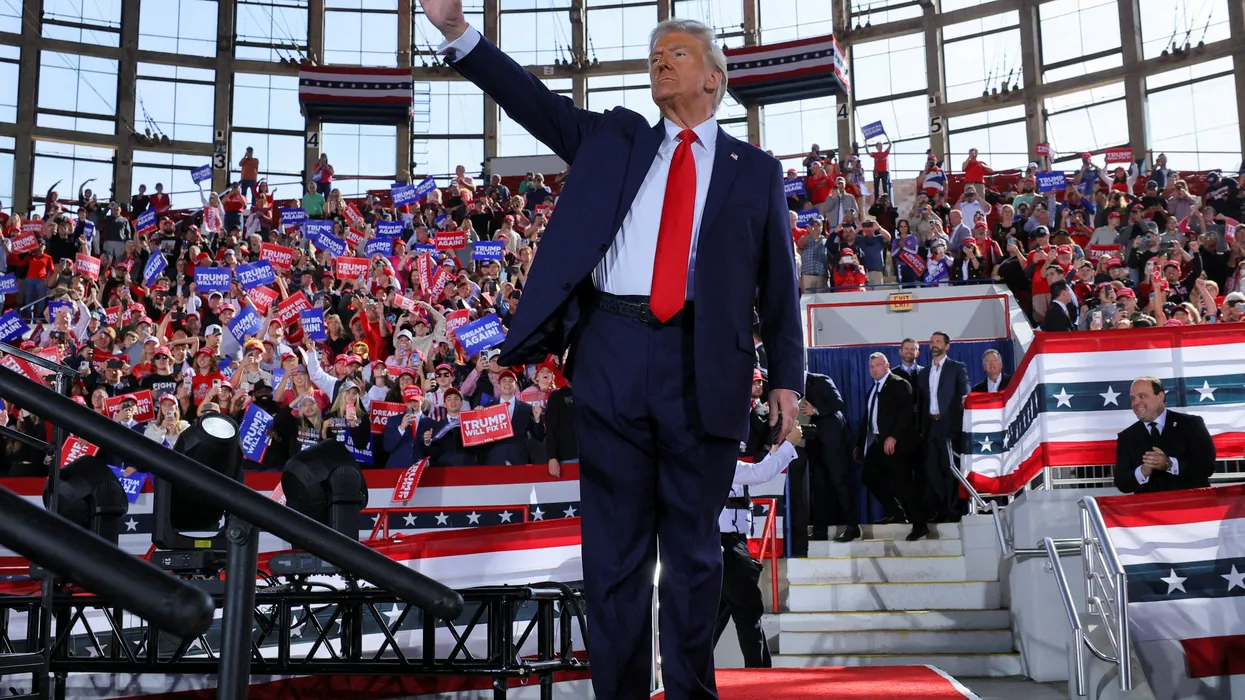
President Donald Trump's Make America Great Again (MAGA) movement draws substantial support from Christian nationalists who set aside the Founding Fathers' secularism to argue that the United States was founded as an explicitly Christian nation. According to a new investigative report, this movement is now engaging in self-dealing on a massive scale — through connections with American government entities.
"Ballrooms, slush funds, jumbo jets. Worship services in the Pentagon, electioneering in churches, the Ten Commandments in schools," wrote Zeteo's Lauren Windsor on Wednesday, drawing on more than a year of reporting. "Conflicts of interest and Christian nationalism have been hallmarks of Donald Trump's second presidency. The epic flood of corruption swamping Washington isn't just overwhelming American politics – it's also obscuring the grift occurring in red states across the country, as officials work to put public investment funds under the control of their friends at Christian finance firms."
"A major conduit for that corruption is the State Financial Officers Foundation (SFOF), a small but powerful nonprofit that convenes Republican state treasurers and auditors, right-wing activists, and Christian finance executives to strategize over how to defeat liberals and weaponize state treasuries against allegedly woke corporations, while steering state treasury money to their ideological allies," Windsor reported. Much of the organization's "War on Woke," she wrote, consists of boosting the fossil fuel industry and crushing efforts to mitigate climate change, under the notion that corporate safeguards are bad business. That campaign is part of a broader Republican backlash against ESG investing: since Texas enacted the first of its fossil fuel divestment laws in 2021, a number of GOP-led states, among them Kentucky, have passed measures restricting the use of environmental, social and governance criteria in public investing or limiting business with banks deemed hostile to fossil fuels. The stakes are financial as well as ideological — the funds overseen by state treasurers and auditors include public retirees' savings, so decisions about which firms manage those dollars reach residents of those states directly.
While the report briefly addressed the situation in Kentucky, Windsor concentrated on Alaska — and on a figure named Derek Kreifels.
"Derek Kreifels was the CEO of the State Financial Officers Foundation for more than a decade," Windsor wrote. "He resigned from this role in the fall of 2024, but he remains an SFOF board member, and his wife serves as one of its top executives. Now, Kreifels is lobbying SFOF treasurers to put public retirees' savings and other funds they oversee into faith-aligned financial products and services offered by his firm, Prospr Aligned, and its affiliates in the Christian finance industry."
Kreifels's firm has already won business from the Kentucky auditor's office, which is led by a member of SFOF's leadership team — a finding Windsor reported for the first time. Another state Kreifels has targeted heavily is Alaska, where his allies include former Revenue Commissioner and ex-SFOF Vice Chair Adam Crum and Alaska Permanent Fund Chair Jason Brune. The Permanent Fund — the state's sovereign wealth fund, created by a 1976 constitutional amendment and financed largely by oil royalties — holds roughly $80 billion in assets and pays an annual dividend to Alaska residents, giving its trustees oversight of one of the state's most consequential pools of public money.
In an interview with Windsor in Anchorage last year, "Brune defended Crum and his collaboration with Kreifels as efforts to promote resource extraction in the Arctic – arguing that he and Crum, as members of the governor's cabinet, 'are pimping for the state.'"
Describing one event, Windsor reported that in the weeks leading up to it, SFOF honored Crum by naming him its vice chair for 2025, while Kreifels announced he was resigning as CEO to embark on a private business venture he would soon reveal.
"'I have been called to a new mission,' Kreifels declared," Windsor wrote. The Anchorage summit, she noted, presented great synergies for Kreifels: using nonprofit money, he could convene right-wing finance officials and the industry executives who lobby them, while lobbying those officials himself on the services offered by his new business venture and celebrating his tenure at SFOF with friends and family in an exotic locale. According to emails from Kreifels that Windsor obtained, SFOF covered travel costs for public officials and their staff.
The State Financial Officers Foundation has also helped support Kreifels's private business ventures, the report found. According to state travel disclosures, SFOF paid for at least one treasurer's travel to the New York Stock Exchange launch party for Prospr's Alaska investment fund. Windsor reported that SFOF also arranged a special speaker for the occasion: longtime ally Paul Atkins, who as chairman of the Trump Securities and Exchange Commission regulates the Prospr fund. Atkins, who previously served as an SEC commissioner from 2002 to 2008, was confirmed by the Senate as chairman in April 2025.
Windsor noted that IRS rules prohibit self-dealing and private benefit from nonprofit money — the long-standing "private inurement" doctrine bars tax-exempt organizations from being operated for the personal benefit of insiders.

