Chip Stocks Sell Off for Third Straight Session, Dragging Wall Street Lower as Fed Meeting Begins
Key Takeaways
- •Nvidia and AMD shares each fell approximately 5% on Monday, marking a third consecutive session of losses for chip stocks.
- •Seagate Technology dropped about 4% as investors awaited the company's earnings report scheduled for later that trading day.
- •The semiconductor sector's broad decline weighed on major U.S. equity indices due to the heavy index weightings of companies like Nvidia and AMD.
- •The sell-off coincided with the start of a two-day FOMC meeting, with market participants looking for signals on the trajectory of interest rates.
- •Semiconductors are considered a bellwether for the broader technology industry and global economic activity because chips are essential across multiple sectors including consumer electronics, data centers, and automotive systems.
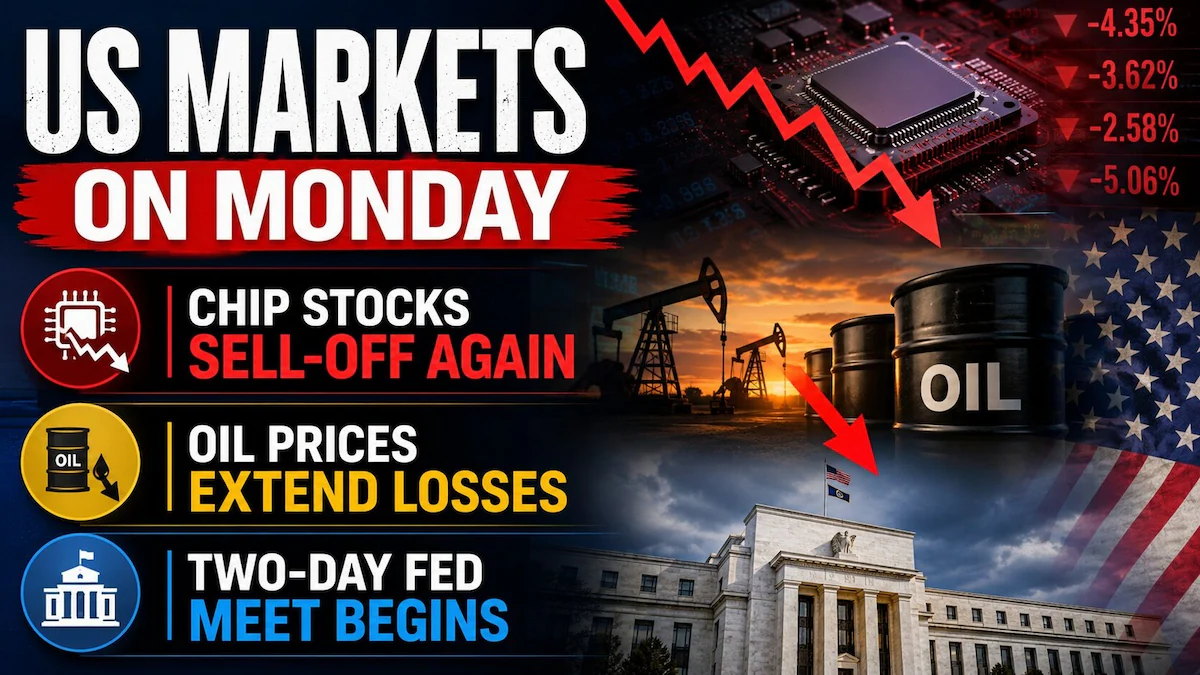
Chip stocks extended their losses for a third consecutive session on Monday, pulling the broader Wall Street market lower amid a confluence of negative headlines affecting the semiconductor sector.
Shares of Nvidia and AMD each declined approximately 5%, continuing a sell-off that has weighed on the technology-heavy Nasdaq Composite. Seagate Technology shares fell about 4% ahead of the data storage company's earnings report, which was expected later in the trading day.
The semiconductor sector's broad decline contributed to downward pressure across major U.S. equity indices. Nvidia and AMD are among the most influential components of both the S&P 500 and the Nasdaq Composite, meaning significant moves in their share prices tend to have an outsized effect on index performance. Semiconductors are widely viewed as a bellwether for the broader technology industry and global economic activity, as chips are essential components across consumer electronics, data centers, automotive systems, and industrial applications.
The sell-off coincided with the start of a two-day Federal Open Market Committee (FOMC) meeting. The Federal Reserve's policy decisions and accompanying statements are closely watched by market participants for signals on the trajectory of interest rates and the central bank's assessment of economic conditions. Higher interest rates raise borrowing costs and can dampen economic growth expectations, factors that are particularly relevant for cyclical industries like semiconductors, where demand is closely tied to corporate capital expenditure and consumer spending.
Crude oil prices and other macroeconomic factors were also in focus as investors awaited the outcome of the Fed meeting.
Source: CNBC-TV18

