Chinese National Extradited to US Over $37 Million Crypto Laundering Scheme Routed Through Bahamas Bank into Tether's USDT
Key Takeaways
- •Prosecutors allege that Zhao helped transfer proceeds from fraudulent crypto platforms targeting 174 identified US victims.
- •The alleged laundering route involved US bank accounts, shell companies, Deltec Bank in the Bahamas and cryptocurrency wallets connected to Cambodia.
- •Eight other people tied to the alleged network have pleaded guilty, with some receiving prison sentences and restitution orders.
- •Zhao was charged with conspiracy to commit money laundering and remains presumed innocent pending further proceedings.
- •The Justice Department’s next scheduled step is Zhao’s Nov. 30 arraignment in Los Angeles.
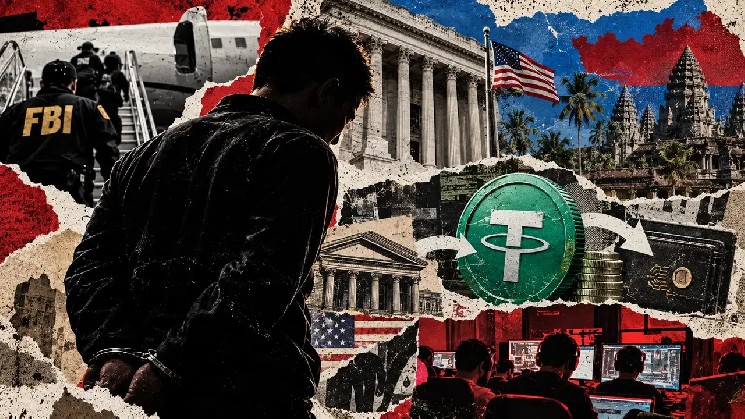
A Chinese national accused of helping launder $36.9 million in proceeds from cryptocurrency investment scams has been extradited to the United States and made an initial appearance in federal court in Los Angeles.
Zheng Zhao, 44, appeared in a Los Angeles federal courtroom on Oct. 23 after being transferred from the Netherlands, where authorities had detained him in connection with an international fraud network that operated from scam centers in Cambodia. The US Department of Justice said a judge ordered Zhao detained pending further proceedings. He was charged in August 2025 with conspiracy to commit money laundering and faces up to 20 years in federal prison if convicted.
From fake trading platforms to a Bahamas bank account
Prosecutors allege that Zhao helped a criminal network move millions of dollars stolen from 174 identified American victims through US shell companies, international bank accounts and cryptocurrency wallets.
According to the allegations, the operation began with fraudsters contacting victims through social media, dating platforms, telephone calls and text messages. They promoted fraudulent crypto investments through websites designed to resemble legitimate trading platforms, displaying fabricated investment gains to encourage victims to deposit more funds. US law-enforcement agencies, including the FBI, have repeatedly warned about this model — often labeled 'pig butchering' — in which crews based in Southeast Asian scam centers cultivate victims online and steer them toward fabricated trading platforms.
Investigators traced more than $36.9 million in stolen funds from US bank accounts controlled by the conspirators to a single account at Deltec Bank in the Bahamas. Zhao and other participants allegedly arranged for the bank to convert the funds into Tether's USDT stablecoin — a token pegged to the US dollar that settles on public blockchains — before the cryptocurrency was transferred to a wallet controlled by individuals in Cambodia. The digital assets were later distributed to leaders of scam centers across the region, giving the network a way to move proceeds outside the conventional banking system.
The alleged transactions illustrate how the operators combined access to traditional financial institutions with cryptocurrency transfers to move money across borders. Prosecutors have not accused Tether or Deltec Bank of knowingly participating in the fraud.
Eight guilty pleas expose a wider laundering network
Zhao's extradition advances a prosecution that has already secured guilty pleas from eight other participants in the alleged laundering operation.
In a June 2025 announcement, the DOJ identified Axis Digital Limited as the company behind the Deltec Bank account used to process the stolen funds. Prosecutors said Jose Somarriba and ShengSheng He established Axis Digital and opened the account, while Jingliang Su joined as a director and participated in converting victim funds into cryptocurrency.
The investigation also uncovered a US-based network that received and transferred the proceeds. Joseph Wong managed money launderers in Los Angeles who established shell companies and bank accounts, while Yicheng Zhang operated two accounts used in the scheme.
Several defendants have since received prison sentences. ShengSheng He was sentenced to 51 months, and Su received 46 months after pleading guilty to conspiracy to operate an unlicensed money-transmitting business. In January, a federal court also ordered Su to pay approximately $26.9 million in restitution to victims. The order established a financial obligation, although authorities have not disclosed how much money has been recovered or distributed.
The Justice Department expanded its pursuit of the network through its Cyber-Enabled Scam Initiative, which coordinates investigations into international fraud operations, digital asset laundering and the financial infrastructure supporting overseas scam centers.
Zhao's next court appearance is scheduled for Nov. 30, when he is due to be arraigned in Los Angeles. He remains presumed innocent, and prosecutors have not yet established his individual responsibility for transactions attributed to the broader network.

