Chinese Researchers Crack Tough Challenge of Low-Grade Iron Ore Utilization
Key Takeaways
- •The world's largest iron ore magnetization roasting project, with an annual capacity of 5.56 million tonnes, passed official acceptance tests in Anshan, Liaoning Province, and is running stably at full capacity.
- •The technology can upgrade tailings containing only 11 percent iron into concentrate graded at 65 percent, matching the quality of premium imported ore.
- •The breakthrough could enable utilization of nearly 30 billion tonnes of refractory iron ore and almost 10 billion tonnes of iron-bearing tailings in China.
- •At Ansteel Group, the technology has achieved a 98 percent iron mineral conversion rate, and eleven licensing agreements now cover over 15 million tonnes of combined annual capacity.
- •The technology is also being deployed overseas, including a limonite upgrading project in Laos, with future plans to extend it to other mineral processing and solid-waste recycling applications.
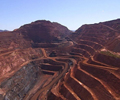
For decades, billions of tonnes of iron-bearing mine tailings in China have lain largely unused. Zhu Qingshan, a researcher at the Institute of Process Engineering (IPE) under the Chinese Academy of Sciences, once remarked: "Turning this 'sleeping wealth' into usable high-grade resources is key to solving the country's iron ore supply problem."
That vision has now become reality. On Tuesday, the world's largest iron ore magnetization roasting project, with an annual capacity of 5.56 million tonnes, passed official acceptance tests in Anshan, northeast China's Liaoning Province. The facility has been operating stably at full capacity, with key performance indicators exceeding design targets. The project represents a major breakthrough in the industrial use of low-grade iron ore.
According to the IPE, the technology is the world's first solution for large-scale industrial processing of ultra-low-grade iron tailings. It can transform tailings with an iron content of just 11 percent into concentrate with a grade of 65 percent — a leap that makes material once considered waste comparable in quality to the high-grade concentrate produced from premium imported ore. The institute said the breakthrough is expected to enable efficient and green development and utilization of nearly 30 billion tonnes of refractory iron ore and almost 10 billion tonnes of iron-bearing tailings in China. Beyond supply, putting tailings to work also addresses the environmental footprint of mine waste, which occupies land and carries long-term storage and safety costs.
A Half-Century Quest
China consumes more than half of the world's iron ore. Although domestic reserves are abundant, most of the country's deposits are low-grade and difficult to process with conventional methods. Over the past decade, China has imported 11.3 billion tonnes of iron ore, much of it from Australia and Brazil, making iron ore supply a long-standing strategic concern for the world's largest steel producer. Tapping underused domestic resources has driven generations of researchers to tackle this long-standing technical challenge.
In the 1950s, the Institute of Chemical Metallurgy, the IPE's predecessor, began exploring ways to make efficient use of low-grade iron ore. Chemical engineer Mooson Kwauk pioneered fluidized-bed magnetizing roasting techniques to convert poor-quality iron minerals into recoverable magnetite. Although the technology showed promise, its industrialization was interrupted by the country's weak industrial base and the historical conditions of the time.
Researcher Zhu Qingshan later took up the unfinished mission. In 2004, Zhu devoted himself to research on refractory iron ore. At the time, the technology still faced major hurdles to industrialization: conventional magnetizing roasting suffered from low reaction efficiency, high energy consumption and costs, and poor operational stability. Zhu's team introduced innovative technical approaches to address these issues and lay the groundwork for practical application.
From Lab to Industrial Scale
For Zhu, successful basic research was not the end but the starting point for industrial application. To turn research into usable technology, Zhu and his team developed a complete system for fluidized-bed magnetizing roasting, including key equipment and supporting technologies.
The team secured a partner in southwest China's Yunnan Province for a project with an annual capacity of 100,000 tonnes. However, the project stalled in 2008 amid the global financial crisis due to funding shortages. With support from various levels of government, the researchers spent more than a year troubleshooting on site, and the plant achieved continuous stable operation in December 2012.
That experience also exposed new limitations in the technology, prompting the team to further improve the roasting process and energy efficiency. They developed a second-generation magnetizing roasting process with more precise control of particle residence time, which was later introduced to Ansteel Group, one of China's major steelmakers. At Ansteel, the technology has achieved a 98-percent conversion rate for iron minerals, delivering significant economic benefits.
Eleven licensing agreements now cover a combined annual processing capacity of more than 15 million tonnes. The team is also advancing overseas projects, including a limonite upgrading initiative in Laos, an early sign that the technology may find markets beyond China, where low-grade iron ore deposits are also widespread. Looking ahead, researchers plan to extend the technology to other mineral processing and solid-waste recycling applications.
