China Ramps Up Humanoid Robot Funding Despite Technical Limitations
Key Takeaways
- •Chinese central and local governments committed at least $230 million to humanoid robotics procurement in the first half of 2026, a roughly 40-fold increase from two years earlier.
- •China produced an estimated 12,800 to 20,000 humanoid robots in 2025, accounting for about 90 to 95 percent of global output, and aims to exceed 100,000 units in 2026.
- •Analysts estimate the field faces a shortfall of hundreds of thousands of hours of training data against a requirement of about 100 million hours for generalizable capability.
- •A June 2026 directive ordered 10 provinces to each designate at least 20 training and application sites, with targets of more than 100 deployment scenarios and 10,000 units in commercial use by year-end.
- •Approximately 150 manufacturers are competing for state contracts, including UBTech, Unitree Robotics, Leju Robot, and Agibot, making sector consolidation widely expected.
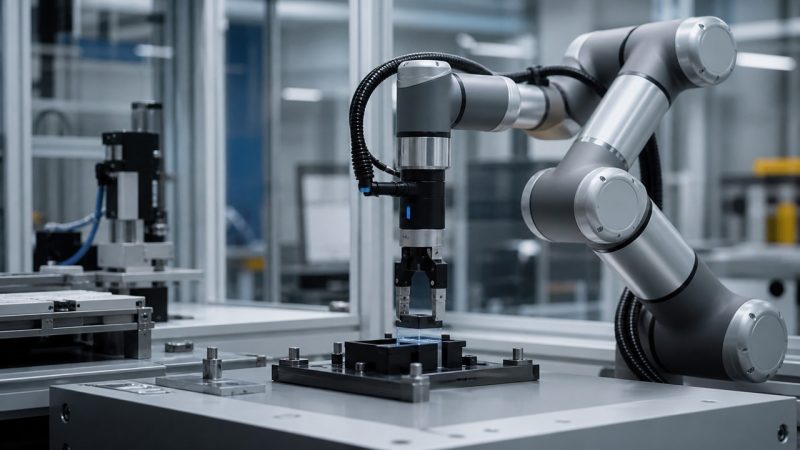
China is pouring public money into humanoid robotics at a rapidly accelerating pace. Central and local governments committed at least $230 million to humanoid robotics procurement in the first half of 2026 alone, a sharp rise from $62 million in the same period a year earlier and a modest $6 million in the first half of 2024. That represents a roughly 40-fold increase in two years, and further spending is continuing.
The driving force is an acute labor shortage caused by a rapidly aging population, with humanoid robots positioned as the government's preferred long-term answer. The difficulty is that today's robots are largely capable of impressive choreographed demonstrations rather than the messy, unpredictable work found on real factory or warehouse floors.
A Manufacturing Surge Built on Shaky Technical Foundations
China produced between 12,800 and 20,000 humanoid robots in 2025, accounting for roughly 90 to 95 percent of global output. The government's target for 2026 is to surpass 100,000 units. Morgan Stanley, responding to the scale of government demand, has raised its own 2026 shipment forecast to 50,000 units.
Current models struggle with basic dexterity and have limited ability to operate in environments for which they were not specifically trained. The deeper challenge is data. Training a humanoid robot to navigate the physical world requires what researchers call physical intelligence, and building that demands enormous volumes of real-world interaction data. Analysts estimate the field currently faces a deficit of hundreds of thousands of hours of training data against an estimated requirement of 100 million hours for robust, generalizable capability.
More than 90 training centers had been established or were under construction by mid-2026, most of them state-backed, with the explicit goal of generating the missing training data. A June 2026 directive from China's Ministry of Industry and Information Technology and the State-Owned Assets Supervision and Administration Commission ordered 10 provinces to each designate at least 20 training and application sites. The mandate also sets targets of more than 100 deployment scenarios and 10,000 units in commercial use by the end of the year.
Policy as a Substitute for Product-Market Fit
State Grid, the state-owned electricity giant, has announced $1 billion in planned spending on humanoid robotics applications. Leading Chinese manufacturers including UBTech, Unitree Robotics, Leju Robot, and Agibot are positioned to capture much of that spending, though the competitive field is crowded, with approximately 150 manufacturers currently active in the humanoid robotics space.
The "Made in China 2025" industrial strategy frames this push explicitly as a race against global competition, particularly the United States, in AI and advanced robotics. That race is playing out chiefly against Western developers such as Tesla, whose Optimus program targets factory work, and Figure AI, both of which are pursuing general-purpose humanoids backed by private capital rather than state procurement.
Morgan Stanley's revised forecast of 50,000 units for 2026 reflects procurement reality rather than necessarily validated commercial demand. With 150 manufacturers chasing the same government contracts, consolidation in the sector appears to be a question of when and how abruptly, not if. How China closes its training-data gap, and whether state-mandated deployments generate data good enough to produce robots that work outside scripted settings, will shape whether the sector's scale advantage translates into technical leadership.
Source: CryptoBriefing
