Middle East Conflict Drives China to Launch First Regular Arctic Container Service to Europe
Key Takeaways
- •China-based Sea Legend is launching the first regular weekly container shipping service through Arctic waters along Russia's Northern Sea Route, branded the "Ice Silk Road."
- •The Arctic route cuts voyage time between Ningbo, China and Felixstowe, UK by approximately half compared to conventional routes through the Suez Canal and Red Sea.
- •Major Western shipping companies including Maersk, MSC, and Hapag Lloyd have explicitly avoided the Northern Sea Route, citing safety concerns, environmental risks, and strained relations with Russia, whose Rosatom administers the waterway.
- •Allianz recorded 531 maritime incidents in Arctic waters over the decade ending in 2023, with machinery damage or failure accounting for nearly half of those cases.
- •While Western operators reroute around Africa's Cape of Good Hope, Chinese carriers may gain a structural cost and time advantage on Asia-Europe trade during summer months if the Arctic service proves commercially viable.
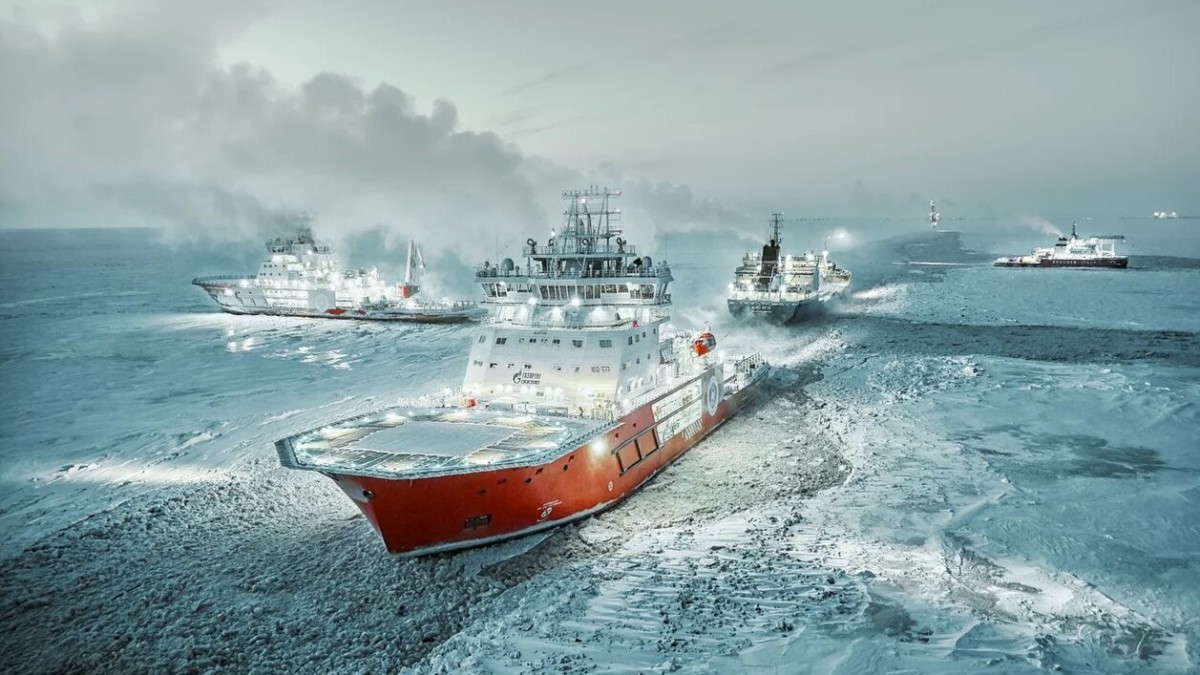
Escalating conflict in the Middle East and growing threats to commercial shipping in the Red Sea have pushed China to accelerate the use of Arctic routes for moving container cargo from the Chinese east coast to European ports.
With Houthi forces targeting vessels in the Red Sea and the Bab el-Mandeb Strait, cargo operators have grown increasingly cautious about transiting these critical Middle Eastern chokepoints — waterways that, together with the nearby Suez Canal, normally carry roughly 12% of global trade. Meanwhile, rapidly melting Arctic ice has opened a viable summertime alternative — one that China is now moving to exploit.
China-based Sea Legend, a container shipping firm focused on trade with Turkey and North Africa, is launching the first regular weekly container shipping service through Arctic waters this week, according to the Financial Times.
While shipping through the Arctic is not unprecedented, the introduction of a scheduled weekly service marks a significant shift, driven by two converging factors: the receding polar ice caps and the increasing danger of conventional routes through the Middle East. The move is notable because container shipping depends on fixed, predictable schedules in a way that bulk or specialized cargo does not, making a committed weekly Arctic slot a structural addition to Asia–Europe logistics rather than an ad hoc workaround.
The "Ice Silk Road"
Sea Legend has branded its Arctic passage the "Ice Silk Road." The route cuts the voyage time between Ningbo on China's east coast and Felixstowe in the United Kingdom by approximately half, the FT reported.
Because summer melting has reduced polar ice coverage, container ships no longer require icebreaker-class vessel escorts to navigate Arctic waters during the warmer months. This makes the so-called Northern Sea Route, which runs along Russia's northern coast, both easier and less costly to operate.
China and its shipping companies are uniquely positioned to benefit. Western shipping giants remain reluctant to transit the Arctic due to strained relations with Russia and persistent concerns about the potential environmental impact on Arctic ecosystems and wildlife.
Denmark-based Maersk completed a single voyage through the Arctic in 2018 but has since ruled out offering the route as a regular service. Other major Western container shippers, including Hapag Lloyd and MSC, have taken similar positions.
In September 2024, MSC Mediterranean Shipping Company reaffirmed its commitment to avoid the Northern Sea Route, stating that the Arctic waterway "remains underdeveloped for commercial shipping since safe navigation and transit are not assured."
"An increase in Arctic transit traffic may also impact the fragile ecosystem of the region and the ice caps," MSC said at the time.
Nearly a year later, neither MSC nor other Western shipping companies have altered their stance on Arctic container transit, even as threats persist at the Middle East's most critical chokepoints, including the Strait of Hormuz and the Bab el-Mandeb Strait.
China, by contrast, has pressed ahead. Bolstered by its diplomatic relationship with Russia, Beijing appears undeterred by the geopolitical considerations that have given Western operators pause. The Arctic push aligns with China's 2018 self-designation as a "near-Arctic state" and its broader strategy, articulated in its official Arctic Policy white paper, to build what it calls a "Polar Silk Road" — positioning itself as a stakeholder in Arctic governance and commerce despite having no Arctic coastline of its own.
Operational and Environmental Risks
Navigation along the Northern Sea Route is administered by Russia's State Atomic Energy Corporation, Rosatom, which issues transit permits to vessels seeking to use the waterway. This Russian oversight is a key factor — alongside environmental and climate concerns — in the reluctance of Western shipping giants to enter Arctic waters.
Beyond geopolitics, the "Ice Silk Road" presents significant operational safety challenges. Even in summer, vessels risk becoming trapped in ice. Search and rescue operations are exceedingly difficult to coordinate from land-based facilities in such a remote region, and the threat of an oil spill poses a serious risk to the fragile Arctic environment.
"To deal with a contingency or casualty in the Arctic is much more difficult," Rahul Khanna, global head of marine risk consulting at insurance giant Allianz, told the Financial Times.
Khanna acknowledged, however, that some shipping companies see the Arctic route as a way to bypass the most volatile geopolitical flashpoints in the Middle East.
Allianz has reported that 531 maritime incidents were recorded in Arctic waters during the decade ending in 2023, according to Allianz Commercial analysis.
"The harsh operating environment means machinery damage/failure is the most frequent cause of incidents, accounting for almost half of this total (261)," Allianz stated.
Middle East Chokepoints Remain Under Threat
For Chinese shipping, the Arctic route could prove advantageous as it effectively halves the Asia-to-Europe journey during summer months — a benefit made more attractive by the ongoing difficulties vessels face when transiting Middle Eastern chokepoints.
The Houthi threat to shipments of Saudi crude oil through the Red Sea has not subsided. An increasing number of tankers loaded with Saudi oil appear to have transited the Bab el-Mandeb chokepoint in dark mode, disabling tracking systems to avoid detection.
Although Iran and the Iran-aligned Houthis have generally refrained from targeting China-linked cargo in the Strait of Hormuz and the Bab el-Mandeb Strait, the risk of miscalculation remains, and any vessel in these waters faces a potential inadvertent threat.
For Western shipping companies, the Arctic is not a practical alternative to the Suez Canal and the Red Sea route. With Arctic navigation under Russian control, there is little incentive for Western-affiliated vessels to use the Northern Sea Route. Instead, when rerouting becomes necessary, Western operators typically choose the longer passage around the southern tip of Africa via the Cape of Good Hope, despite the significantly extended voyage times.
The divergence means that Chinese carriers could gain a structural cost and time advantage on Asia–Europe container trade during summer months — while their Western competitors continue to absorb the added fuel, insurance, and schedule costs of Cape of Good Hope diversions. Whether Sea Legend's weekly Arctic service proves commercially viable beyond the current summer season will be a key indicator of whether the Northern Sea Route transitions from a niche experiment to a durable fixture in global container logistics.
By Tsvetana Paraskova for OilPrice.com
