ChatPaddi Emerges as Adebo David's Indigenous Alternative to WhatsApp Business for Africans
Key Takeaways
- •Meta announced in July 2026 that businesses using the official WhatsApp Business Platform will face new charges starting in October, adding pressure on African merchants who depend on chat-based selling.
- •Adebwebs Technologies founder Adebo Adegboye David built ChatPaddi as a homegrown alternative, saying the decision to charge African users while exempting Western counterparts showed Africans were not a priority for Meta.
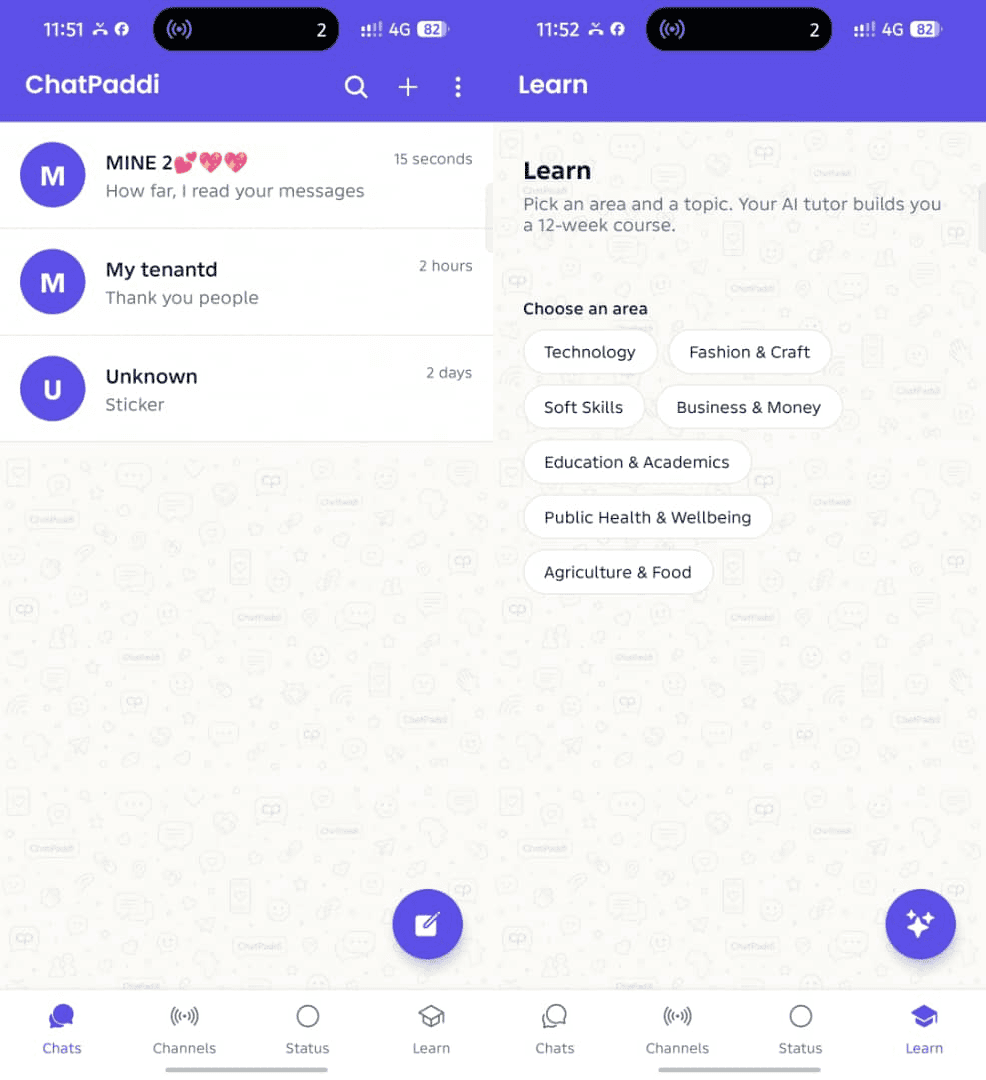
- •Unlike WhatsApp Business, ChatPaddi integrates a full e-commerce store, enabling sellers to upload catalogs, manage inventory, process payments, and generate shareable web links directly within the app.
- •ChatPaddi is free for public messaging and basic communication, earning revenue from a share of live-stream virtual gifts and processing fees on business transactions made through its built-in store.
- •The app is already available on the Google Play Store, while its App Store approval remains pending as Meta's October fees approach, making merchant adoption a key milestone.
In July 2026, Meta announced that businesses using the official WhatsApp Business Platform (API) would begin facing new charges starting in October. For many merchants, the added cost threatens an already expensive relationship with the messaging platform. Across African markets, where chat threads frequently double as storefronts and customer-service desks, the announcement lands at a moment when messaging costs shape the daily economics of small-scale selling.
Adebo Adegboye David, founder of Adebwebs Technologies, views the move as an unnecessary burden. WhatsApp Business users already cover their own mobile data costs, and paying to send messages on top of that may simply be too much, he argues. But he also sees a market opening: David and his team have built ChatPaddi, a homegrown counter-response that performs everything the Meta messaging app does — and, in his telling, considerably more. The founder describes the product as an attempt to free Africans from foreign dependency.
“Reading about WhatsApp trying to charge Africans and not their Western contemporaries shows that we are not a priority and we are not determining factors any of their products. That’s what brought about ChatPaddi,” he explained.
His concern extends beyond a single pricing decision. Global platforms, including payment processors like PayPal and social apps like TikTok, routinely restrict African users due to geographical and security considerations. David noted that African users are treated as optional consumers rather than stakeholders on foreign platforms, leaving founders and everyday users to battle systemic discrimination and geographic blacklisting. His frustration taps into a long-running conversation among African technologists about digital sovereignty — the push for local control over the platforms, payments, and data on which the continent’s digital economy runs.
“I’ve seen a whole lot of experiences where we are being gated with information,” David added. While he acknowledged there are a “few bad eggs,” he said corrective measures should not be generalised.
With ChatPaddi, he is offering a platform intended to give Africans full sovereignty over their monetisation, identity, and data.
The venture is not David’s first. He has previously built digital platforms aimed at replacing fragmented legacy systems across the continent, including 9jafinder, Identifyorg, Salesgit, Spousora, and Edu230.
How ChatPaddi Is Different
The stated mission is to become the leading African-made social messaging platform. ChatPaddi merges instant messaging with standalone e-commerce, live streaming, and social feeds. Rather than building another WhatsApp, the application is an all-in-one “super-app” designed around modern African digital habits. The super-app playbook — packing messaging, commerce, and payments into a single download — has reshaped how users in other emerging markets get online, cutting the data and device burden of juggling separate apps. Where WhatsApp Business organises chats without commerce, David wants to bridge that gap.
Chataddi integrates an e-commerce store directly within the app. Sellers can upload product catalogues, manage inventory, process payments, and generate shareable links that open in standard web browsers. Buyers, in turn, can browse and purchase without leaving the chat or going through manual bank-transfer routines.
David drew the distinction concisely: “WhatsApp Business is just allowing you to manage a business, not really ending with an accessible store on the internet. With ChatPaddy, you can create a store, post your goods, manage your business, and connect payments right from the app.”
The app also addresses public safety and creator-economy needs, allowing users to live-stream directly to their contact lists.
Monetisation and Regulatory Compliance
ChatPaddi is free for all users for public messaging and basic communication. Creators can monetise live streams through digital gifting: viewers purchase virtual gifts to support streamers, with ChatPaddi retaining a platform revenue share — a model that has become a staple of live-streaming platforms worldwide. Business transactions carry a processing fee, and the platform takes a standard charge when merchants process physical or digital orders through the built-in store via payment gateways.
“When people want to pay to order, you have processing charges attached. Also, with our live features, people tend to gift themselves. While you buy gifts for friends, we have our own share of the gifts. That’s another way we generate revenue,” David noted.
Overcoming the Trust Deficit
ChatPaddi is not the first app created by an African developer, but homegrown software has long faced a psychological hurdle: local users have often been sceptical of homegrown software compared with foreign options, making user trust a mountain to climb.
David acknowledged that Africans trust Western software largely because of years of proven uptime, data protection, and consistency. Citing Paystack’s early rise in the financial ecosystem, he said African founders must prove reliability through execution, security, and persistence. He added that ChatPaddi is not a WhatsApp clone, saying, “when we prove that reliability, people will use it.”
The app is already available for download on the Google Play Store, while it remains under the approval process on the App Store. With Meta’s new fees set to take effect in October, the pending iOS approval and ChatPaddi’s ability to convert sceptical merchants into early adopters are the milestones to watch as its bet on locally built infrastructure is put to the test.

