OpenAI Adds ChatGPT Voice to Desktop App for Voice-Controlled AI Agent Workflows
Key Takeaways
- •OpenAI's ChatGPT Voice for desktop enables users to control AI agents and execute multi-step computer tasks through spoken commands across ChatGPT Work and Codex environments.
- •The feature is powered by OpenAI's GPT-Live voice model family, which was launched earlier in the same month as this announcement.
- •On macOS, the feature integrates with Appshots to access on-screen content including alt text, allowing ChatGPT to provide more context-aware assistance.
- •The desktop version differs from the earlier mobile release by supporting direct task execution rather than only conversational voice interaction.
- •Anthropic has also expanded voice mode for Claude across productivity applications, indicating that voice-controlled AI agents are becoming a competitive frontier among leading AI providers.
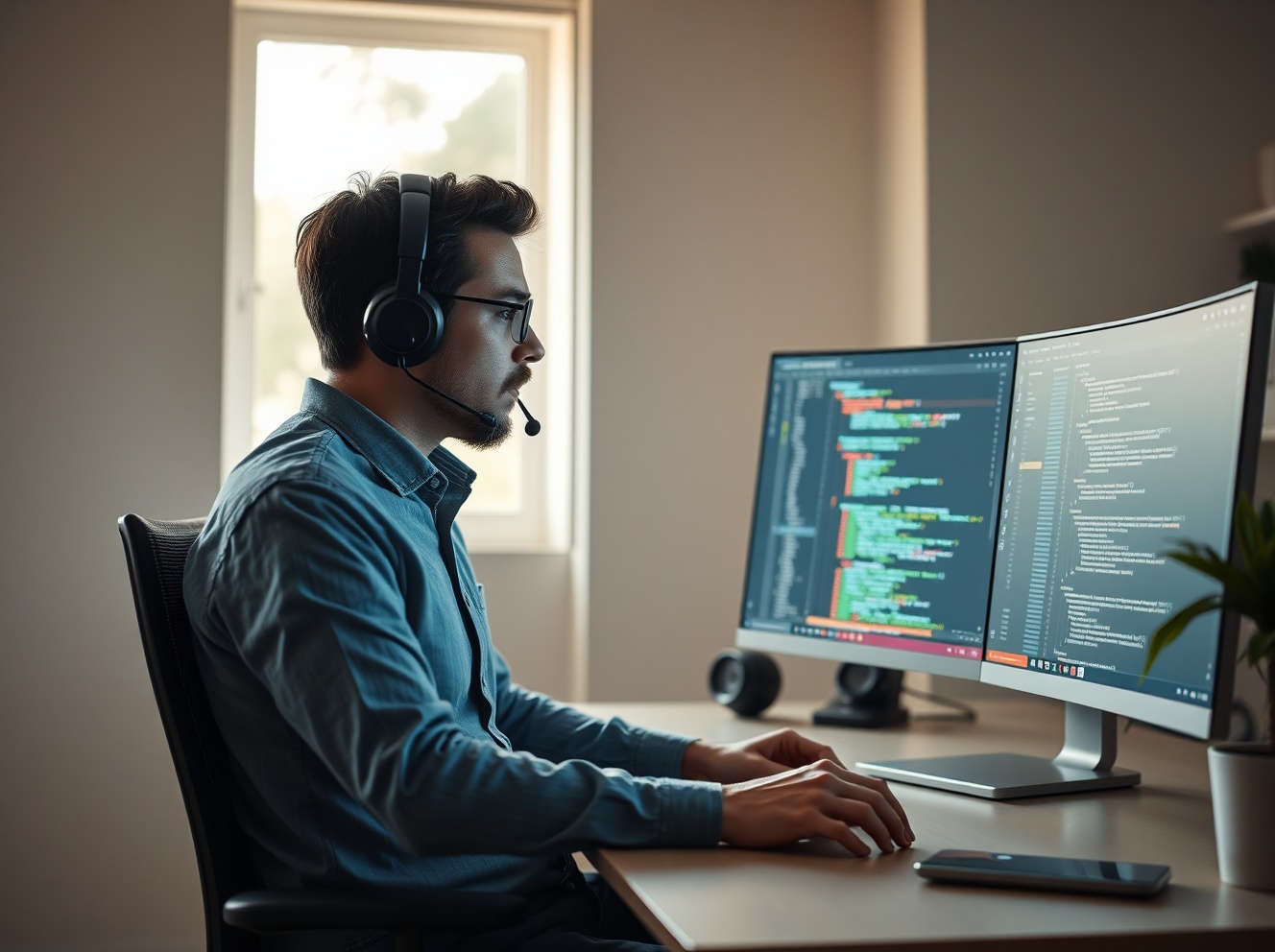
OpenAI has added voice capabilities to its ChatGPT desktop app, allowing users to control AI agents and carry out complex computer tasks through spoken commands. The feature, announced Thursday, uses OpenAI's GPT-Live voice model family, which the company launched earlier this month. The release comes as AI labs race to move beyond text-based chatbots toward agentic systems that can take actions inside software environments on a user's behalf.
Voice control extends to desktop workflows
ChatGPT Voice now operates across both ChatGPT Work and Codex environments. The update lets users dictate multi-step instructions that AI agents can execute autonomously, moving the feature beyond conversational voice interaction and into desktop-based task execution.
In a demo video, OpenAI showed a developer using a single spoken command to create a new thread, make a pull request, and identify the root cause of a bug. The system can also use computer-use skills to navigate websites and applications as part of a user's requested workflow. Computer-use capabilities—where an AI model can interact with graphical interfaces similarly to a human user—have been a focus area for multiple AI labs, and voice integration makes these agents accessible without needing to type detailed prompts.
On macOS, the feature works with Appshots, allowing the app to access on-screen content, including alt text, so ChatGPT can provide assistance with additional visual and contextual information. The desktop release is a broader implementation than the earlier smartphone version of ChatGPT Voice, which improved conversation flow and interruption handling but did not allow the assistant to take direct actions on the device.
Desktop capabilities compared with mobile voice tools
The smartphone version of ChatGPT Voice was designed mainly for natural conversation rather than command execution. By contrast, the desktop version allows users to speak complex instructions involving multiple steps and to respond verbally when ChatGPT needs additional input to continue a task. This distinction matters because desktop environments typically involve more complex, multi-application workflows than mobile devices, making voice-driven agent control potentially more impactful for professional use.
OpenAI also said users can access ChatGPT Voice in Codex from the iOS app through remote access. ChatGPT Voice for desktop is powered by OpenAI's GPT-Live voice models and works with ChatGPT Work and Codex in the desktop app.
Anthropic has also updated voice mode for Claude. Its voice features can use the company's Opus, Sonnet, and Haiku models to complete tasks in productivity applications including Gmail, Calendar, Slack, Notion, and Canva. OpenAI and Anthropic are both expanding voice tools as an interface for AI-assisted work, signaling that voice-controlled agents are becoming a competitive frontier among leading AI providers rather than a niche feature.
Implications for productivity tools
Voice-controlled AI agents move AI interaction further from text-only prompts toward hands-free, conversational computing. For developers and knowledge workers, the feature could reduce friction in workflows that require several steps, allowing users to issue commands while continuing to work at the keyboard or while away from the computer.
The ability to coordinate multiple agents through a single spoken instruction could also be applied to project management and debugging workflows. OpenAI's decision to bring ChatGPT Voice to the desktop app indicates that the company is positioning voice as a core interaction method for professional and enterprise users, rather than limiting it to casual mobile conversations.
The desktop version can execute complex multi-step commands, navigate websites, coordinate multiple AI agents, and request additional user input when needed. On macOS, Appshots support allows ChatGPT to access on-screen content for more context-aware assistance. Users can also use Codex voice features from the iOS app through remote access.
OpenAI's ChatGPT Voice for desktop is rolling out globally. As of July 2026, the release marks a broader step toward using voice as a practical tool for complex professional workflows and places OpenAI's desktop voice capabilities in competition with Anthropic's voice mode for Claude.

