ChatGPT Images 2.5 vs. Nano Banana 2: A Six-Category Comparison
Key Takeaways
- •ChatGPT Images 2.5 matched Nano Banana 2 with three category wins apiece in the comparison.
- •OpenAI says the new model can reduce image-generation latency by as much as 50% versus Images 2.0.
- •The test found that ChatGPT Images 2.5 no longer exhibited the yellow tint or heavy oversharpening seen in earlier generations.
- •Nano Banana 2 won the text-heavy lettering test and the Bitcoin timeline test after ChatGPT Images 2.5 made spelling and date-related errors.
- •OpenAI added Sketch, prompt sharing, regional comments, format templates, and new high and max API quality tiers.
OpenAI launched ChatGPT Images 2.5 on September 8, promising sharper detail, richer textures, more natural lighting, more precise editing, and up to 50% lower image-generation latency than Images 2.0.
In a six-category comparison, Nano Banana 2 won three tests and ChatGPT Images 2.5 won the other three. The results were separated less by obvious quality differences than by small, checkable mistakes, including a spelling error and an incorrect date in a research-based infographic.
OpenAI says latency has fallen by as much as 50% compared with Images 2.0. The company has also added two API models: GPT-Image-2.5 Flare, the fast default, and GPT-Image-2.5 Sunburst, designed for premium editing precision.
The comparison follows an earlier test published in May, when GPT Image 2 and Nano Banana 2 traded wins across eight categories. GPT Image 2 won more categories but developed a distinctive oversharpening artifact when prompts contained many simultaneous constraints. That raised a question for the next model: could OpenAI fix the problem?
For this round, the same evaluator used six categories carried over or adapted from the earlier tests and submitted the same prompts to both models. Google’s model was Nano Banana 2, its name for Gemini 3.1 Flash Image, rather than the slower and more deliberate Nano Banana Pro. The test therefore compared OpenAI’s new fast, precision-focused model with Google’s equivalent offering.
What changed in GPT-Image-2.5
OpenAI’s image models have previously been associated with distinctive flaws. The model behind the original GPT Image 1 developed a persistent warm yellow cast that users nicknamed the “piss filter.” OpenAI never fully explained or fixed the tint.
GPT Image 2 replaced that issue with another: prompts containing too many stacked constraints could produce heavily oversharpened images filled with crunchy, over-processed artifacts.
Neither problem appeared in this test. Images generated with ChatGPT Images 2.5 maintained their color balance and detail even at full prompt complexity. The yellow cast and excessive sharpening seen in the two earlier generations were absent. The improvement was especially apparent in the steampunk and portrait tests, which produced the most photographically coherent ChatGPT images across the three generations tested.
OpenAI has also introduced workflow features that are not captured by a simple image-to-image comparison. Sketch lets users draw a rough layout directly in ChatGPT as a generation reference. Other additions include prompt sharing, inline comments on specific image regions, and format templates for posters and merchandise. In the API, quality tiers now extend from low through new high and max settings, above the point where Images 2.0 topped out.
Here is how the two models performed across the six categories.
Lettering density: the Kellerman’s Hardware scene
The first test depicted a gritty intersection at 2 a.m. in which nearly every surface contained readable text: a ghost sign, spray-painted graffiti, vinyl storefront lettering, a torn concert poster, a stenciled curb, and a sticker-covered payphone.
Nano Banana 2 rendered nearly all of the text cleanly. Its main error was a payphone sticker that repeated its own wording in a garbled form, a minor flaw that could easily be missed.
ChatGPT Images 2.5 included a detail that Nano Banana 2 omitted: a lamppost covered with overlapping, stapled flyers that were torn and weathered as specified in the prompt. However, its street-art tag appeared to read “STILLL HERE,” with an extra L. The apostrophe in “KELLERMAN’S” on the ghost sign was also missing or unreadable.
Although OpenAI produced the more realistic scene overall, it made two separate legibility errors in a test centered on precise text rendering. Nano Banana 2 won the category.
Winner: Nano Banana 2
Spatial awareness: the steampunk clock tower
This aerial-composition test required a five-plane depth scene featuring a massive clock tower. Its faces were supposed to show different times using legible Roman numerals, while six additional text elements were distributed from the foreground to the background.
ChatGPT Images 2.5 created the more atmospheric image by a clear margin. Steam rose visibly from the rooftops, a river cut through the middle ground, and the tonal range was richer across the five depth planes. The text was also easier to read.
Nano Banana 2 produced a flatter atmosphere. Its two visible clock faces did contain legible Roman numerals—XII, III, VI, and IX—but the hands were positioned similarly on both clocks, contrary to the prompt’s request for different times.
ChatGPT Images 2.5 won for following the instructions more closely without sacrificing realism.
Winner: ChatGPT Images 2.5
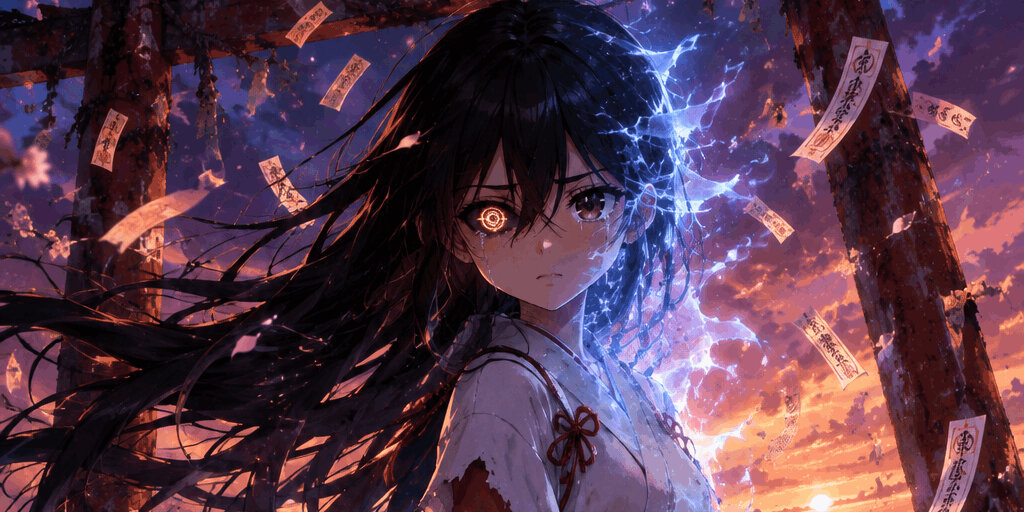
Illustration: the anime spirit medium
The prompt called for a Studio Ufotable-style key visual showing a girl transforming into spiritual energy at a torii gate, accompanied by a nine-tailed kitsune fox beneath a twilight sky painted in the style associated with Makoto Shinkai.
ChatGPT Images 2.5 produced the strongest sky in the testing series. It included a visible sun disc, a reflection in the water, and a mountain silhouette that supported the Shinkai comparison. The character’s asymmetric eyes also worked well.
The model was less literal with the instruction that the girl should be “dissolving into energy.” It reinterpreted that idea as an electric-crackle effect running through her hair rather than the flowing, translucent dissolution described in the prompt. Nano Banana 2’s wispy blue-white energy trail was a closer match to that specific instruction.
Neither model created a convincing nine-tailed fox. ChatGPT Images 2.5 nevertheless won on overall visual impact.
Winner: ChatGPT Images 2.5
Realism: the rooftop architect
This cinematic portrait included numerous independent constraints: a beige trench coat, round glasses, blueprints held specifically in the left hand, golden-hour lighting, shallow depth of field, and film grain.
ChatGPT Images 2.5 produced striking light, with the sun disc directly behind the subject and excellent skin micro-texture. The skin was too smooth, but the surrounding scene looked highly realistic, resembling an analog-camera photograph.
Adding instructions that would normally reduce photographic quality unexpectedly increased the image’s realism. One generation used keywords including “realistic, highlights, crushed shadows, uneven flash, blown out skin tones, candid moment, shot on a phone camera.”
Nano Banana 2 preserved a fuller composition and placed the blueprints in the subject’s right hand rather than the requested left. It did, however, add a legible label to the blueprint: “PROJECT: 124 DUANE ST,” a detail that most renders omitted.
Nano Banana 2 won the single-shot comparison, while ChatGPT Images 2.5 was judged stronger across repeated iterations.
Winner: Nano Banana 2 for one shot; ChatGPT Images 2.5 for repeated iterations
Agentic research: the Bitcoin timeline
Both platforms can research a subject before generating an image. The test asked for a widescreen, children’s-drawing-style timeline of Bitcoin’s history with a strict requirement for factual accuracy. It was the most important category in the comparison and produced the largest gap between the models.
ChatGPT Images 2.5 generated a clean, two-row infographic containing numerous specific dates, but one was incorrect. It identified 2023 as the year Bitcoin exchange-traded funds were approved in the United States. The U.S. Securities and Exchange Commission approved the first spot Bitcoin ETFs on January 10, 2024, a full year later. The source noted that the discrepancy could reflect an interpretation issue, since futures ETFs were approved in that year.
Nano Banana 2 produced a less structured timeline depicting similar events. Its output used a “2023–2024” range for the ETF approval and the fourth halving instead of asserting one incorrect year. As a result, none of its stated dates was technically false.
Nano Banana 2 won because a confidently wrong date is more consequential in a test designed to evaluate whether “agentic reasoning” produces accurate research.
Winner: Nano Banana 2
Abstract concepts: a prompt made of invented words
The final prompt consisted almost entirely of invented terms: “A woman eating shmfiyxl in Lyxin. Next to her, her Lymglsushing plays Lakishkark.” The dish, location, companion, and activity had no dictionary definitions, leaving each model to invent their meanings and decide how to represent them.
ChatGPT Images 2.5 incorporated the nonsense words directly into the scene as visible text. “Lyxin” appeared on a neon sign above a sleek, futuristic restaurant, while “Lakishkark” was printed on the box of a board game played by the woman’s alien tablemate. By turning the invented terms into readable signage, the model made them concrete rather than abstract.
Nano Banana 2 took a different approach. It generated a warm, culturally specific scene featuring a Guatemalan market stall, a woman wearing a traditional huipil, and an orc-like creature playing a hybrid stringed-and-pipe instrument. It interpreted “plays” as playing music rather than playing a game, which was a different but valid reading of the prompt.
However, nothing in the image specifically referred to “Lyxin” or “Lakishkark,” and neither invented word appeared as visible text. ChatGPT Images 2.5 won because converting undefined concepts into legible labels was the more literal response to a prompt that supplied no established meanings.
Winner: ChatGPT Images 2.5
The verdict
Nano Banana 2 won three of the six categories, leaving the comparison effectively tied. The result depends on the user’s expectations and how the model is used.
ChatGPT Images 2.5 fixed the oversharpening problem that affected its predecessor. Its illustration output was arguably the most visually striking single image produced by either model across the two full rounds of testing.
The choice of model is therefore tied to the task: text-heavy and research-based images put more weight on exact legibility and factual checking, while illustration and repeated-generation workflows emphasize different strengths shown in this test. The comparison does not establish a universal winner, but it does show why evaluating image models requires more than judging a single image for visual appeal.
The main difference was not overall quality but a series of small, verifiable details: a spelling error in a scene dense with lettering, an incorrect year in a research-driven infographic, and other narrow instruction-following misses. On overall aesthetics and image quality, the two models were broadly comparable.

