TechBBQ's Charles Kinga on What European Investors Get Wrong About Africa
Key Takeaways
- •Charles Kinga, who grew up in Nairobi and has lived in Denmark for roughly 25 years, heads the Nordic-Africa Initiative at TechBBQ, running its Nordic-Africa Startup Summit now in its second edition.
- •The first Nordic-Africa Startup Summit was assembled in about 100 days from essentially no funding, with Novo Nordisk as main sponsor and the Bestseller Foundation joining later.
- •Investment into African startups fell sharply after a record peak in 2022, according to trackers such as Africa: The Big Deal, increasing the need for deeper, patient cross-border capital.
- •Kinga argues Nordic investors often fail to understand African founders' operating environment, and that differences in traditions and business customs require time together before deals are made.
- •He wants to see more African founders building infrastructure rather than only consumer platforms, and defines success as investors committing patient capital over five to ten years to African startups.
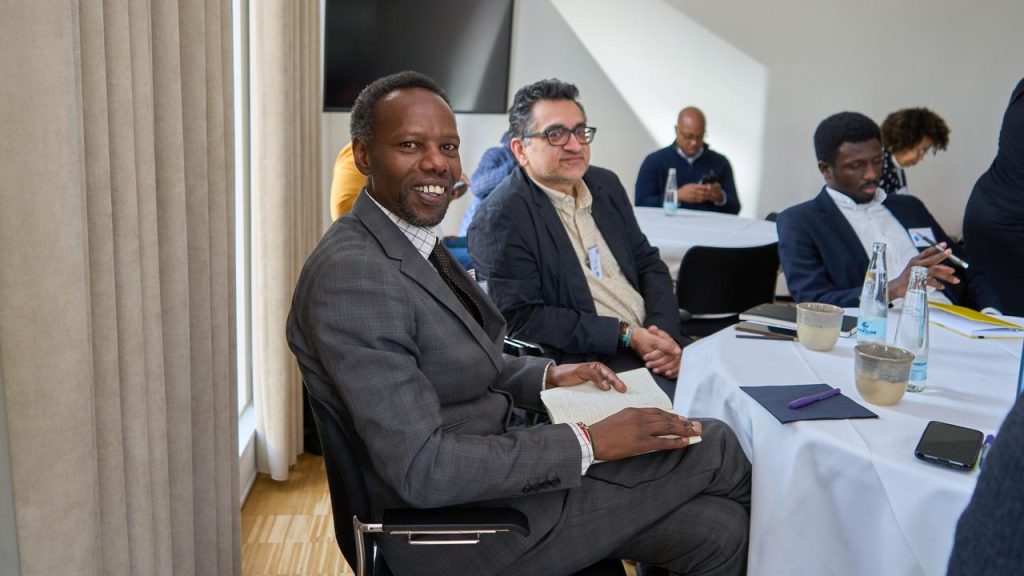
Charles Kinga does not immediately strike you as someone who can talk for hours. When we met on August 25 in the lobby of the Go Hotel in Copenhagen, Denmark's capital and largest city, he appeared quiet, almost understated. I was in the Danish capital for TechBBQ, the annual Nordic technology gathering that has grown since 2013 into one of the region's largest startup events, where Kinga heads its Nordic-Africa Startup Summit.
Yet Kinga is a natural storyteller, the kind who takes the scenic detour but never loses sight of the destination. A simple question about his move to Denmark detours through Punjab, running a cocktail bar in India, and sorting letters on Copenhagen night shifts. Somewhere along the way he was also a musician, which perhaps explains the lyrical quality of his storytelling.
He has lived among enough cultures to belong comfortably to several. Kenya is home. Denmark is home. India, where he spent a decade, left its own imprint. He speaks several languages and seems fascinated by the small customs through which societies reveal themselves.
Today, Kinga is Head of the Nordic-Africa Initiative at TechBBQ, a job that requires him to persuade two ecosystems that often misunderstand each other to sit at the same table. The timing is not incidental: after a record funding peak in 2022, investment into African startups fell sharply in the following years according to trackers such as Africa: The Big Deal, making the case for deeper, more patient cross-border capital more pressing. He is thoughtful, entertaining and unusually optimistic about African technology—but his optimism is not uncritical. Africa's growth story, he believes, is sometimes exaggerated. Founders and investors misunderstand each other. And putting African entrepreneurs on Copenhagen stages means little unless conversations eventually become capital.
Over our conversation, Kinga talked about belonging, money, culture, and why Africa needs more than another platform startup. This interview has been edited for length and clarity.
Growing up in Nairobi
Kinga grew up in Nairobi, in Jericho, Mumbi Estate, and attended Martin Luther Primary School, one of the oldest schools in Eastlands. "Growing up in Eastlands at that time was interesting because it was one of Nairobi's main residential areas," he said. "People like Jaramogi Oginga Odinga and Mwai Kibaki, who later became president, lived there. So you had a good mix of middle-class families and hardworking people like my parents."
His mother was a nursery school headmistress; his father worked in tourism as a tour guide and driver. His mother had the better education of the two. His father had dropped out of school before independence, worked within the colonial system, and later joined the Mau Mau and fought in Kenya's war for independence. "There's actually an interesting podcast in Danish where my father and I interview each other about that period and his experience during the war for independence," Kinga noted.
Success in that household looked much as it does today: a job and a stable life, not being a social outcast, probably a car and good social circles. For children, success meant doing well in school, passing exams, and if possible becoming what Kenyans call "number one in class".
At about age eight, having just finished Standard Two, he visited his grandfather in Makueni County, near the border between the Maasai and Kamba communities—and refused to return to Nairobi. "I had seen paradise," he recalled. He started Standard Three at a rural school in Makueni. There was dust everywhere. He arrived wearing shoes, and the headmaster sent him home, asking who he thought he was and telling him to come back looking like all the other children. It became one of the best periods of his life. "Ultimately, when I think about home, I still think about that countryside."
A new life in Denmark
Kinga has now lived in Denmark for about 25 years. He arrived "as a fully grown man"—not looking for a better life, but for another life and a new challenge. After roughly ten years in India, where he attended university, he met some Danes; one became his girlfriend and later the mother of his first daughter. He first came to Denmark as a tourist, to see whether the country could work for him—whether he could get a proper job with an Indian education.
The culture shock was real. He had experienced snow living in Punjab, up north towards the Himalayas, but Denmark was different. He arrived in October to a somewhat dull city, though the people were nice and nobody looked at him strangely.
At one point he wanted to write a book called The Land of Small Things. Bigness of the kind associated with America, he realised, is not really a Danish or Scandinavian thing—even the street signs seemed small. He found a society that was organised and based on trust: people trust you and expect the same in return. Nobody is a superstar; a minister can take the bus and the prime minister can bicycle to work. "I thought: this is my kind of place." He decided to learn the language, and within about a year and a half he could speak Danish.
Studying Africa from Copenhagen
Kinga studied African Studies at the University of Copenhagen—his fourth degree, though he did not really need another. What he wanted was an education from a Danish university, having learnt in India that universities give you a particular footing for understanding a society. He first considered studying interpretation, like the interpreters seen at the United Nations (UN), since languages come naturally to him. Then he discovered African Studies, called the administrator—who is still a friend—and sent in his credentials. He was accepted.
Once there, taking the back seat became very important to him. He wanted to understand how Africa was studied from Denmark, and to understand his own bias: sitting in a classroom discussing Kenya, Congo, or Somalia, was he an African with a bias that blinded him? He approached the studies "on a very strict scientific basis", trying to take the African out of himself and observe like an anthropologist dissecting a specimen—"just looking at the facts, nothing less, nothing more."
Bartending and night shifts
His first Danish job was as a bartender. In India he had run a cocktail bar started from scratch while he was supposed to be studying law. While learning Danish, a classmate told him the Hilton Hotel near the airport needed a temporary bartender. He applied by showing up properly dressed—the right shoes, the waistcoat, everything. An Englishman with a Cockney accent interviewed him, they got on well, and he worked there for about six months. The money covered food, rent and transport; he was self-sufficient and needed no social assistance.
Wanting something more permanent, he applied to the Danish post office—then a major institution with huge terminals where letters from across the country arrived, were sorted, and were dispatched across Denmark and the world. He worked at one of those depots for two years on the night shift, which was tough on both body and psyche. When his daughter was born, he took paternity leave and then quit, applying to university and receiving Danish student support—modest, but enough to cover rent, supplementable with a loan or a limited-hours student job.
Where is home?
"Anywhere I step," Kinga answered. He proposed an experiment: meet him at Nairobi's airport, let him find his own taxi and talk to the boys hustling riders outside—"You'll be surprised at the kind of Swahili that will come out of me." He feels 100% at home in Kenya; arriving in Nairobi and getting into a taxi, he feels he belongs.
Denmark, likewise, is not a switch. "I'm very Danish too," he said. If a police officer addresses him in English on arrival from Africa, he switches quickly to Danish—partly his way of saying, "I also belong here." Landing in India would probably be the same; he occasionally speaks Hindi with an Indian colleague. Ultimately, though, "the home that is going to be my home is the savannah where I used to look after my grandfather's cattle. That's really home."
How he came to TechBBQ
Kinga applied for a job as Head of Projects and wrote to CEO Avnit Singh on LinkedIn. The two knew each other from way back, having been involved together in an association. Singh replied that the role was not quite the right profile, but that something else could be interesting—in effect headhunting him to take over something focused on Africa. They corresponded and eventually met to discuss scope, expectations and pay.
It started under difficult circumstances: there was essentially no money when the Africa track launched last year. It was an idea that had to be fundraised from scratch. They secured seed funding, and after Kinga came in they raised more, with strong support from the Danish ecosystem. This year is only the second edition. "There were moments at the beginning when it would have been easy to give up," he said.
Building the summit in 100 days
The first Nordic-Africa Startup Summit was built in roughly 100 days—"a complete exercise in counterintuitive thinking," Kinga said. "If you told most people what we were trying to do, they would probably say, 'You're completely mad, and I don't even want to talk to you.' But I like that space."
His first move was to ask whether he could attract big names to speak about technology in Africa—people like Strive Masiyiwa, the Zimbabwean founder of Econet Group; James Mwangi of Equity Bank, one of Africa's largest banks by market value; and Professor Bitange Ndemo, the former permanent secretary in Kenya's ICT ministry who chaired the taskforce behind the country's digital economy blueprint. Ndemo was among the first he contacted, asked about giving a keynote on Kenya's blueprint for the digital economy; Ndemo wrote back yes. Kinga went to the CEO: "Look, we've got Professor Ndemo." Singh asked who he was, Kinga explained, and the reaction was, "Wow, okay. So you think this is possible?"
"Now I'm going to build this backwards," Kinga said. His logic: names attract names. With Ndemo, Masiyiwa or Mwangi secured, everybody else could be found. Novo Nordisk, Denmark's largest company by market value, was the main sponsor at that point, pledging some money; the Bestseller Foundation then came in. Sponsors had their own interests, geographically and by sector—"Africa is a big place; you have to bite it into smaller chunks"—and Kinga's job was balancing those interests with sectors where the initiative could genuinely create impact.
Partnership, not aid in VC clothes
Given the uncomfortable history of Europeans arriving in Africa with capital and good intentions, how does he keep Nordic-Africa collaboration from becoming development aid wearing VC clothes? "The simple answer is that I spend time with the venture capital firms we bring into this," he said. He held meetings with the VCs who appeared on stage last year, wanting to know who they were, what they did, how they did it, what they were building, and how they dealt with founders.
He also wanted to know whether they had support systems for founders. "Building a startup is not easy. A startup is supposed to move from zero to 100 within a very short time, and there is a very high chance it will crash. That takes a heavy toll on founders. Even when they succeed, many burn out."
He sought out European investors living in Africa and Nordic founders who had moved there to build companies, and spoke to prominent African founders such as Juliana Rotich, co-founder of Ushahidi and BRCK, and Hilda Moraa, founder of Pezesha, who were on stage last year—partly to understand the VC world they operate in, and partly to explore another question: how to blend venture capital with the good things philanthropy and charitable capital can do.
The other priority is bringing in more interesting founders, younger or older. What matters, he said, is that they are building for real problems on the ground—and he would particularly like to see founders building infrastructure, not only platforms designed to solve here-and-now problems. It is a debate already live across the continent's tech scene, where critics argue that too much venture money has chased consumer platforms while gaps persist in power, logistics, payments rails and other foundational systems.
What each side misunderstands
African startups often complain that European investors misunderstand African risk. Having sat between both sides, Kinga calls it "a double-edged sword." One thing Nordic investors don't always understand is African founders' operating environment—two cultures meeting.
"Of course, the world is global. If you send an Excel sheet to somebody in Lagos, they can work on it exactly as somebody sitting in Oslo would. That's not the difference. The difference is how we operationalise things. Business cultures can clash." That can be addressed by spending time together before an investor puts money into a company and finding middle ground. Culture, he added, might not even be the best word: "It is traditions and customs—things people have done for centuries, often without even realising they do them."
What success looks like
"Charles Kinga will be retired, living somewhere outside a metropolis and enjoying himself," he said of the long term. Before then, he wants to see genuine collaboration: "a space where people talk to each other, exchange ideas and, from those ideas, do deals. And by deals, I mean proper deals." He wants someone to be able to say, "We're putting capital into this small startup. We're patient. We'll wait five years. We'll wait 10 years." That patience stands out in a venture industry where typical fund cycles run seven to ten years and African exits have historically been scarcer and slower than in mature markets.
He has a feeling that started happening last year, perhaps in a fragmented way. Much of what he did this year was based on those observations and on feedback received. The dinner before the summit, for example, grew out of something simple: people saying, "I've seen this person, and I need a platform where I can actually meet them." That platform cannot always be the hectic TechBBQ venue, so a separate space was created for deeper conversations, letting TechBBQ itself showcase the broader ecosystem.
Not everything discussed in those rooms can be made public. But what Kinga wants to see is actual movement: founders who were on stage continuing conversations with investors who were in the room. During TechBBQ, someone would come to him saying, "I'm looking for so-and-so. Can you introduce me? I heard they're here." And he could say, "Yes, they're here. They were at the dinner." That, he said, is very satisfying.
"Because ultimately, that is the point: not simply putting African founders on a stage in Copenhagen, but creating the conditions for people who would otherwise never meet to find each other, talk, and eventually do something together."

